Sections
The ketamine clinic boom of the last five years is two different things wearing one storefront. One is a real treatment with real data for the kind of depression that hasn’t budged on anything else, and the other is a gold rush of strip mall operations with a nurse practitioner, a recliner, and a Square reader. The hard part for the guy trying to figure out whether to spend three thousand dollars is that from the parking lot, the two versions often look identical.
The three forms of it, briefly
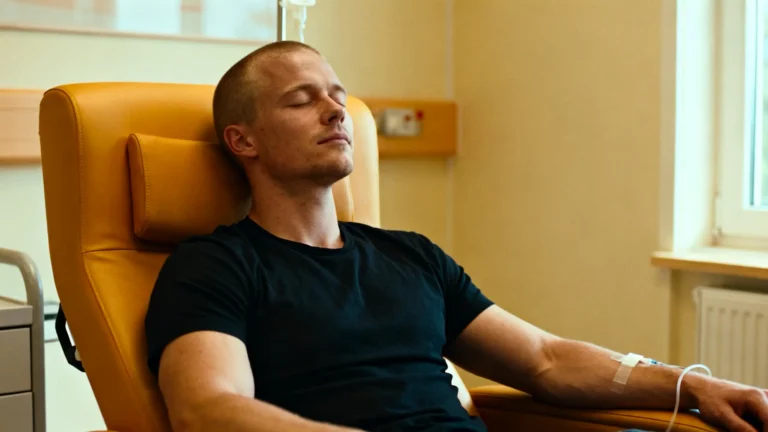
Spravato is intranasal esketamine, FDA approved for treatment-resistant depression (the official category for major depression that hasn’t responded to at least two adequate medication trials), covered by most insurance plans, dosed in a clinic with two hours of monitoring afterwards. It’s the most regulated of the three, the most expensive without insurance, and the one with the most data behind it. IV ketamine is racemic ketamine (the older mixed form of the molecule, versus the single isomer in Spravato) infused over about forty minutes, off-label, usually six sessions to start, cash pay, somewhere around four hundred to seven hundred dollars per infusion in the Portland area depending on the clinic. Lozenges and troches are at home compounded ketamine, prescribed by telehealth clinics, the same dose form a dentist might dissolve in your mouth, and the data on those is the thinnest of the three by a meaningful margin.
The IV form has the longest research track record, going back to the Krystal trials in 2000 at Yale. Spravato is the version pharma actually got approved through the FDA process, which is why it shows up on insurance. Lozenges are the version that scaled because they were cheap to ship and didn’t require running a clinic.
What a real clinic looks like
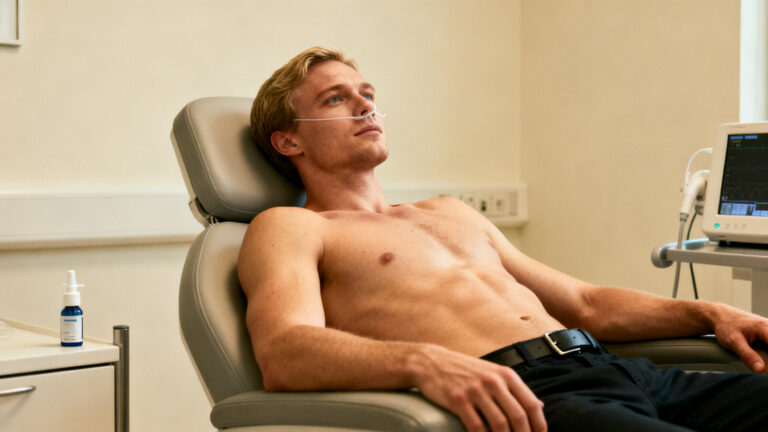
There’s an actual physician or psychiatrist running it, not just listed on the website as a medical director nobody’s ever seen. The intake is a real intake, including a full list of medications you’re on and a real conversation about why you’re considering this, what you’ve already tried, and what success would actually look like for you. They want to coordinate with whoever else is prescribing for you, because ketamine plus the wrong other medication is a real thing they need to know about. They monitor blood pressure during the infusion (ketamine spikes BP and that matters, especially in older patients or anyone with cardiac history). They have an actual plan for what happens if you dissociate hard or get nauseous, both of which are normal but unpleasant. And critically, they have a plan for what comes after the initial six sessions, because the antidepressant effect of ketamine fades over weeks to months, and the maintenance question is where the grift clinics make all of their money.
A good clinic will tell you up front what done looks like. Six infusions, reassess, then maintenance only if you actually need it, then a plan for tapering off if the longer acting medications underneath are doing their job. They’ll also be honest that this might not work, because the response even in the right patients is maybe sixty to seventy percent (Murrough et al. 2013), not the ninety-five percent number you see on certain clinic websites.
What a grift clinic looks like
The intake is a form. The medical director is somebody whose name is on the website and whom you’ll never meet, sometimes a guy in another state. The recliner is in a converted dental suite or a tanning salon that pivoted. The “monitoring” is a pulse oximeter clipped to your finger that nobody is actually watching. They push you into a maintenance package after the first six infusions without any defined endpoint, because the business model only works if you’re coming back every two weeks indefinitely. And the staff is real friendly, partly because they’re nice people and partly because the upsell is critical to next quarter’s spreadsheet.
Lozenge clinics by mail have their own version of this. You fill out a form on a website. A nurse practitioner you’ll never meet, who’s licensed in a state you don’t live in, signs off on the prescription. FedEx shows up with a bottle a few days later. The next time anyone checks in on you is the renewal email. Some of those clinics are run carefully and ethically. Most aren’t. The home-use research, what little exists, mostly doesn’t look great compared to clinic-monitored dosing, partly because dose accuracy at home is a mess, partly because the people most attracted to the cheapest version often have the most going on.

Cost reality, because this is mostly a cash pay world
Spravato through insurance can be a fifty-dollar copay per session, which is the cheapest version of any of this if you happen to qualify. Without insurance it runs six hundred to nine hundred per session. IV at a decent Portland clinic is four-fifty to six hundred per session, six sessions to start, so call it three grand to find out whether it works for you, and another grand-ish per month if you end up on maintenance. Lozenges are the cheap version, two to three hundred a month, which is also why the floor on quality is so low… at three hundred dollars a month, there’s not a lot of margin for anyone to spend much on actual clinical oversight.
None of this is reliably covered by Flexible Spending Accounts or Health Savings Accounts for ketamine specifically, because it’s off-label for everything except Spravato. The cash pay model is most of why the industry looks the way it does, and is most of why the consumer-protection situation is the way it is. Anyone selling you a “package” with a deposit upfront is somebody whose business depends on you not asking too many questions.
Who it’s actually for
The right patient for ketamine is somebody who has failed adequate trials of at least a couple of standard antidepressants from different classes, has tried augmentation (adding a second medication on top), maybe done some therapy, and is still depressed in a way that’s stopping their life from working. Not somebody whose first SSRI (a serotonin-reuptake-inhibiting antidepressant, the Lexapro/Zoloft/Prozac family) had nausea side effects for two weeks and got abandoned. Not somebody whose marriage just blew up and is having a bad two months. Not somebody who read about it on Twitter and decided to skip the boring part.
The reason the right-patient question matters is that ketamine clinics that take everybody who walks in the door are running a business, and a business that needs every walk-in to become a paying customer is going to find a reason to say yes to the wrong patient. The clinics that turn people away, that send the guy whose first SSRI didn’t work back to his regular prescriber to actually try a couple more things first, are usually the ones worth trusting later when they say yes to you.

The pattern, in shape rather than person
The version of this that goes well is roughly the patient who’s spent ten or fifteen years on every antidepressant the field has, augmentation tried, maybe lithium added, maybe an antipsychotic added at low dose, and is still depressed enough that life isn’t really running. The cousin or coworker mentions ketamine. They come in asking about it. The right clinic does a real evaluation, confirms the treatment-resistant designation is real, runs the six IV sessions over two or three weeks, monitors blood pressure throughout. By session four they’re sleeping. By session six the background hum they’ve been carrying for years has quieted enough that they can hear themselves think. A maintenance infusion at six weeks, another at three months, and after that the effect holds with the longer acting medications doing their job underneath.
What’s nice to hear, if you’re the patient in that picture, is that this stuff actually does pull people out of holes that nothing else could. Eighteen months later they’re still doing okay. Total spend is maybe four grand, which sounds like a lot until you compare it to fifteen years of antidepressants that mostly didn’t do the job. The version where the same patient walks into a strip mall clinic and gets pushed into bimonthly maintenance forever would have cost him twenty thousand dollars and gotten him to roughly the same place, with a couple extra problems along the way.

What to ask before you book
If you’re considering one of these clinics, the questions worth asking are pretty mechanical. Who is the prescriber actually evaluating me, and what are their credentials. Are they going to coordinate with my regular prescriber. What’s the protocol, how many sessions, and how do we decide whether it worked. What happens if it doesn’t work. What does maintenance look like, and what would the end of treatment look like. What monitoring happens during the infusion. What happens if something goes sideways. If the answers to those are vague, or you’re being rushed past them to the deposit form, that’s the entire answer about what kind of clinic you’re standing in.
The business model needs you coming back every two weeks indefinitely, and the staff is real friendly because the upsell is critical to the spreadsheet.
Bottom line
Ketamine works for the right patient, and the right patient is somebody who’s already done the boring stuff and is still stuck. The right clinic has a real physician involved, real monitoring, and a real plan for what done looks like. If they can’t tell you what done looks like, you’re in the wrong building. And if anyone is selling you a long-term maintenance contract on day one of intake, the math on what they’re actually selling you is sitting in plain view.
Sources
- Berman RM, Cappiello A, Anand A, et al. Antidepressant effects of ketamine in depressed patients. Biol Psychiatry. 2000;47(4):351-354. PMID 10686270.
- Daly EJ, Trivedi MH, Janik A, et al. Efficacy of Esketamine Nasal Spray Plus Oral Antidepressant Treatment for Relapse Prevention. JAMA Psychiatry. 2019;76(9):893-903. PMID 31166571.
- McIntyre RS, Rosenblat JD, Nemeroff CB, et al. Synthesizing the Evidence for Ketamine and Esketamine in Treatment-Resistant Depression. Am J Psychiatry. 2021;178(5):383-399. PMID 33726522.
- Murrough JW, Iosifescu DV, Chang LC, et al. Antidepressant efficacy of ketamine in treatment-resistant major depression: a two-site randomized controlled trial. Am J Psychiatry. 2013;170(10):1134-1142. PMID 23982301.