Sections
Ketamine-assisted therapy is what it sounds like. You take ketamine in a clinical setting, and you have a therapist actually present (or involved in close follow-up afterward) to do something with whatever surfaces while the drug is doing its thing. Drug plus therapy in the same container, instead of drug now and therapy maybe later.
This is different from just getting ketamine. Pure ketamine treatment, whether it’s in-clinic IV or IM or at home lozenges, is a pharmacological intervention… you take the drug, you have the experience, you go home, you wait for the antidepressant effect to kick in over the next day or two. KAP adds an active therapy layer to the same molecule, which changes what people get out of it, because it’s the same drug in a different container and the container changes the result, and both are real, they’re just answering different questions.
The shorthand I use with people is that ketamine alone treats the chemistry, KAP treats the patient inside the chemistry. Pharma plus structured therapy, where the dissociation becomes the medium the therapist works in rather than a side effect to manage around.
The dissociation stops being a side effect to manage around and becomes the room the therapist actually works in.
The three parts: prep, dose, integration
A real KAP protocol has three pieces, and the middle one is the part everybody fixates on… which gets the proportions wrong from the start, because the parts on either side of the experience are where the actual work lives.
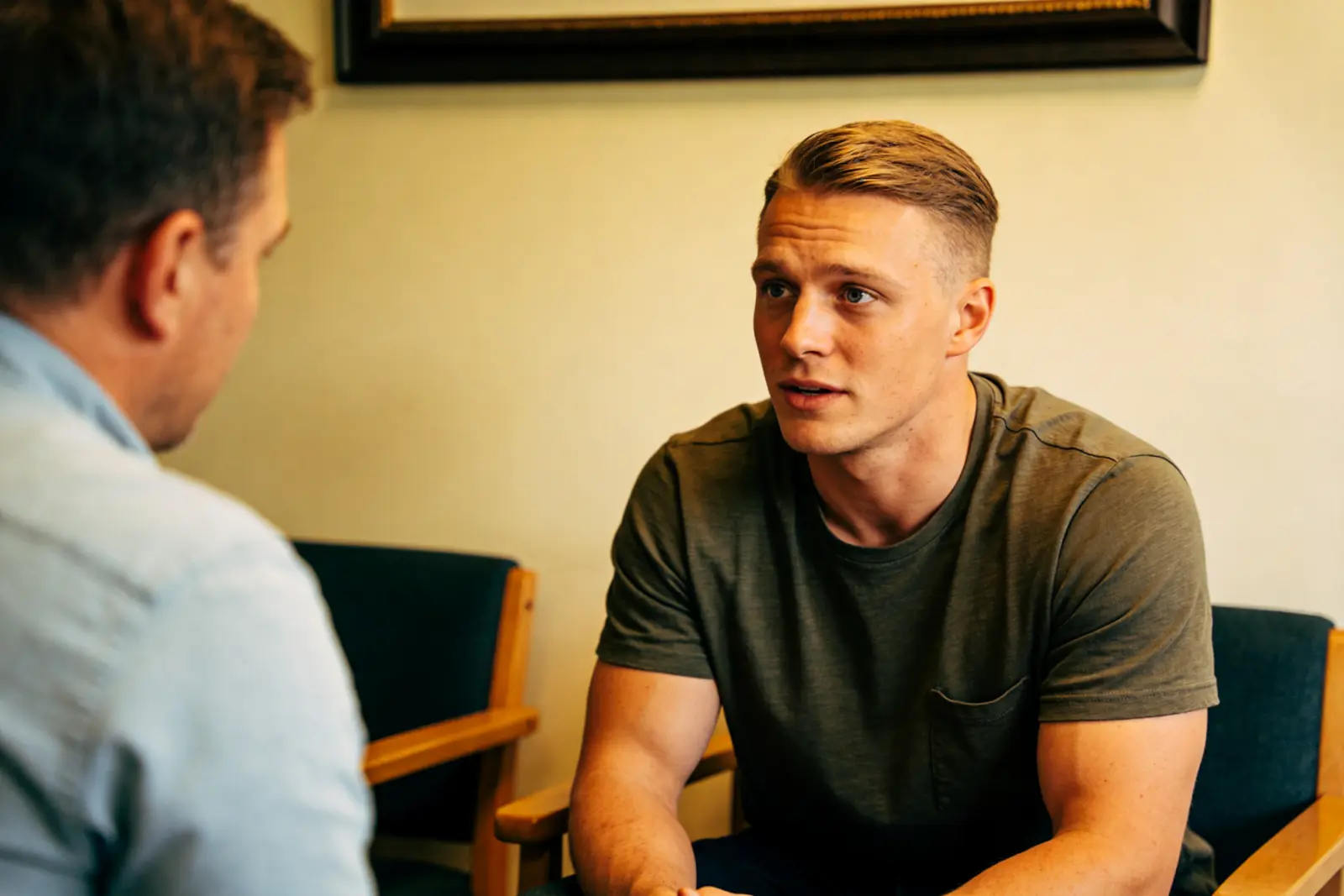
The prep session happens before you ever touch the medicine. Usually 60 to 90 minutes, sometimes spread across two visits. You sit with the therapist, you talk about what you’re hoping to look at, you set what we call an intention, which is a fancier word than necessary for “what do you actually want to work on while your defenses are down.” The therapist walks you through what the experience is going to feel like physically… tingling in the limbs, body feeling far away, time stops behaving normally, that kind of thing. You talk about what to do if things get heavy. Prep isn’t paperwork, it’s what makes the dosing session safe enough to actually go somewhere.
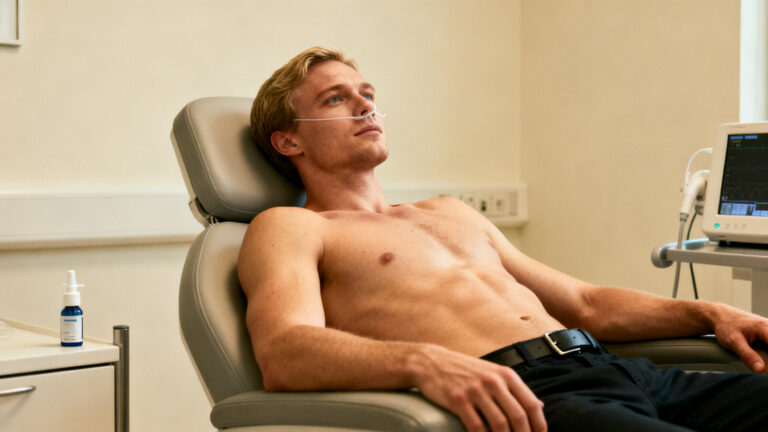
The dosing session is the part you’ve read about. You’re in a recliner or on a couch, eye mask on, headphones with a curated playlist (the music genuinely matters, more than the clinics know how to explain), dose calibrated to your goals. Sublingual is in the 100-400mg range, IM injections sit around 0.5-1mg/kg, IV is dosed lower and titrated. The therapist is present throughout, you’re not unconscious, you can talk if you want or stay quiet if you want, what you’re in is a 45 to 90 minute altered state where the usual defenses against your own material are softer than normal.
Integration is the third leg and it’s the one that does the actual work, usually 24 to 72 hours after the dosing session while the neural-plasticity window is still open. You meet with the therapist again, you talk through whatever surfaced and whatever kept repeating, and you make one small specific plan for what you’re going to do differently this week. Without integration, KAP is an interesting afternoon you’ll tell your friends about. With integration, it becomes a change in how you live. The whole protocol stands or falls on this part.
Skip the integration and the whole thing quietly comes apart, no matter how good the dosing session felt while you were in it.
Why the therapy wrapper matters more than people think
There’s a solid body of research now comparing ketamine with and without a therapy layer, and the short version is that the pharmacology by itself produces a relatively short-lived antidepressant effect, while the pharmacology plus active integration produces something that lasts longer and looks more like real change.
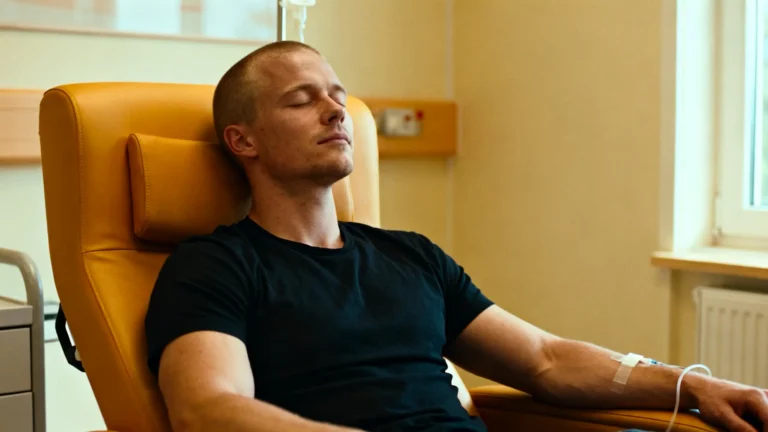
Spravato (the FDA approved esketamine nasal spray) is the medical version. You go to a certified clinic, you spray, you sit for two hours while staff watches your vitals, you go home. It works for TRD (treatment-resistant depression, which means it hasn’t responded to two adequate medication trials) and the data is decent. The model is medical, not psychotherapeutic… you’re not doing therapy during it, you’re being observed. Straight IV ketamine infusions in a pain-medicine or psych-infusion clinic work the same way, the medicine does what the medicine does.
KAP is the model where a clinician trained in psychotherapy is in the room (or on video, or available immediately after) and is actively using what’s happening in your nervous system to move material that ordinary talk therapy can’t quite touch. The weird-feeling state becomes the workshop, not a delivery problem.
The medicine does the easy part on its own, and everything that lasts comes from what you do with the window afterward.
Picture a guy with years of treatment-resistant depression behind him, a full medication ladder already tried, sometimes a round of Spravato at another clinic with modest improvement that wore off in a few weeks. Switch the protocol to KAP with a therapist he trusts, six dosing sessions over eight weeks with real integration in between, and he comes out the other side describing something he hadn’t described before, usually a story he’d been organizing his life around that he can now see from the outside instead of being stuck inside of. Same pharmacology, just inside a different container, and what changed wasn’t the molecule, it was what he could finally do with it.
Set, setting, and the dissociation
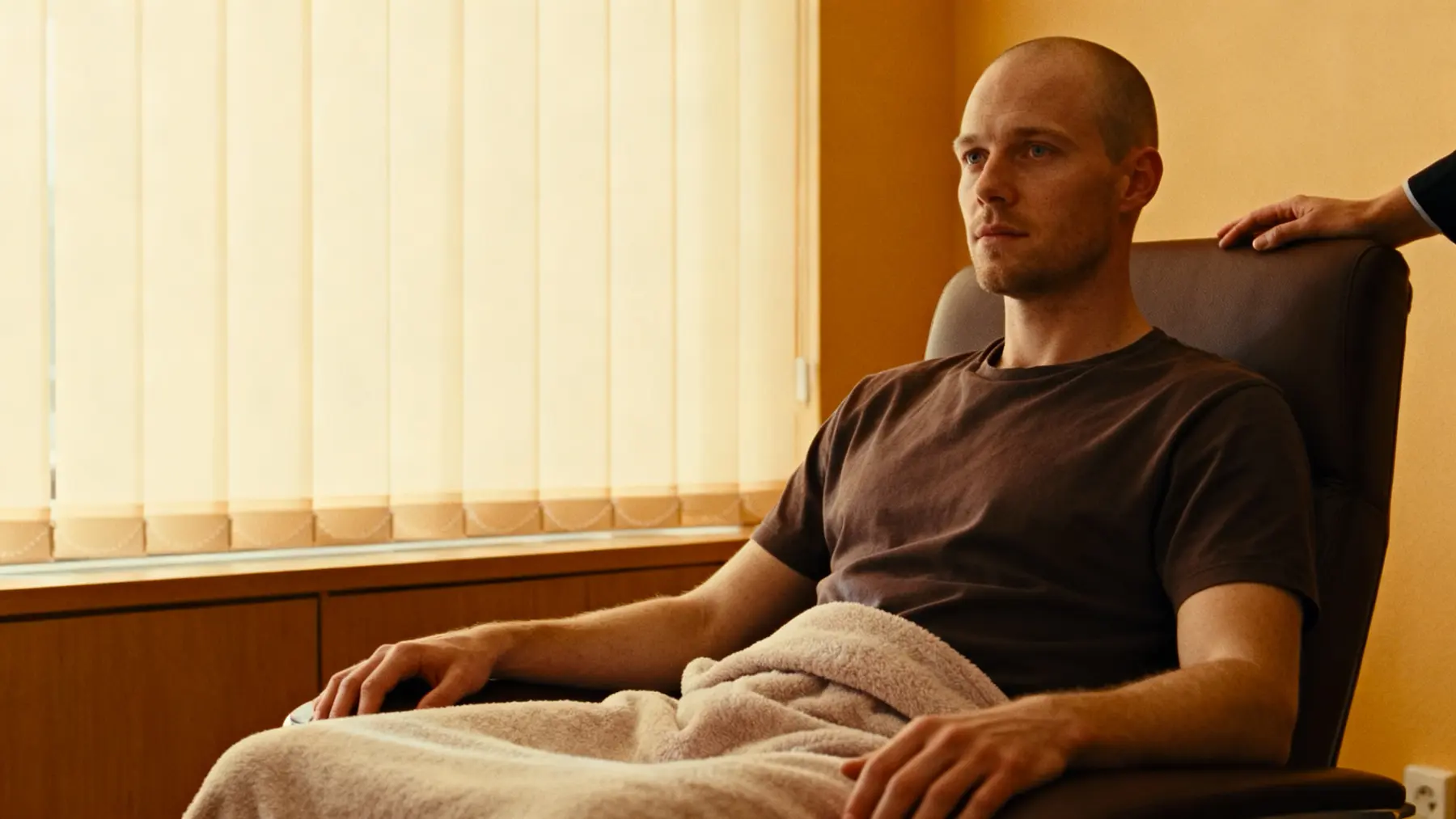
Set is what you bring, setting is what’s around you, and both of them matter more than most patients expect them to.
Set means your mood that day, how much sleep you got, whether you fought with your partner that morning, what you’re hoping for, what you’re afraid of… if you walk in trying to bull your way through a session because you “need this to work,” you usually have a worse session than the guy who walked in curious. We do real prep work on this because going in tight makes the experience tighter, and a tight session is one of the most common ways KAP underperforms when otherwise it should have worked.
Setting is the room. Lighting low, temperature comfortable, eye mask so you stop tracking the environment, music chosen for how it shapes the emotional arc of the experience (most KAP practitioners use playlists borrowed from the psilocybin research at Johns Hopkins and Imperial (Kaelen et al. 2018)). A blanket, water nearby, somebody you trust within arm’s reach. None of this is decoration, your nervous system reads all of it.
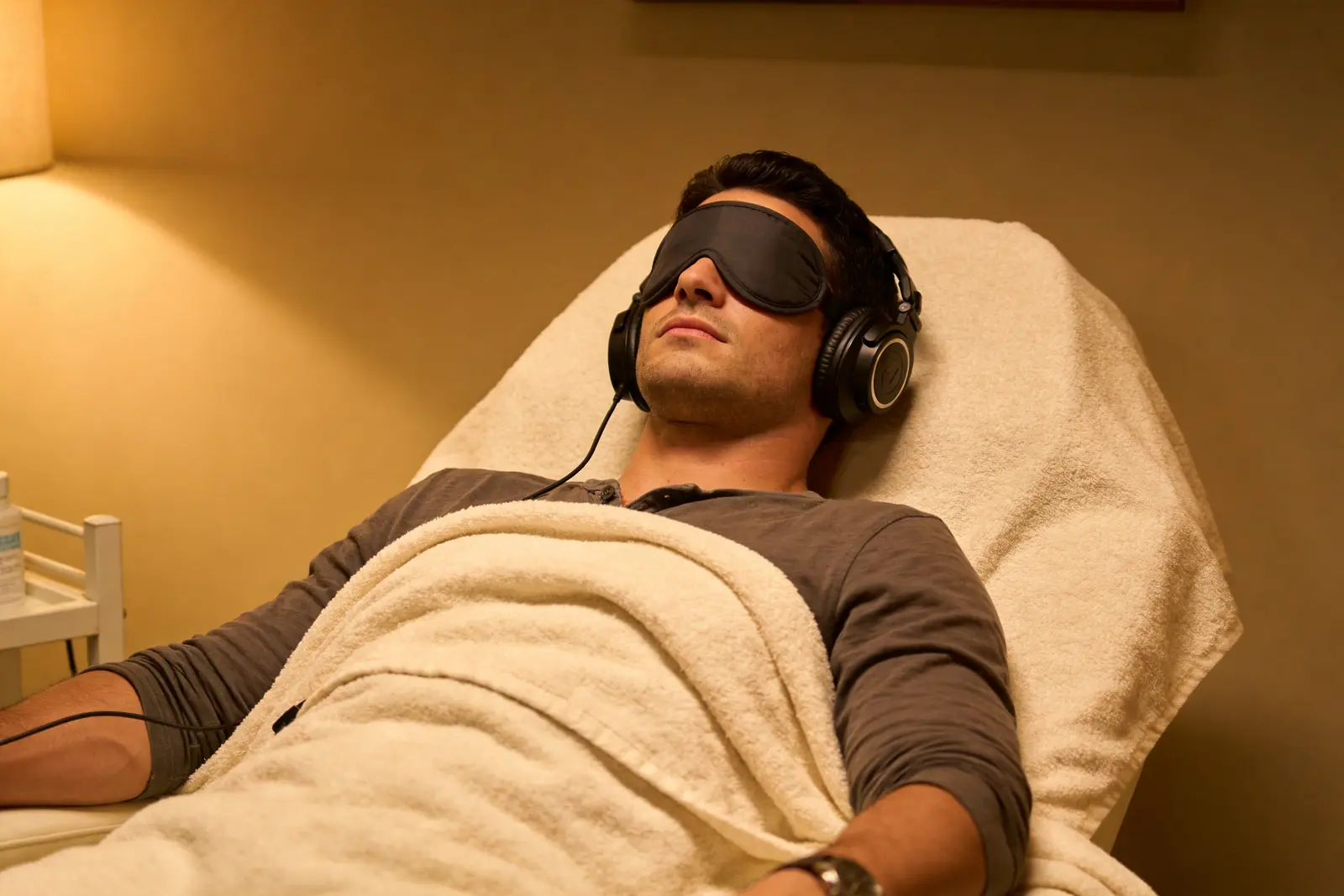
The dissociation itself is the part people are most nervous about and the part that turns out to matter most. At a therapeutic dose, you feel your body get distant, the sense of having a self loosens, sometimes there’s visual content and sometimes not, time stops behaving normally… the defenses that usually keep you from looking directly at the hardest material get quieter. This is uncomfortable for about ten minutes and then usually shifts into something workable. The therapist’s job during this stretch isn’t to talk you through every minute, it’s to be a steady presence so you can let your guard down enough to actually go somewhere useful.
60 to 90 minutes, before any dose
Set an intention. Walk through the physical experience. Decide what you want to work on. Skipping this part is the single most common reason a KAP course underperforms.
45 to 90 minutes in altered state
Sublingual 100-400mg or IM 0.5-1mg/kg, eye mask, music, therapist present. Six to eight sessions is typical for a full course, sometimes fewer.
24 to 72 hours after each dose
Where the actual change lives. Neuroplastic window is open. You translate the experience into one specific thing you’ll do differently this week.
Who this fits, and who it doesn’t
People with trauma that hasn’t responded to standard trauma therapy, people with depression so deep that talk therapy feels like trying to push furniture through a closed door, people who’ve been in therapy for years and keep circling the same patterns without changing them, people with OCD or rigid thought structures whose emotional engine talk therapy can describe but can’t quite touch. That’s the population the data is on.
Not great for: anybody with a personal or family history of psychosis, anybody with unmanaged bipolar I, anybody with active substance use disorder involving dissociatives, anybody with uncontrolled high blood pressure or cardiac issues since ketamine bumps both your blood pressure and your heart rate. Worth saying clearly on the cardiac side, because some clinics will minimize this part… the first-time-ketamine in somebody on three blood pressure meds is a genuinely fraught conversation, anyone on multiple cardiac meds is an iffy candidate, and any provider who tells you the cardiac side is no big deal isn’t being honest with you. Not also great for people who want to skip the integration part and just have the experience, which isn’t KAP, that’s a vacation with a sober-driver problem.

What it isn’t
It isn’t recreational, it isn’t a guarantee, and it isn’t a substitute for the ordinary weekday effort of actually changing how you live between sessions. People who treat KAP like a magic ritual don’t get the durable results that come from people who treat it like a tool. The molecule does what the molecule does whether you use the window well or not, and most of the difference in long-term outcomes comes from what happens with the window, not from the window itself.
The therapist in KAP isn’t a witness, they’re guiding you toward material that matters and helping you stay with discomfort that traditional therapy can’t quite access, and translating what surfaces during the experience into things you can actually do when the ketamine is out of your system. If a clinic is offering you ketamine without real prep or integration and calling it KAP, what they’re offering is infusions with a friendlier name. Might still be the right thing for you, the infusions alone are a real treatment. Just don’t pay KAP prices for it.
Sources
- Berman RM, Cappiello A, Anand A, et al. Antidepressant effects of ketamine in depressed patients. Biol Psychiatry. 2000;47(4):351-354. PMID 10686270. (Foundational ketamine antidepressant trial)
- McIntyre RS, Rosenblat JD, Nemeroff CB, et al. Synthesizing the Evidence for Ketamine and Esketamine in Treatment-Resistant Depression: An International Expert Opinion on the Available Evidence and Implementation. Am J Psychiatry. 2021;178(5):383-399. PMID 33726522.
- Daly EJ, Trivedi MH, Janik A, et al. Efficacy of esketamine nasal spray plus oral antidepressant treatment for relapse prevention in patients with treatment-resistant depression: a randomized clinical trial. JAMA Psychiatry. 2019;76(9):893-903. PMID 31166571.
- Drozdz SJ, Goel A, McGarr MW, et al. Ketamine Assisted Psychotherapy: A Systematic Narrative Review of the Literature. J Pain Res. 2022;15:1691-1706. PMID 35734507. (Review of the therapy-plus-ketamine evidence)
- Dean RL, Hurducas C, Hawton K, et al. Ketamine and other glutamate receptor modulators for depression in adults with unipolar major depressive disorder. Cochrane Database Syst Rev. 2021;9(9):CD011612. PMID 34510411. (Cochrane systematic review)
- Kaelen M, Giribaldi B, Raine J, et al. The hidden therapist: evidence for a central role of music in psychedelic therapy. Psychopharmacology (Berl). 2018;235(2):505-519. PMID 29396616. (Imperial College research on music in psychedelic therapy)
Set an intention. Walk through the physical experience. Decide what you want to work on. Skipping this part is the single most common reason a KAP course underperforms.
Sublingual 100-400mg or IM 0.5-1mg/kg, eye mask, music, therapist present. Six to eight sessions is typical for a full course, sometimes fewer.
Where the actual change lives. Neuroplastic window is open. You translate the experience into one specific thing you'll do differently this week.