Sections
- The phrase turned into permission to dodge the actual steps
- What actually moves trauma, and why it’s miserable
- Big T versus little t, and why neither needs handling
- The fragility framing makes patients more fragile
- The thing nobody in this industry will say out loud
- What we do instead, the trauma-prepared version
- If you came here for validation, you’re at the wrong clinic
Trauma informed care is the most successful piece of mental health branding of the last decade, and for a crowd that never shuts up about how compassionate it is, it’s making a lot of people worse. The phrase used to mean something specific in institutional settings. Now it mostly means a vibe… soft voices, dim lights, endless validation, a clinician who treats you like you might shatter if anybody asks a question with real weight on it. People show up at psychiatry second opinion appointments after two or three years inside that vibe and they’re more avoidant, more wired, more convinced they’re fragile than they were when they started. Which is bad outcomes dressed up as careful clinical practice, and somebody has to say it out loud.
So here goes. I’m against the padded-room version of this. I’m anti trauma-informed in the way the wellness industry uses the term. I’m pro trauma-prepared and pro the patient walking out of here with what amounts to a full-ass resilience suit. Spaces don’t make you safe and neither does a salt lamp (no shade, we have a few), your therapist’s gentle voice doesn’t make you safe… you get safer by walking toward the discomfort instead of decorating around it.
The evidence base for treating actual trauma, the stuff with decades of randomized trials behind it, isn’t gentle. It’s exposure. You face the thing, you stay with the thing until your nervous system gets the message that you survived the thing. CBT (cognitive behavioral therapy, the structured worksheet and homework kind, not the talk about your mother kind) for trauma. Prolonged Exposure, which is exactly what it sounds like and you’ll be hearing about it again in a minute. Cognitive Processing Therapy, which is a written-narrative version of the same thing. Every one of these requires the patient to walk straight at the discomfort they’ve been organizing their entire adult life around avoiding, and none of them work if the therapist flinches every time the patient does.
The phrase turned into permission to dodge the actual steps
SAMHSA wrote a framework in 2014 that was meant for institutions. Hospitals, prisons, schools. The idea was that if you run a system that processes a lot of humans, you should assume some of them have a trauma history and not run the place in a way that reactivates it for them. Reasonable, useful, boring document. Nothing in it said you can’t ask hard questions, and nothing in it said exposure therapy is mean.
Then the wellness industry got hold of it. By 2019 there was trauma-informed yoga, trauma-informed coaching, trauma-informed sound bath certification you could finish in a weekend. The phrase drifted. First it meant “we’re nice to you,” then it meant “we’ll never make you uncomfortable,” and now in some corners of the internet it means “we’ll validate every avoidance pattern you have and reframe it as a boundary,” which honestly explains a lot about how this industry got to where it is.
I’ve had guys tell me, in complete sincerity, that their previous therapist said it’d be retraumatizing to actually ask them about their PTSD. Their PTSD. The thing they came in for treatment for. The therapist apparently read a pamphlet and decided that the kind trauma-informed thing to do was to skip the treatment. That’s malpractice in a sweater, and the sweater is selling at full retail. And it isn’t one bad apple, it’s the norm. When researchers surveyed licensed psychologists about how they actually treat PTSD, the large majority didn’t use exposure at all, even though it’s got more evidence behind it than anything else in the field, mostly because the clinicians were uncomfortable with it or believed a stack of misconceptions about it being too risky. The most effective tool we’ve got is the one the field reaches for least.

What actually moves trauma, and why it’s miserable
Trauma treatment is, basically, your nervous system updating a danger file that’s out of date. Something got filed at some point as life-threatening, and the file gets activated by anything that resembles the original event. A car door slams, a combat veteran is out of his chair. A partner reaches for somebody with childhood sexual trauma in the wrong way, the body goes cold. The file is wrong in the sense that the present situation isn’t the past one. It’s also right in the sense that it kept you alive once, which is why it’s so stubborn… the brain doesn’t update files that previously saved its life unless you really make it.
The only way to update the file is to put the body back in contact with the cue and have the body discover, repeatedly, that the cue isn’t, in this case, going to kill you. Every effective trauma protocol is some flavor of that. There’s no version where you sit on a couch and talk about how you feel about how you feel and the file gets quietly rewritten. The talking version, where the patient narrates the trauma in general terms and the therapist nods carefully, has never shown promising outcomes for PTSD in any decent trial. We’ve known the mechanism since the eighties, when Foa and Kozak laid out the emotional-processing model that says a pathological fear only updates when you activate it and feed it information that contradicts it, which is a fancy way of saying you have to approach the thing, not narrate around it. It’s just that nobody got rich pointing it out.
Cognitive Processing Therapy
Twelve sessions. Written trauma narrative, structured worksheets aimed at the stuck points in your thinking. You write out the worst thing that happened and read it back. The therapist asks where the conclusions went sideways. Roughly three-quarters to four-fifths of people who complete it no longer meet criteria for PTSD (Resick et al. 2002).
Prolonged Exposure
Eight to fifteen sessions. You go back to the places and situations you’ve been avoiding, and you tell the story out loud, in detail, over and over, until it stops feeling lethal. It’s as miserable as it sounds. It also works as well as anything in the field.
Eye Movement Desensitization
Eight phases. Patient holds the memory in mind while the clinician runs bilateral stimulation. Mechanism is still debated. Outcomes are solid. Requires the patient to actually access the memory and not skirt around it.
EMDR (eye movement desensitization and reprocessing, the therapy where the clinician has you track their fingers or a light bar while you hold a traumatic memory in mind) is the one I’ll say something specific about, because I’m honest about this in the room and I should be honest about it here. I personally think it’s hokey. I couldn’t take it seriously enough to find out whether it’d work on me, which is my problem and not yours. The research, though, doesn’t care what I think. EMDR works for PTSD about as well as anything else we’ve got, often better, when it works. People come back and say some version of “I don’t really know what happened, but the thing doesn’t grab me by the throat anymore.” So I refer for it, because I’d rather go with what the data says than my own aesthetic feelings about therapy that involves tracking somebody’s fingers. The data wins.
Notice what every one of these has in common. The patient is asked, repeatedly, to make contact with the thing they’ve been organizing their life around not making contact with. Direction is the same. Format changes.
Big T versus little t, and why neither needs handling
The trauma-informed crowd doesn’t usually distinguish between Big T trauma (combat, assault, the kind of event a diagnostic manual recognizes) and little t (everything else… the breakup, the layoff, the alcoholic parent, the year your dog died). Both can shape a nervous system. Neither requires you to be handled like glass, and the treating-everything-as-fragile move is one of the most actively damaging interventions the field is producing right now.
The treatment looks different. Big T with full PTSD criteria gets a protocol, with somebody who’s done it a few hundred times and isn’t going to flinch when the material lands. Little t, where the impact is real but the checkbox isn’t met, gets exposure work plus the patient learning to stop treating ordinary discomfort as a clinical emergency. What they share is the principle… both get smaller by being approached, not by being avoided. The protocol changes, the direction doesn’t.

The fragility framing makes patients more fragile
Tell somebody enough times that their nervous system is delicate and they should never feel uncomfortable, and they’ll start to believe you. The discomfort goes from a normal signal that the body is doing what bodies do, to evidence that they’re broken. They contract. The window of what feels survivable gets smaller. By the second year of this they can’t have a hard conversation with their boss, can’t sit through a movie with a fight in it, can’t visit family without three days of preparation. The world hasn’t gotten harder. They’ve gotten less able to meet it.
Avoidance isn’t protective. Avoidance is the symptom. Every time you duck the cue and get a hit of relief, the brain logs that the cue must be dangerous, because look how good it felt to dodge it. The fear grows, the world shrinks, and a practitioner selling that line who never names the avoidance and never asks for any movement toward the cue is feeding the loop while billing for it monthly.
Avoidance feels safe for about ten minutes, then you’re just stuck with the same problem plus less practice.
Resilience isn’t a personality trait you have or don’t have, and it isn’t body armor in the sense of being unfeelable. Resilience is what your nervous system has after it’s been through some shit and updated the file. You don’t get there by being protected from discomfort. You get there by surviving discomfort with somebody competent next to you, often enough that your body believes survival is the default outcome and not the surprise.
Fuck a safe space, spaces don’t make you safe, you make you safe.

The thing nobody in this industry will say out loud
The mental health industry runs on recurring revenue. Lifetime patients pay better than discharged ones. Insurance reimbursement, monthly med checks, weekly therapy slots, supplement subscriptions, retreat upsells, six-figure trauma intensives… every business model in this space is built around keeping you in it for as long as possible.

Trauma-informed care, as it’s been sold, fits that model perfectly. It manages people into dependency instead of armoring them out of it. And here’s the part that should bother anybody who claims to care about evidence. When somebody went looking for proof that rolling out trauma-informed training across an organization actually makes the patients better, the systematic review found that most of the studies only measured whether the staff felt more trauma-informed afterward, and barely many of them bothered to check what happened to the clients at all. The framework got adopted everywhere on the strength of how it sounds, not on a stack of trials showing it improves the people it’s aimed at. It teaches them their nervous systems are too fragile for direct conversation, teaches them their pain needs handling rather than facing, and then bills them, monthly, for the handling. Wait, can you actually say that about your own industry? Apparently, because I just did. The industry can fix it if it doesn’t like being talked about that way, and so far it isn’t fixing it.
What I tell new patients is this. I hope I never see you again. I’m not joking. The point is you come in, you build the resilience, you leave. The goal of treatment isn’t to keep you stable on me forever. It’s to make me unnecessary. If you’re still in here five years from now because we’re “managing your trauma,” I’ve failed at the job. I’ll tell you that on day one and again every quarter until you graduate out.
What we do instead, the trauma-prepared version
Trauma-prepared means two things at once. The clinician has the chops to handle whatever comes up in the room. Dissociation, flashback, full-body panic, suicidal thinking surfacing mid-exposure, none of it should rattle the person sitting across from the patient. That part is on the provider. They should have done this a few hundred times, and they shouldn’t need the patient to manage their anxiety about the material. And this is the part the trauma-informed crowd gets backwards. The whole premise that exposure is too dangerous for the complicated patients, the ones with dissociation or borderline traits or a substance problem or active suicidal thinking, doesn’t survive contact with the evidence. When researchers actually looked at running prolonged exposure with exactly those comorbidities, the conclusion was that it can be used safely and effectively, and it usually drops the PTSD and the comorbid problem at the same time. The fear that facing the trauma will shatter the fragile ones is the thing keeping the fragile ones fragile.
The other half is on the patient. What you actually do, deliberately and over weeks, is build the capacity to feel hard things without coming apart. Pick a target. Move toward it. Expect the heeby jeebies to show up. Don’t treat the heeby jeebies as a stop sign, treat them as the point. The exercise is for your nervous system to log that you walked into the thing you’ve been avoiding for fifteen years, felt awful for forty minutes, walked back out, and the building didn’t collapse on you while you were in there.
What’s nice to hear, before this whole post sounds like one long beating, is that this works. The trial data on Prolonged Exposure and CPT is some of the cleanest data the field has, and the patients who do this work get measurably better, not just less symptomatic. And no, they don’t flee the room in droves, which is the other thing the trauma-informed worriers get wrong. When somebody pooled the dropout numbers across dozens of PTSD trials, the degree of trauma focus in a treatment didn’t predict whether people quit, with one exception worth naming: trauma focused therapy did lose more people than present-centered therapy specifically, around 36 percent against 22 percent (Imel et al. 2013). People can tolerate going at the thing. They tolerate it better when nobody’s whispering to them that they can’t. Their lives expand. They drive on the road they used to take a detour around. They sleep with their partner without bolting at 3 AM. They go to the dinner party. They talk about the thing without their voice doing the trauma-vocabulary thing where they describe the assault in academic clauses. The data says you can come out the other side of this, and the data has been saying that for thirty years.
I want people uncomfortable in here. I want them to dig in. I want them to wonder somewhere around session five why they thought this was a good idea, and maybe regret it a little. And then look up some Thursday and realize the thing that used to bring them to their knees doesn’t really do that anymore. That’s the resilience suit. Not body armor that keeps you from feeling. The opposite… the capacity to feel a lot, including bad things, without having to leave the building.

If you came here for validation, you’re at the wrong clinic
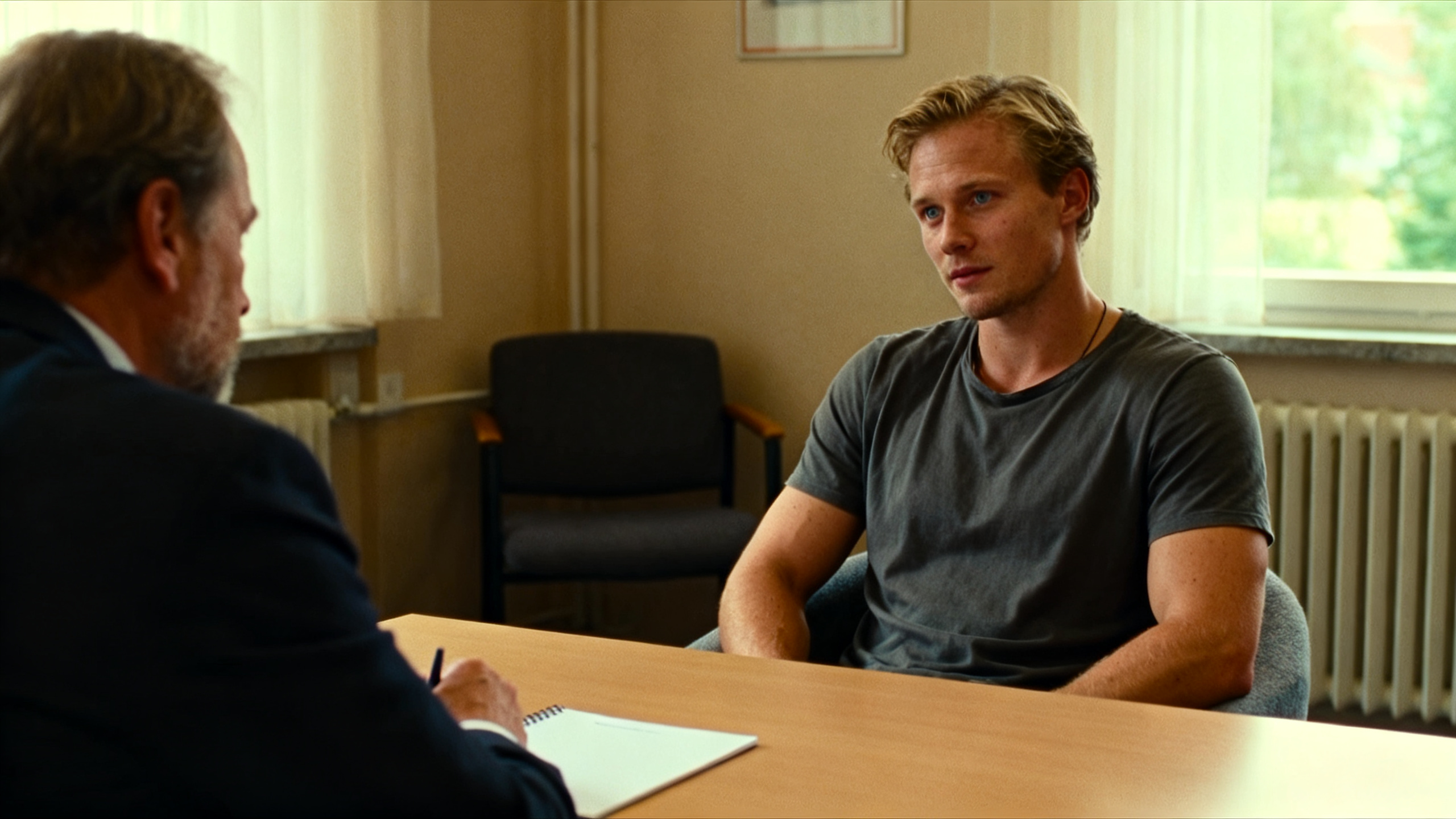
Say you’ve got a guy who comes in with PTSD from a sexual assault years earlier. He’d been with a trauma-informed therapist for almost three years before I met him. He could describe what happened to him using the vocabulary of a graduate seminar. Polyvagal this, window of tolerance that, nervous system the other thing. He hadn’t had sex with his wife in a long time. He hadn’t driven the road past where it happened in even longer. His world was the size of a postage stamp and getting smaller every quarter.
At intake he told me he wanted somatic work and a trauma-informed psychiatrist. I told him, in not exactly these words, that somatic work wasn’t going to drag him out of this and what he needed was Prolonged Exposure, which was going to feel like the worst thing he’d ever signed up for. He cried. He told me I sounded like every guy who’d ever dismissed his experience, which is the kind of thing patients say when an exposure recommendation lands as the threat it accurately is. I told him I wasn’t dismissing it, I was naming the protocol the evidence supported for his diagnosis, and he could take it or leave it.
He left. He came back two weeks later. We started PE. Session four, he sobbed for forty straight minutes telling the story out loud. Session seven, he drove past the place. Session eleven, he initiated sex with his wife for the first time in a long time, which she didn’t see coming. Eight months later he sent an email saying the thing that’d haunted him had become a thing that happened to him and didn’t feel lethal anymore. That email is up on a pin board here.
He didn’t get there by being protected from the material. He got there by going at it with somebody next to him who knew how to put in the reps and wasn’t going to bail when it got loud.
If you’ve been in trauma-informed therapy for two years and you can describe your trauma in beautiful clinical language while your life keeps shrinking, the therapy isn’t working. The framework drifted into something that protects people from the thing they came in to face. The process is uncomfortable, it’s supposed to be, and the discomfort isn’t a bug in the process, the discomfort is the process. Spaces don’t keep you safe. Therapists don’t keep you safe. You build the thing inside you that does, and you walk out of here with it whether the rest of the industry likes it or not.