“If the problem can be solved, why worry? If the problem can’t be solved, worrying will do you no good.”
This quote comes up often in group therapy sessions on stress management, usually through a solution-focused lens. This old saying is practical. If something can be done about a problematic circumstance, then by all means, do something to address it. If nothing can be done, dwelling and fixating negatively will almost never help accomplish anything positive. Doing something else unrelated yet productive is usually a better use of time and energy.
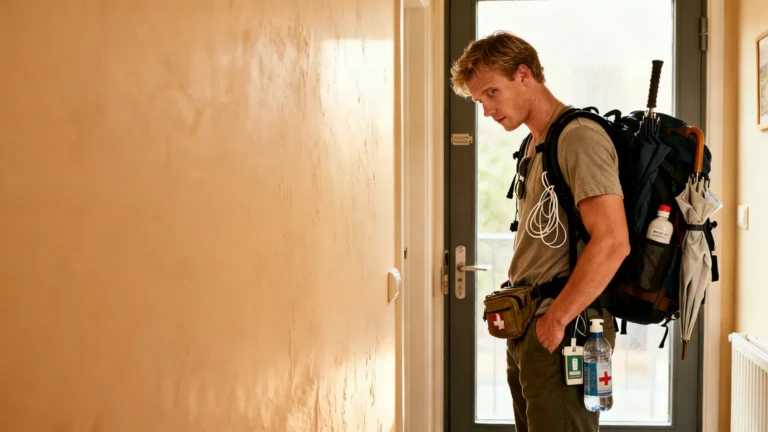
It’s not the load that breaks you down, it’s the way you carry it.
Nevertheless, one distinction tends to arise when exploring insights from this quote: knowing it and doing it are two very different things. As profound as it’s in its simplicity, something I think matters more than it gets credit for, it still leaves a gap for many of us. We all worry, and understandably, about important things: life, provisions, health, the well-being of others, death, whatever form they take. I think the ancient adage can be a useful starting point to break down and approach stressors we have, similar to how AA, the 12 Steps, and the Serenity Prayer approach it. The idea is the same: work with what you have, where you are.
For the other complexities in life mentioned above, I often pair another quote to fill in the missing gap. To borrow from Lou Holtz:
“It’s not the load that breaks you down, it’s the way you carry it.”
I like this because it implies that we all have the stressors of life that we carry. They may differ in weight, size, or quantity, but we all have them. Likewise, our capacity to carry them differs, along with our strength, tools, and support. It also implies that no matter the setup, we each have a direct influence over how we choose to carry these loads and stressors. Plenty of problems could be just as simply ‘solved’ by making a sincere apology, although that’s neither easy nor appealing by any means. There’s no guarantee of outcome for better or worse or anywhere in between, but that’s just how it goes.
One useful exercise in group is exploring the things you carry that feel heaviest or most painful. Sometimes things have been thrust upon us. Other times we pick them up. Sometimes others, by obligation or manipulation, expect us to carry something we may not even need to carry. Do I need to be carrying this? And even if I must, need I do it alone? Need I do it constantly, without rest? Need I do it lest I feel guilt or shame that’s undeserved? Need I know how to do it most effectively without support, encouragement, or even experience?
That lands differently when you get concrete. Sometimes the load is grief that hasn’t moved in years. Sometimes it’s debt. Sometimes it’s a marriage you haven’t been honest in for a long time. Sometimes it’s a secret. Sometimes it’s a job that looks good on paper and is hollowing you out in private. Sometimes it’s a parent who still knows exactly how to make you feel twelve years old in under thirty seconds. People come in carrying all kinds of things, and a lot of them have been carrying them so long they forgot to ask whether they still need to.
That question matters, because some loads are real responsibilities and some are old roles we never retired. There’s a difference between caring for someone and managing them. There’s a difference between helping and rescuing. There’s a difference between guilt that points you toward repair and guilt that just keeps you stuck in place. If you never stop to sort that out, you can spend years burning energy on things that were never actually yours to own.
There’s also a difference between carrying something badly and carrying something alone. A lot of people were taught those are the same thing. They aren’t. Some things need rest. Some need structure. Some need better tools. Some need another set of hands. Some need a professional. The point isn’t to become invincible. The point is to stop pretending that doing everything by yourself on stubbornness alone is some kind of virtue.
And when you do start looking at stress that way, the practical questions get better. What can actually be solved here? What has to be endured for a while? What can be put down? What needs an apology? What needs a boundary? What needs a doctor? What needs sleep? What needs ten minutes outside without a phone in your hand? Those aren’t glamorous questions, but they usually get people farther than sitting still and replaying the same fear for the hundredth time.

We have choices
We can let go. We can get better at this over time. We can rest when appropriate. We can ask for help when the load is heavy and support is needed.

That doesn’t mean every option is easy. It does mean you aren’t as trapped as stress wants you to believe. Maybe the next move is small. A phone call you’ve been avoiding. A conversation you keep putting off. Actually taking the medication the way it was prescribed instead of half-committing and then deciding it didn’t work. Going to bed earlier. Saying no once. Asking for help before things are on fire. Small is still a move.
A lot of people wait for the perfect answer before they move at all. That usually just turns into more carrying. More dread. More delay. More private bargaining with yourself about why next week will somehow be easier. Usually it isn’t. Usually the load gets heavier the longer it sits there untouched. That’s why the practical move matters more than the dramatic insight. You don’t need a breakthrough every time. Sometimes you just need to stop making the same thing harder than it already is.
And one more thing: not every load needs to become part of your identity. Some things are just hard seasons. Some are problems to solve. Some are limits to accept. Some are signs that something in your life needs to change. If you can tell the difference, you usually suffer less. That matters more than people think. Over time, it does.
Whatever you’re carrying right now, you don’t have to figure it out alone.
How to use this page
Two Quotes That Changed How Clients Think is useful only if it changes what happens after the appointment. A treatment page should help you name the target, understand the method, and know what early progress or early mismatch might look like.
What to track
Track behavior, avoidance, sleep, panic spikes, rituals, substance use, follow-through, and the situations that still run the show. Treatment gets vague fast when nobody knows what is being practiced between visits.
What to bring into care
Ask what the plan is for the next week, not just what the diagnosis is called. The useful version of care has a target, a pace, a way to measure progress, and a way to change course when the current plan is not moving anything.
What would make it a poor fit
A poor fit often looks like endless talking with no movement, homework that never connects to real life, exposures that are too vague, or a plan that ignores sleep, substances, medication, family pressure, or the situation that keeps the symptoms alive. Feeling supported matters, but support alone is not the whole treatment.
What counts as progress
Progress should show up outside the appointment. Less avoidance, shorter recovery after a spike, fewer rituals, more honest conversations, better follow-through, or a smaller life tax from the same symptoms. The goal is not to feel brave in the office. The goal is to have more room in the week.
Why timing matters
Timing matters too. A hard week is not automatic failure, especially when treatment asks you to stop avoiding the thing that has been running your life. The useful question is whether the hard part is attached to a plan. Treatment should also have a review point, because drifting for months without a clear adjustment is not the same as giving it a fair chance or measuring it honestly across real weeks. If the plan is working, you should be able to name what is changing, what still needs practice, and what will happen if the next checkpoint looks the same.
When the plan should change
The plan for Two Quotes That Changed How Clients Think should change when the work is not connected to a target, when the same crisis repeats without a different response, or when the treatment asks for courage without teaching a usable skill. A hard session can be part of good care. Months of vague support with no movement is different. The page should help you tell those two apart.
How to check whether it is working
A useful treatment checkpoint is concrete enough to remember after the appointment. What are you practicing this week. What situation will test it. What should you track. What would make the plan too easy, too hard, or beside the point. If the answer is only talk more next time, the treatment may need a clearer spine.
What this page cannot do
Public treatment pages can explain a method, but they cannot know the room you walk back into. Trauma, safety, housing, family pressure, substance use, sleep, culture, money, and medication can all change what good care should look like. Use the page as a way to ask better questions about the plan, not as proof that one therapy label fits every version of the problem.