Sections
Sleep deprivation isn’t something you can think your way out of.
Chronic stress and months of five hour nights don’t yield to positive mindset or meditation. Your brain has requirements. If you’re not giving it those, everything else on your psychiatric chart is being painted on a wall that’s already cracked.
And yet people show up wondering why they’re anxious, depressed, foggy, snapping at their partner, crying in the parking lot of the Trader Joe’s. They’ve tried two SSRIs and a therapist, they’re sleeping four and a half hours a night, and nothing is mysteriously wrong with them, they’re just sleep deprived, and the rest of the picture is what happens after that… cause and effect, like everything else in the field, just less heroic to treat than the third antidepressant.
The hard part is that the same stress keeping you up is the thing the sleep is supposed to repair, so you’re trying to fix the leak with the water that’s leaking, and that loop is the actual problem, not whatever symptom got you in the door.
What a night’s worth of sleep is actually doing
A normal night isn’t one block of unconsciousness, it’s four or five cycles of about 90 minutes each, and each cycle runs through stages that do different jobs. The deep heavy stuff (slow wave sleep, the kind where if somebody tried to wake you up you’d be groggy and pissed off about it) mostly clusters in the first half of the night. REM, the dream-heavy stage with the high brain activity, mostly clusters in the second half. Both stages do specific work and you can’t trade one for the other, which is why staying up an extra two hours and then sleeping in two hours doesn’t actually break even.
The deep slow wave half of the night is when your brain runs the cleaning crew, basically. It clears out metabolic gunk that builds up while you’re awake, consolidates memories, releases growth hormone, the maintenance side of the whole operation. Crash at 1 AM and wake at 6 and you’ve cut into the part of the night that does that work. The REM-heavy second half is when the brain processes the day’s emotional stuff and makes the random connections that mean people who “sleep on it” actually solve the problem more often than people who push through. Wake at 5 AM after going to bed at 11 and you’ve truncated that half. Which is why “six hours is enough for me” is almost always wrong… people who say that have been compensating with caffeine and a high tolerance for feeling like garbage, and they’ve stopped noticing what their baseline used to be.
What stress actually does to the sleep itself
Cortisol, the main stress hormone, has a daily rhythm. It’s supposed to spike about thirty minutes after you wake up (which is the thing that actually gets you out of bed and moving in the morning), then drift down through the day, hit its low around midnight, and climb again toward morning. That curve is what makes you sleepy at night and alert in the morning, which is honestly one of the more elegant things the body does on its own.
Chronic stress flattens the curve. Evening cortisol that should be dropping isn’t, morning cortisol that should spike doesn’t quite spike, and you end up feeling wired at 11 PM and dead at 8 AM. You know the feeling. The chain after that’s simple… elevated nighttime cortisol fragments sleep, especially the deep slow wave portion, so you stay in bed for eight hours and clock four hours of actual recovery. The next morning your stress system is already running hot because it didn’t get its REM-driven cooldown, so you react more to traffic, to your kid spilling juice, to your inbox, and that reactivity pumps more cortisol, and by 10 PM you’re tired but wired again. The whole cycle reinforces itself on a timescale of days, which is why “I’ll catch up on sleep next weekend” is a thing people say and it isn’t actually a thing that works.
Picture a guy who comes in convinced he’s developing early dementia, scared his father had Alzheimer’s and the pattern is back… he hasn’t slept right in two and a half years because of a family situation, and his cognitive testing comes back fine, his brain isn’t degenerating, it’s just sleep deprived. Put him on a low-dose trazodone (an old antidepressant that at small doses works as a sleep aid, not addictive, no next day fog at low doses) at bedtime and get him into CBT-I (cognitive behavioral therapy for insomnia, a structured six to eight week protocol that’s the best-evidence treatment for chronic insomnia), and eight weeks later the word-finding comes back. He wasn’t getting dementia. He was getting four hours of sleep.

CBT-I, and why it beats Ambien for almost everybody
The thing that actually works for chronic insomnia is CBT-I (cognitive behavioral therapy for insomnia, mentioned above, a structured six to eight week protocol). Not the chat version where you talk about your relationship to sleep, the actual protocol with specific moves… sleep restriction, stimulus control, and cognitive work on the 3 AM catastrophizing. The results have held up for twenty years in actual use. CBT-I holds its gains at the one-year mark in a way sleeping pills don’t, and in one trial the best long-term outcomes came when the pill was dropped and the CBT continued (Morin et al. 2009), which is the kind of thing the prescription-sleep-med industry doesn’t put on the bottle.
Sleep restriction is the part everyone hates and the part that does the most work. If you’re spending nine hours in bed and getting six hours of sleep, the protocol shrinks your time in bed to about six and a half hours. You feel worse for the first two weeks, then the sleep consolidates, your sleep efficiency climbs past 85%, and you start expanding the window back out. By week six most people are sleeping seven solid hours. Bed becomes a place where sleep happens, not where you lie awake worrying about whether you’re sleeping. Which is the whole game.
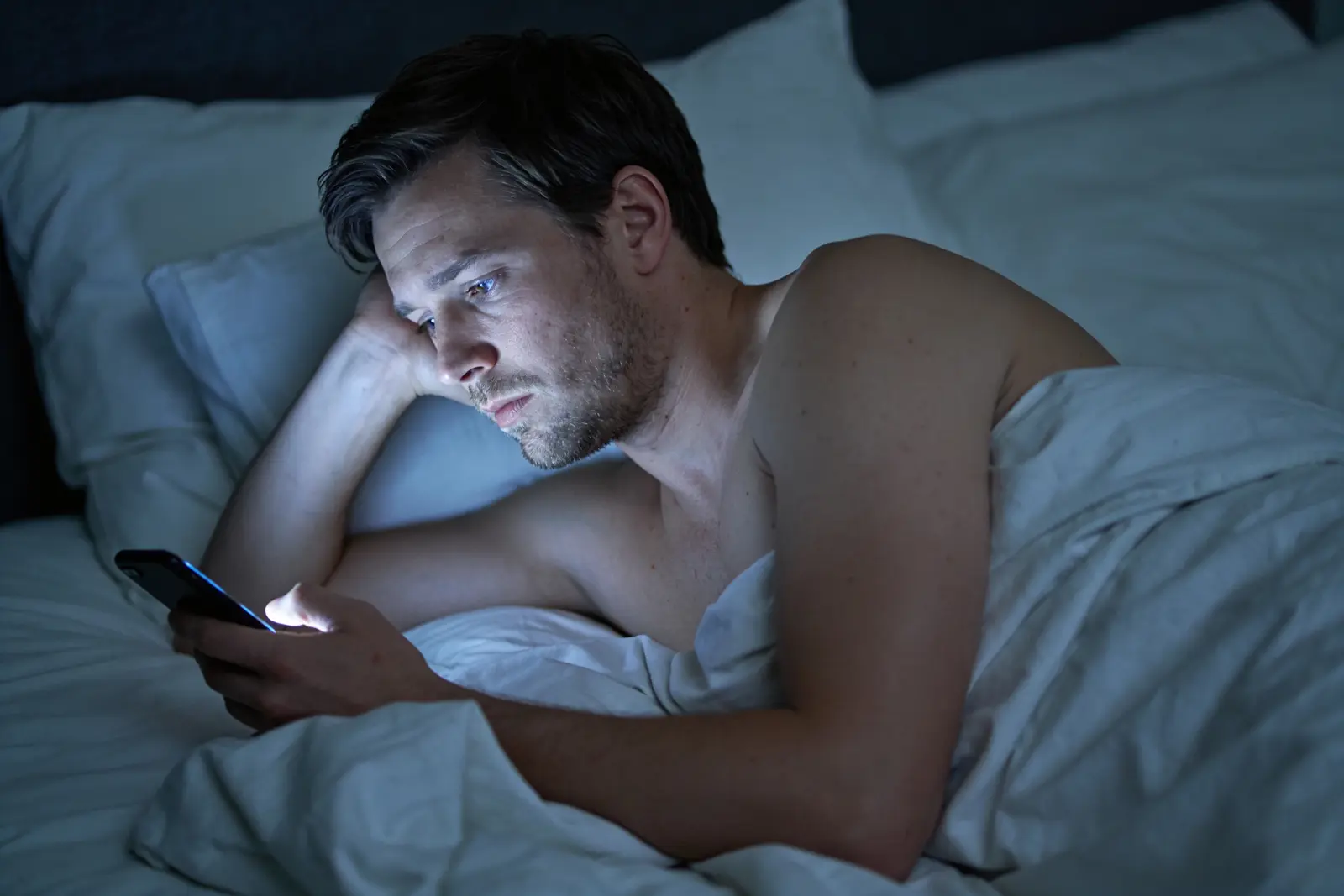
Stimulus control is the other half. Out of bed if you’re not asleep in twenty minutes, no phones in bed, no working in bed. If you’ve spent a year scrolling in bed, your brain has learned that bed is for stimulation, and CBT-I retrains that one cue at a time. None of it’s glamorous, but the protocol works.
Trazodone, 25-100mg
Off-label sleep aid most psychiatrists reach for first. Not addictive, no next day fog at low doses. Best for the people who fall asleep fine but can’t stay asleep at 3 AM, which is most people who come in for sleep. Worth knowing the sleep-medicine guideline actually gives it a weak thumbs-down, the RCT data is thin, but it stays the common first reach in real practice and that gap is just honest to name.
CBT-I, 6 to 8 weeks
The one that actually sticks when meds get dropped. Sleep restriction, stimulus control, cognitive work on the 3 AM catastrophizing. Apps like Sleepio and CBT-i Coach deliver a real version if a therapist isn’t accessible.
The unsexy three
No caffeine after noon. No alcohol within three hours of bed. Bedroom under 68 degrees. None of these is glamorous, all of them keep showing up in the data anyway.
Ambien and the rest of the prescription sleep meds have a role for short-term stuff… jet lag, a death in the family, the week after surgery. Not a long-term solution. Tolerance builds, the architecture they produce is shallower than natural sleep, so you wake up technically rested but missing slow wave time. They also have a complicated relationship with sleepwalking, sleep eating, and the occasional 2 AM email the patient doesn’t remember sending the next morning, which is funny exactly once and then it’s just a problem.
Why sleep hygiene articles don’t fix anyone
You’ve read the list. Cool dark room, no screens, same bedtime, no caffeine after lunch, magnesium, mouth tape if you’re feeling spicy. Most of it’s correct and almost completely useless for somebody in an actual sleep crisis.
Sleep hygiene is preventive medicine. It works for people whose sleep is mostly fine and who want to optimize, it doesn’t work for someone whose cortisol curve is upside down, whose bed has become a place of dread, who’s been awake at 3:14 AM for six months straight. Telling that person to take a warm bath and put their phone in the kitchen is like telling somebody with a broken leg to wear better shoes… technically not wrong, also nowhere close to the actual problem.
The other reason hygiene tips fail is that they treat sleep like a behavior. Sleep is a physiological state your body enters when the conditions allow it. You can’t will yourself into it… the harder you try, the more your stress system fires, which is the opposite of what sleep onset requires. Trying to sleep prevents sleep, which is a deeply annoying piece of how human brains work.
What actually works is removing the obstacles. The anxiety. The schedule. The alcohol you don’t think is affecting you but is. The news at 10 PM. Some of those are fixable, some aren’t. The ones that aren’t usually need medication or a real CBT-I run to compensate, and that’s the actual menu.

The order of operations
If you’re sleeping less than six hours and have been doing it for more than a month, sleep is the first thing to fix, not the third, and not after you try one more therapist, because almost no psychiatric intervention works well on top of a chronically sleep deprived brain. The antidepressant won’t work the way it should, therapy won’t stick because the part of sleep that consolidates learning is the part you’ve been cutting, and the lifestyle changes won’t generate the dopamine they’re supposed to because dopamine signaling itself gets altered by sleep loss. The whole machine is built on top of the sleep, which is one of those facts that’s annoying to hear and continues to be true anyway.
Fix the sleep first, even imperfectly. Trazodone, CBT-I, an honest look at the alcohol and the caffeine and the 11 PM screen time, a sleep study if there’s any chance of apnea (where you stop breathing repeatedly through the night because your airway collapses, which is more common in guys than the general population realizes). Then re-evaluate the depression and the anxiety and the focus problems. Half of what was on the problem list won’t be there anymore. The other half is treatable in a brain that’s actually online for it.
The guys who get better stop treating sleep as the thing they’ll get to once everything else calms down, because the everything-else doesn’t calm down on its own, the sleep is how it calms down. Which is annoying news if you were hoping the answer was something more interesting than going to bed earlier, and also continues to be the answer.