An IV skin-and-beauty drip is, almost without exception, a bag of saline with some combination of vitamin C, B vitamins, biotin, and (depending on the…
Sections
An IV skin-and-beauty drip is a bag of saline with some combination of vitamin C, B vitamins, biotin, and depending on the clinic, glutathione or NAD+. You settle into a chair for forty-five minutes, somebody in scrubs looks after you, the room is calm, and you walk out feeling taken care of. People love them, and it’s not hard to see why. The whole thing is built to feel good, and feeling good is a perfectly fine reason to do something.
This corner of the industry got big after the influencer wave hit aesthetic medicine, and it kept growing because the experience delivers. You book it, you show up, somebody competent runs the line, and for once an hour belongs to you. That counts for a lot, and the chemistry in the bag is real too. Here’s what’s actually in it and what people reach for it for, straight, so you can pick what’s worth your money.
What’s actually in the bag
The big four, in roughly the order they show up on a menu:
Vitamin C, usually 5 to 25 grams. Orally your gut caps absorption at a couple hundred milligrams (Levine et al. 1996), so an IV puts more of it into your bloodstream than a pill ever will. It’s the classic antioxidant, and people run it for skin brightness, immune support, and a general post-drip lift. If you like how you feel on it, that’s a real reason to keep it on the menu.
Biotin is the hair-skin-nails vitamin, and it’s a staple of beauty drips for exactly that reason. One genuinely useful thing to know going in, more practical than cautionary: high-dose biotin can throw off thyroid and troponin blood tests for a day or two, so just tell whoever’s drawing your labs that you’re taking it. Easy to work around once it’s on the table.
Glutathione is a beauty-drip favorite, and it’s easy to see why. It’s the body’s own master antioxidant, the molecule your cells already lean on to handle oxidative stress, and people run it for brighter, more even-looking skin and that general lit-from-within thing. One thing worth knowing going in: there’s no FDA-approved injectable glutathione product, so what you’re getting is compounded, which just means it’s worth going to a clinic that sources from a reputable pharmacy and runs a clean operation. Past that, it’s an antioxidant a lot of people genuinely like and keep coming back for. If you like how your skin looks and feels walking out, that’s the whole point of the chair.
NAD+ is the newest entrant, sold for energy and anti-aging. It’s a coenzyme your cells use to make energy, the science on NAD biology is genuinely interesting, and people who run it tend to be loyal to it. One practical tip: pushed in fast it can burn or make your chest feel tight, so if that happens, ask them to slow the drip down. It eases right up, and a slow NAD+ drip is a much nicer hour.
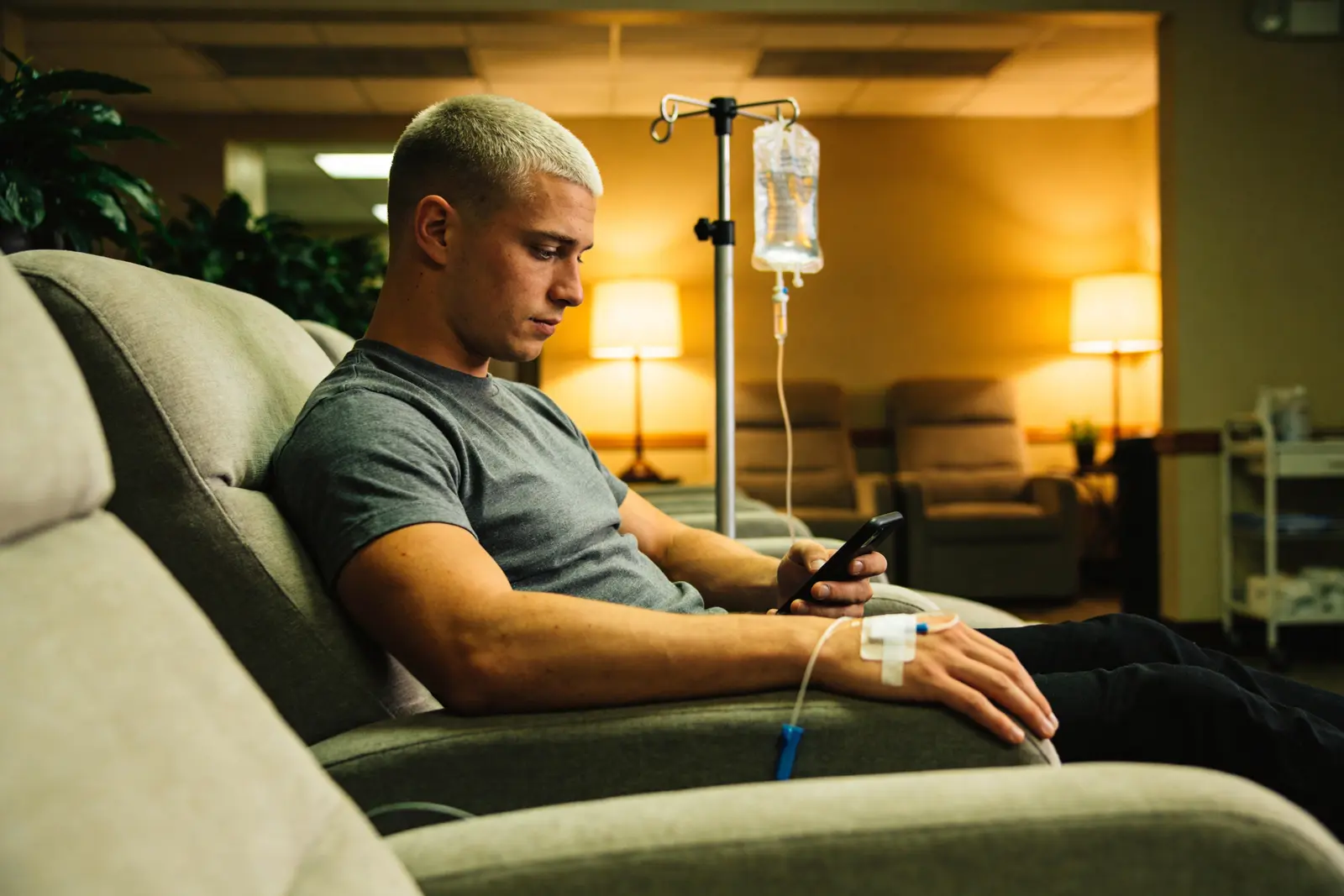
Part of what you’re buying is the hour
Ask a regular what keeps him coming back and the chemistry is only half the answer. The other half is the hour itself. Slack doesn’t follow him into the chair, the nurse is kind, the room is dim, his phone is out of reach. Meditation apps felt like one more thing to fail at. The drip doesn’t ask anything of him, it just gives him somewhere to be still.
That’s worth naming, because it’s a real part of the value and nobody puts it on the menu. In a culture where rest needs a receipt, an appointment makes it easier to actually take the rest. The bag and the hour are both doing something, and there’s nothing wrong with paying for a setup that finally gets you to slow down.
The chemistry, the kind nurse, the dim room, and the phone-free hour are all part of the package. You’re allowed to like the whole thing.
The skin-care basics worth pairing it with
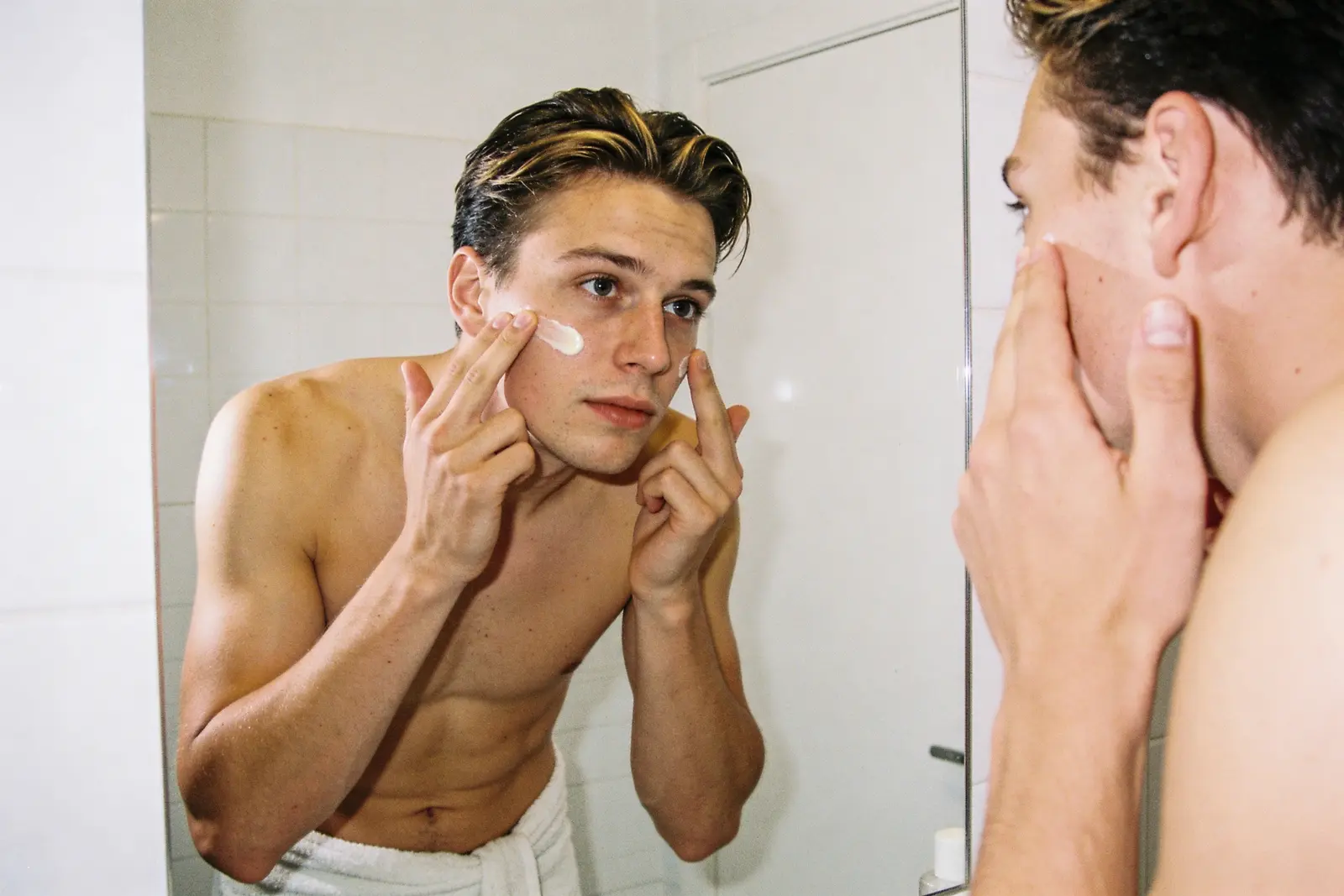
Whatever you’re doing in the chair, a few boring things move skin more reliably than anything else in dermatology, and they cost almost nothing. Stack them under the fun stuff and you get the best of both.
Sunscreen. SPF 30 or higher.
The single biggest intervention for skin aging that exists. UV damage drives photoaging, pigmentation, and most skin cancers. Daily use, not just at the beach. Reapply if you’re outside.
A retinoid
Tretinoin 0.025 to 0.05%, or adapalene OTC. Decades of trial data for fine lines, texture, pigmentation, and acne. Start two nights a week. Expect six months before you see the change.
Sleep, no smoking, treat the actual condition
Seven to eight hours. Not smoking. And if you’ve got rosacea or eczema or hormonal acne, treating that condition will change your skin more than almost anything else.
For hair specifically, the things with the most data behind them are finasteride and minoxidil, decades of randomized trials, and worth knowing about if hair is the actual goal. And if something like rosacea or melasma is what’s bugging you, a dermatologist can often sort it out fast. None of that competes with the drip, it’s just the foundation underneath it.
Go somewhere legit
The one thing that actually matters with any IV is where you get it. A clean clinic with real medical oversight, a pharmacy it trusts, and staff who know what they’re doing covers the part worth covering. Pick a place like that and you’ve handled it, same as you would for anything that involves a needle.
What I tell people who ask
If you like the drip, get the drip. The appointment is yours, the experience is real, and an hour of being looked after in a calm room is worth something on its own. Run the vitamin C, the glutathione, the works, if that’s what you enjoy and you can afford it.
And if better skin is the actual goal, the cheapest, most reliable wins are still a dermatologist, a tube of tretinoin, and a sunscreen you’ll actually use, under $150 all in and the change shows up in photos over six months. Do both. The drip for the hour and the antioxidants, the basics for the long game.
Sources
- Hughes MC, Williams GM, Baker P, Green AC. Sunscreen and prevention of skin aging, a randomized trial. Ann Intern Med, 2013, 158(11), 781-790. PMID 23732711. (Daily sunscreen retarded visible skin aging over 4.5 years)
- Kang S, Krueger GG, Tanghetti EA, et al. A multicenter, randomized, double-blind trial of tazarotene 0.1% cream in the treatment of photodamage. J Am Acad Dermatol, 2005, 52(2), 268-274. PMID 15692472. (Topical retinoid improved fine lines, pigmentation, and texture versus vehicle)
- Adil A, Godwin M. The effectiveness of treatments for androgenetic alopecia: a systematic review and meta-analysis. J Am Acad Dermatol, 2017, 77(1), 136-141. PMID 28396101. (Pooled randomized data showing minoxidil and finasteride promote hair growth in male pattern hair loss)
- U.S. Food and Drug Administration. Biotin interference with troponin lab tests and assays subject to biotin interference. FDA in vitro diagnostics page. (Biotin from supplements can cause falsely low troponin and abnormal thyroid results)
- Levine M, Conry-Cantilena C, Wang Y, Welch RW, et al. Vitamin C pharmacokinetics in healthy volunteers: evidence for a recommended dietary allowance. Proc Natl Acad Sci U S A. 1996;93(8):3704-9. PMID 8623000. (Oral vitamin C absorption is essentially complete at 200mg and bioavailability declines at higher single oral doses)
How to use this page
IV Skin and Beauty sits in the messy overlap between body, mood, sleep, sex, hormones, habits, and shame. That's why the answer is usually not one lab, one supplement, or one motivational speech.
What to track
Track timing, frequency, sleep, stress, alcohol, cannabis, exercise, medications, relationship context, and whether the problem is getting better, worse, or just louder in your head. The pattern matters more than a single bad week.
What to bring into care
A useful visit separates medical risk, performance pressure, habits, and mental health instead of throwing them into one bucket. Bring the details that feel awkward, because those are often the details that make the plan more accurate.
What would make it a poor fit
A poor fit is any plan that turns a complicated pattern into one magic lever. More testosterone, less porn, one supplement, one injection, one lab, or one pep talk may sound clean, but real bodies rarely cooperate that neatly. The plan has to match the pattern, not the marketing.
What counts as progress
Progress usually looks boring before it looks impressive. Better sleep, fewer spirals, more reliable function, less avoidance, steadier sex, less shame, and clearer follow-through all count. The metric isn't whether the topic feels less awkward. The metric is whether life gets less organized around the problem.
Why timing matters
Timing matters too. A single bad night, awkward week, or weird lab value can start a spiral. A pattern that repeats across weeks is more useful than one dramatic data point.
When the plan should change
The plan around IV Skin and Beauty should change when it keeps chasing one explanation while the pattern keeps pointing somewhere wider. Sexual function, pain, weight, sleep, hormones, mood, confidence, relationship strain, alcohol, cannabis, and medication side effects can all feed the same loop. If the plan only treats the loudest part, the quieter drivers may keep the problem alive.
How to check whether it's working
A useful checkpoint is specific without becoming obsessive. Track frequency, context, sleep, stress, substances, medication timing, exercise, and what happens after a setback. The goal isn't to gather perfect data. The goal is to stop making a whole identity out of one bad night, one lab value, or one week where the body didn't cooperate.
What this page can't do
Public men's health writing has to be careful because shame sells easy answers. A page can help separate medical risk, performance pressure, habits, and mood. It can't replace an exam, labs when appropriate, medication review, or a conversation honest enough to include the details that feel embarrassing. Those details are often the ones that make the plan work.