Sections
Performance anxiety doesn’t show up the way the name suggests it does. When people hear it they think about sex, specifically about a guy who can’t get hard with a new partner or who finishes in ninety seconds and spends the next week catastrophizing… that’s real, and we’ll get there. But the bedroom version is just the one with the brand name, the category itself is bigger and most of it has nothing to do with your dick.
Performance anxiety is what happens when your nervous system decides you’re being judged and dumps stress hormones into a situation that needs fine motor control, fluent speech, sustained attention, or, yeah, an erection. Your hands shake, your mouth goes dry, the front of your brain that’s supposed to be running the show gets less blood. You perform worse, your brain logs that as proof the threat was real, the next try is worse. The loop is the same whether the task is a sales call, a free throw, a first date, or the third Christmas in a row where your wife’s brother asks what you’re doing with your career.
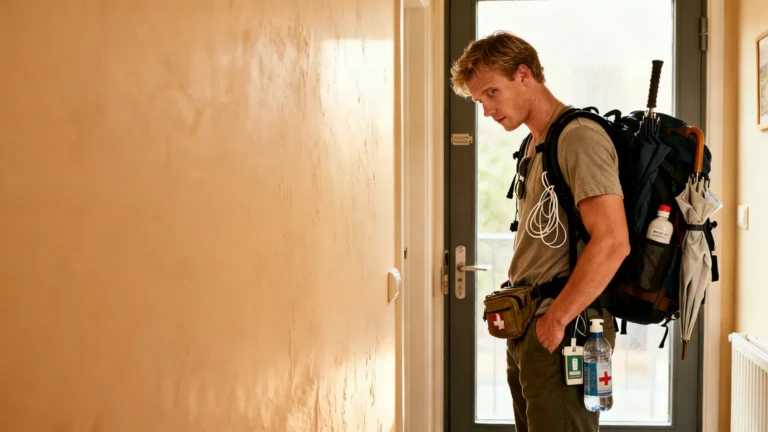
For a lot of guys this is a low background hum that never quite turns off, anxious about the job, about being a decent partner, about being a father who isn’t quietly screwing his kids up, about the friend group noticing that the cars and houses are pulling ahead of yours. Most of these guys don’t call it anxiety, they call it being responsible. They’ve been running on it so long they don’t remember what the baseline used to feel like, and they’d rather have a heart attack than admit they’re stressed.
The four arenas where this lands
Work is the most common version. The 38-year-old VP who hasn’t slept through a Sunday night in two years. The surgeon who’s done four thousand of the same procedure and still throws up before the first case of the day. The lawyer billing 2200 hours a year, sure the partners are about to figure out he’s a fraud. You can build an entire career out of performance anxiety and a lot of guys do, then they can’t access any evidence that they’re succeeding because the alarm doesn’t let them sit with a win for more than a few minutes before it’s already cooking the next thing.
Sex is the one with the brand name. The mechanism is unkind here… getting an erection requires parasympathetic tone, which is the “rest and digest” side of your nervous system, the opposite of the “fight or flight” state your body enters when it’s worried about failing. You can’t will an erection into existence, you can only stop blocking one, which is a different sentence. Once a guy has lost an erection in front of a partner he cares about, the next time he’s in that bed his brain is monitoring instead of feeling, and monitoring is the death of arousal. This one comes up most often in newly-divorced guys in their forties and fifties, and in guys whose porn use has trained them to a level of stimulation real life partnered sex doesn’t match. SSRI side effects make it worse, alcohol past the second drink makes it worse, and the rehearsing-it-in-your-head-all-day before the date makes it worse.
Sports is the cleanest version because the failure is visible to everybody watching… the free throw, the second serve, the kick. The yips in golf and baseball. Athletes have been the population most willing to take medication for this the longest, which is partly why we know what we know about the propranolol piece coming up in a minute.
Social is the most disabling because it never ends. Public speaking, meeting your partner’s parents, the office party where you’re supposed to small-talk with people whose names you forgot the last time you met them. The kind of guy who comes in for this often runs a job site or a sales team or a whole company without breaking a sweat, then can’t sit at a round table of ten with their wives. Same nervous system, just trained on different rooms.

The propranolol question
Propranolol is a beta-blocker that’s been around since the sixties, originally for blood pressure. In the seventies, classical musicians figured out that 10 to 20mg an hour before a recital killed the hand tremor and the racing heart without dulling them mentally. The double-blind trials in performers backed that up (Brantigan et al. 1982), though the broader meta-analysis across anxiety disorders found the formal evidence base thinner than the clinical reputation suggests (Steenen et al. 2016). Concert orchestras have quietly run on it for fifty years, so have trial lawyers and surgeons and a lot of people you’ve watched on television, which is the kind of thing nobody puts on the program.
It works on the peripheral nervous system. It blocks the adrenaline receptors in your heart, your hands, and your gut. You still feel nervous in your head but your body doesn’t broadcast it… your voice doesn’t shake, your hands don’t tremor. And because a lot of performance anxiety is the feedback loop between noticing your body freaking out and getting more anxious because your body is freaking out, killing the body half breaks the loop, which sometimes is enough.
You can’t will an erection, and you can’t will a steady hand. You can only stop blocking the ones your body would otherwise produce.
I prescribe it situationally, 10 to 40mg, taken sixty to ninety minutes before the thing. Not daily, not as a maintenance medication. It’s a tool for the wedding toast, the keynote, the first three dates after a divorce. Not addictive, not a controlled substance, side effects are usually mild like occasional fatigue or cold hands, and it’s contraindicated in asthma and some heart conditions, which is why you need an actual doctor and not the internet to start it. For sexual performance anxiety the evidence is messier than for the stage-fright version, but plenty of guys have used it successfully for the first few encounters with a new partner until the loop breaks on its own.
SSRIs (the most common antidepressant class, the Lexapro / Zoloft / Prozac family) play a different role. If the performance anxiety is part of broader anxiety that’s running all the time, sertraline at 50 to 100mg or escitalopram at 10 to 20mg brings the whole baseline down over four to six weeks. The catch is the sexual side effect profile, which can absolutely create the exact problem you came in to fix, so this is a conversation, not a default prescription. And worth saying out loud, if you want the medication after we’ve talked through the trade offs, you get the medication. I’m a provider, not a parent, and the appointment isn’t mine.
Why avoidance keeps winning
The kind of guy who keeps skipping the holiday dinner six years in a row is doing it because each year the relief he feels at not going is instant and large. The cost (his wife went alone again, his employees noticed, his world got smaller by one notch) shows up in pieces over the months after, and no single moment of it feels bad enough to undo the avoidance. Brains are wired for the immediate, avoidance always wins on the immediate, that’s why it’s the engine of every anxiety disorder we treat. Explains why this stuff keeps showing up in the office.

In the work version it shows up as overworking, which is itself avoidance dressed up as a virtue. If you’re answering email at midnight you don’t have to find out whether your output is good enough, because you can always tell yourself you haven’t given it your full effort yet. In the sex version, guys stop initiating, then stop dating, then build a story about being too busy, then about preferring it that way. In the social version it’s the guy who calls himself an introvert, which is sometimes the actual truth and sometimes just a polite word for “I’ve been avoiding rooms so long that walking into one feels physically dangerous.” Both are real, the distinction matters, and you generally know which one you’re if you’re honest with yourself for thirty seconds.
Propranolol
10 to 40mg, an hour before the event. Kills the tremor and the pounding heart without dulling the part of you that has to actually do the thing. Not daily. Not addictive. Talk to a doctor if you have asthma or any heart history.
SSRIs if it’s everywhere
Zoloft 50 to 100mg, Lexapro 10 to 20mg. Four to six weeks before you feel real benefit. Watch the sexual side effects. Worth it if the anxiety is generalized, not just on stage.
Exposure, graded
Do the thing, smaller version, more often. Toast at a family dinner before the wedding. Sex with the lights dimmed before the lights out. Propranolol buys you the first few reps. You still have to take them.
What’s nice to hear, since most of this post has been about what the anxiety costs you
The guys who actually treat this almost always get back something they didn’t expect, which isn’t a measurable performance improvement (their kid still drops the second serve, their toast is still slightly wobbly) but is the hours back. The three days before the meeting where they used to be unable to enjoy a weekend because they were running the meeting in their head, those hours come back. The eight months of declined invitations stop being eight months. The sex they were talking themselves out of trying actually happens. The cost of performance anxiety is almost never the occasional bad performance, it’s the rehearsal time. Treating it gives the rehearsal time back, which turns out to be most of the actual time, and a lot of guys describe that as feeling like they got their life back at the same volume they remember it.

What changes when guys actually treat this
The version that comes up most often goes something like this. Say you’ve got a guy who lands on 20mg of propranolol before social events plus six months of CBT focused on graded exposure. He goes to the dinner that December, doesn’t love it, stays an hour and a half, leaves. The next year he stays for the whole thing. What he didn’t expect was how much energy he got back from not running the anticipatory loop for three weeks before every event. The loop had been costing him more than the dinners ever would have, and the year he stops paying that tax is the year he starts noticing he can pay attention to his kids again.
That’s what I tell guys in the chair. The cost of performance anxiety is almost never the occasional bad performance, it’s everything around it. The three days before the meeting, the eight months of avoidance, the sex you didn’t have because you talked yourself out of trying. Treating it doesn’t make you a measurably better performer, it gives you back the hours you spent dreading the performance, which turns out to be most of the hours. You don’t have to be perfect at the thing, you just have to be willing to do it badly enough times that your nervous system updates its file. Medication makes those reps survivable. The reps themselves are still on you and there’s no medication that does them for you.
10 to 40mg, an hour before the event. Kills the tremor and the pounding heart without dulling the part of you that has to actually do the thing. Not daily. Not addictive. Talk to a doctor if you have asthma or any heart history.
Zoloft 50 to 100mg, Lexapro 10 to 20mg. Four to six weeks before you feel real benefit. Watch the sexual side effects. Worth it if the anxiety is generalized, not just on stage.
Do the thing, smaller version, more often. Toast at a family dinner before the wedding. Sex with the lights dimmed before the lights out. Propranolol buys you the first few reps. You still have to take them.
| Feature | Common comorbidity | Clinical note |
|---|---|---|
| Generalized anxiety disorder | Performance anxiety is often the presenting edge of constant background worry | If anxiety is everywhere (not just on stage), SSRI is the right tool, not just propranolol PRN |
| Erectile dysfunction (psychogenic) | Monitoring-instead-of-feeling loop; very common in newly divorced men 40-55 | Parasympathetic state required for erection; anxiety activates sympathetic; the loop feeds itself |
| Major depression | Avoidance pattern over years leads to social isolation; isolation deepens depression | Treating depression often partially improves performance anxiety; may need targeted work too |
| Alcohol use disorder | Alcohol used as social lubricant; tolerance builds; anxiety rebounds worse on days off | Stop alcohol for 2 weeks first; baseline anxiety may be mostly alcohol rebound |
| ADHD | Impulsivity and poor performance regulation misread as performance anxiety | Treat ADHD first; residual anxiety after stimulants is a cleaner target |