Sections
A lot of men hear pelvic floor and immediately think kegels, which is how this whole topic gets dumbed down fast, because the pelvic floor is a real structure that can affect erections and ejaculation and some guys do get better when they train it… but some men are dealing with a pelvic floor that’s already too tense, too guarded, too switched on, and in that version more squeezing can make the whole thing worse.
The internet handles this badly, one camp acts like pelvic floor work is fake woo, the other acts like every sexual problem is just a weak muscle that needs more reps, and both camps are wrong, which you’d know if you looked at the actual research for five minutes.
What the pelvic floor actually does
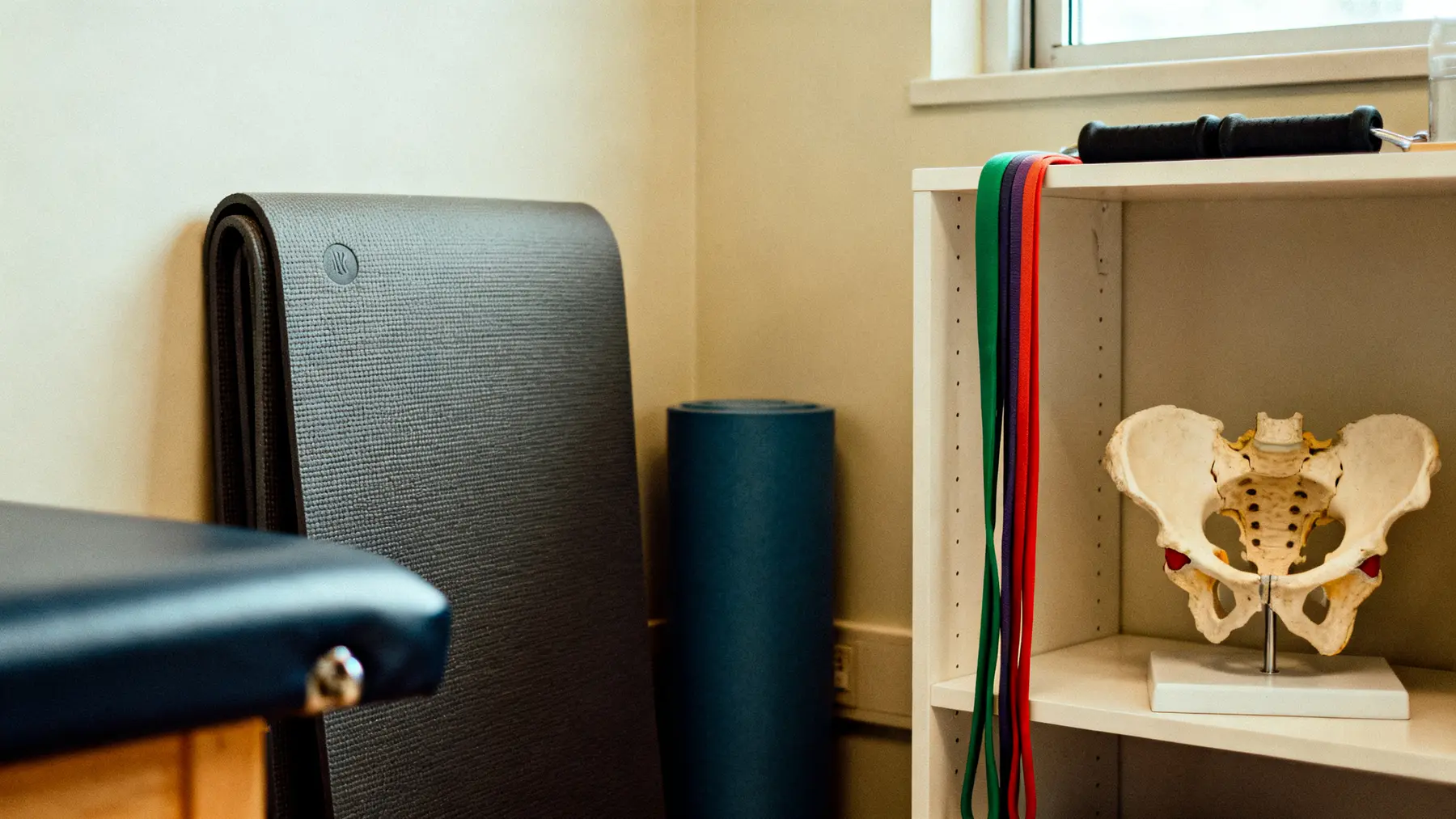
The male pelvic floor is a sling of muscles at the base of the pelvis, and some of those muscles help compress veins and support rigidity during erection while also helping coordinate ejaculation, urinary control, and the feeling of letting go versus bracing up, so yes, in a literal mechanical sense, this area can matter a lot for sex… but it’s one moving part in a bigger system that also includes blood flow, nerve signaling, arousal, anxiety, pain, sleep, hormones, and whatever habits you’ve built around sex, so if the rest of the system’s a mess, doing a hundred squeezes a day isn’t some magic override.
When kegels can actually help
There’s real evidence here, a 2004 randomized trial found pelvic floor exercises plus biofeedback improved erectile function compared with lifestyle advice alone, and a 2019 systematic review found pelvic floor muscle training appeared effective for both erectile dysfunction and premature ejaculation across the small trials that exist.
The less exciting part is that the evidence base is still pretty thin, the review found only ten trials, study quality was low to moderate, and the protocols were all over the place, so you can say pelvic floor training looks useful for some men, but you can’t honestly say we’ve pinned down the perfect program or that every guy with ED or PE should start doing kegels on his living room floor tonight.
When more squeezing is the wrong move
This is the part men miss, some pelvic floors aren’t weak, they’re overactive, tight, guarded… the way a jaw stays clenched even when nothing’s happening. In that state the problem isn’t failure to contract, it’s failure to relax.
- Kegels help weak pelvic floors, not tight overactive ones.
- Pain, urgency, constipation, and painful ejaculation change the plan.
- Relaxation work and pelvic floor PT can matter more than squeezing harder.
Sometimes squeezing harder is the problem, and the first fix is getting the muscle to let go.
You see that pattern in guys with chronic pelvic pain, urinary weirdness, pain after they finish, and some of the men who end up describing hard flaccid symptoms, and the 2022 systematic review on pelvic floor physical therapy for pelvic floor hypertonicity suggests therapy can help in these overactive patterns, but the treatment isn’t just more reps, it’s usually down training, relaxation, manual work, breathing, coordination, and getting the whole alarm system to stop bracing all day.
The newer hard flaccid systematic review makes the same broader point in a different way, the syndrome’s still poorly understood, there’s no standard treatment, and reported management ranges from pelvic floor physical therapy to biopsychosocial treatment and just dealing with it as it comes, which isn’t the picture of a condition where random kegels are obviously the answer.

How this connects to premature ejaculation
Premature ejaculation and erectile dysfunction overlap more than people think, and the meta-analysis on PE and ED found they travel together a lot, which fits what clinicians see in real life, because a guy rushing because he’s afraid of losing the erection is a different problem than a guy who’s chronically clenched and can’t relax, and sometimes both are happening at once.
That’s why pelvic floor work can help some men with PE, if better muscle awareness and control lets you stop sprinting toward the point of no return then that’s useful, but not every case of PE is a weak pelvic floor story, and sometimes the floor is overworking, the anxiety is high, and the whole situation needs less straining and more control over arousal.
Which version is actually your problem
If your symptoms are mainly weaker erections and poor control with no pain or urinary weirdness, then targeted pelvic floor training with somebody who actually knows male pelvic health is a reasonable first move, but if your symptoms include pelvic pain, perineal tightness, constipation, urinary hesitancy, pain after orgasm, a constant sense of clenching, or a hard flaccid type picture, then blindly adding more kegels isn’t a smart first move.
That’s where a pelvic floor PT who actually works with men is worth finding, because they can sort weakness from tension from coordination problems in one session, which is more than any forum thread is going to do for you.
How to tell if you’re overdoing it
If kegels make pelvic pain, urgency, premature ejaculation, or erection anxiety worse, stop treating more squeezing as the answer. A tight pelvic floor often needs coordination, relaxation, breathing, and down-training before strengthening. The same exercise can help one guy and irritate another because they started from different problems.
The useful question isn’t whether kegels help or hurt in the abstract. It’s whether your pelvic floor feels weak, poorly timed, or already clenched. That answer changes the exercise plan, the tempo, and whether pelvic-floor physical therapy comes first.
Bottom line
Kegels aren’t fake, but they also aren’t the answer for every guy, because some men genuinely get better erections and more control from pelvic floor training while other men are already clenched so tight that adding more squeezes just makes an irritated system worse, and if the pelvic floor is part of your problem, you need to know whether it’s weak, uncoordinated, or already wound too tight before you start adding reps.
How to use this page
Kegels: when they help and when they backfire sits in the messy overlap between body, mood, sleep, sex, hormones, habits, and shame. That is why the answer is usually not one lab, one supplement, or one motivational speech.
What to track
Track timing, frequency, sleep, stress, alcohol, cannabis, exercise, medications, relationship context, and whether the problem is getting better, worse, or just louder in your head. The pattern matters more than a single bad week.
What to bring into care
A useful visit separates medical risk, performance pressure, habits, and mental health instead of throwing them into one bucket. Bring the details that feel awkward, because those are often the details that make the plan more accurate.
What would make it a poor fit
A poor fit is any plan that turns a complicated pattern into one magic lever. More testosterone, less porn, one supplement, one injection, one lab, or one pep talk may sound clean, but real bodies rarely cooperate that neatly. The plan has to match the pattern, not the marketing.
What counts as progress
Progress usually looks boring before it looks impressive. Better sleep, fewer spirals, more reliable function, less avoidance, steadier sex, less shame, and clearer follow-through all count. The metric is not whether the topic feels less awkward. The metric is whether life gets less organized around the problem.
Why timing matters
Timing matters too. A single bad night, awkward week, or weird lab value can start a spiral. A pattern that repeats across weeks is more useful than one dramatic data point.
When the plan should change
The plan around Kegels: when they help and when they backfire should change when it keeps chasing one explanation while the pattern keeps pointing somewhere wider. Sexual function, pain, weight, sleep, hormones, mood, confidence, relationship strain, alcohol, cannabis, and medication side effects can all feed the same loop. If the plan only treats the loudest part, the quieter drivers may keep the problem alive.
How to check whether it is working
A useful checkpoint is specific without becoming obsessive. Track frequency, context, sleep, stress, substances, medication timing, exercise, and what happens after a setback. The goal is not to gather perfect data. The goal is to stop making a whole identity out of one bad night, one lab value, or one week where the body did not cooperate.
What this page cannot do
Public men's health writing has to be careful because shame sells easy answers. A page can help separate medical risk, performance pressure, habits, and mood. It cannot replace an exam, labs when appropriate, medication review, or a conversation honest enough to include the details that feel embarrassing. Those details are often the ones that make the plan work.