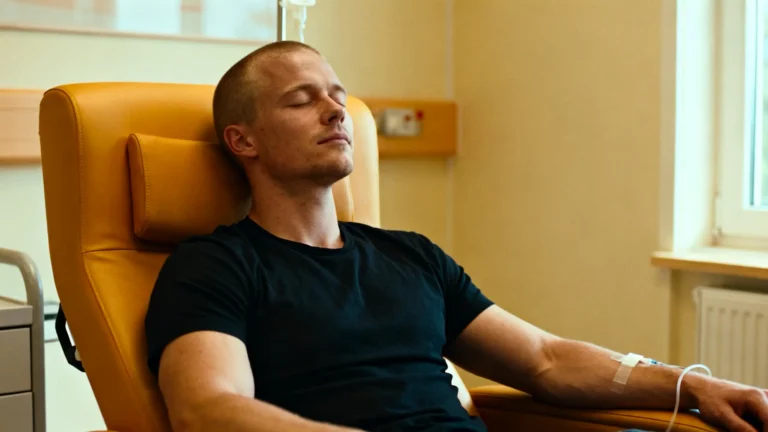
At-home ketamine is the version of this treatment most people end up actually doing.
Sections
At home ketamine is the version of this treatment most people end up actually doing. Less because it’s better than the IV in a clinic, more because it costs less, fits around real life, and meets a lot of patients where they already are, which is on their couch at 7 PM with the dog and a weighted blanket.
The model is straightforward. A clinician evaluates you over telehealth, decides you’re a reasonable candidate, and writes for a compounded sublingual troche or rapid-dissolve tablet that gets mailed to you. You take it at home on a defined schedule, usually twice a week for the first month, then less often. Most programs land somewhere between 50 and 200mg per dose, titrated up from a low test dose. That’s a fraction of what you’d get IV, and the experience is different too… more dreamy, less out-of-body, people describe it as a long warm float with vivid imagery, nothing like the full ego-dissolution of a clinic infusion.
There are two pretty different versions of this in the wild and they’re worth telling apart. The high volume telehealth-only model (Mindbloom, Joyous, Better U, a dozen others) is one. The at home protocol prescribed by a clinician who actually knows you, often as a maintenance step after an in-clinic series, is the other. Both are technically “at home ketamine.” They aren’t the same product, and confusing them is how most of the trouble starts.
What the dose actually feels like
Sublingual ketamine peaks roughly 20 to 40 minutes after you tuck the troche under your tongue and hold it there, you swish the saliva, you don’t swallow until the timer goes off, you spit or swallow the residue depending on what your prescriber tells you. The amount that actually makes it into your bloodstream through the tongue is around 25 to 30 percent of what you put in (Rolan et al. 2014), which is why the oral doses look big compared to IV. The IV bypasses your gut and the mouth doesn’t, so the mouth needs more to hit the same blood level.
At 50mg you’ll feel a mild warmth, some visual softening, music gets interesting in the way it does at the end of a glass of wine. At 100 to 150mg, which is where a lot of programs settle, you’ll get the dreamy state, body feels heavy or floaty, time stretches, internal imagery shows up if you close your eyes. You can usually still get up and walk to the bathroom, though you shouldn’t, because your coordination is off and you’ll feel like you’re walking on a boat. At 200mg and above you’re in territory where the weird-feeling state is real and you shouldn’t be moving around.
Most people find it interesting, sometimes uncomfortable, occasionally beautiful. Recreational it’s not, which is part of why the abuse rate at these doses in clinical use is much lower than the headlines suggest. Nausea is the most common annoying side effect, which is why most compounded formulations include ondansetron (Zofran, the anti-nausea med) or are taken with a Zofran an hour before. Blood pressure goes up a bit. Heart rate goes up a bit. If you have uncontrolled high blood pressure or a history of psychosis, you shouldn’t be doing this at home.
The protocol that keeps people safe
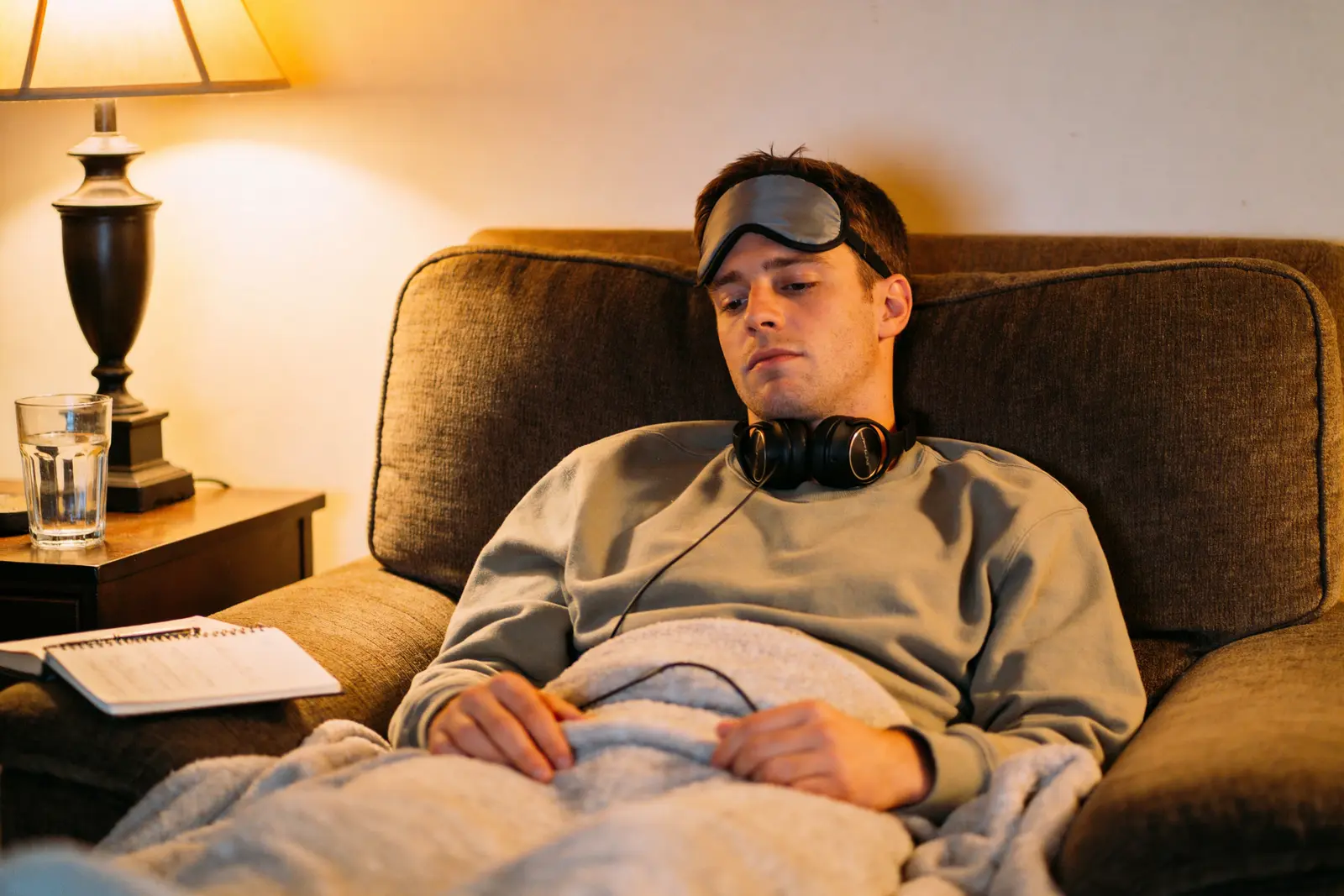
A reasonable at home protocol looks roughly like this. Quiet room. Eye mask. A playlist you’ve heard before so it doesn’t surprise you, a support person physically in the house not on FaceTime, who knows what you took and isn’t going to freak out if you say something weird at minute 35. Phone on do-not-disturb. No driving for the rest of the day, no alcohol, no benzos within a few hours either side. Journal nearby for after, not during.
The integration session is the part most people skip and most people shouldn’t. It’s a telehealth call, usually the day after or two days after, where you talk through what came up. The good prescribers don’t ask if you had a cool trip, they ask what you noticed about how you talk to yourself, what came up about your marriage, what felt different the next morning. Without that step, what you’ve got is a moderately interesting evening on the couch and not much else. The integration is where the dose gets translated into change.
The integration is where the dose gets translated into change.
The structure around the dosing is doing as much work as the dose. Take it away and the troche is just a Tuesday evening.
Where the telehealth-only model gets sketchy
I’ll be direct about this part. The screening at some of the big telehealth-only ketamine companies is, in clinical terms, thin. A 20-minute intake, a checkbox form, and you’re approved. I’ve had patients show up after starting one of these programs who never had their blood pressure checked, never had a real conversation about their substance use history, never got asked about dissociative symptoms or trauma, and were on doses that escalated faster than I’d be comfortable writing.
The pattern that shows up over and over is something like: picture a guy on one of the daily low-dose platforms for about five months who came in for what he thought was an ADHD evaluation, and ten minutes in it’s clear the ketamine has become the thing organizing his day. He takes the troche before bed, and if the package is late from the compounding pharmacy he has a bad week. He stopped seeing his therapist because the ketamine “did more anyway.” He’s still depressed, he’s now also dependent on a drug nobody has ever really sat with him about, and the platform’s response to his check-in form was to offer him a slightly higher dose.
That’s the failure mode. The drug isn’t especially dangerous at these doses on its own. The at home telehealth model is just structurally bad at noticing when somebody is using ketamine to dodge instead of using it to move. The safety nets aren’t there. A clinic-based program has a nurse who sees your face, takes your vitals, notices the third week in a row you’ve gotten worse. A subscription model has a refill button. The refill button is the problem.
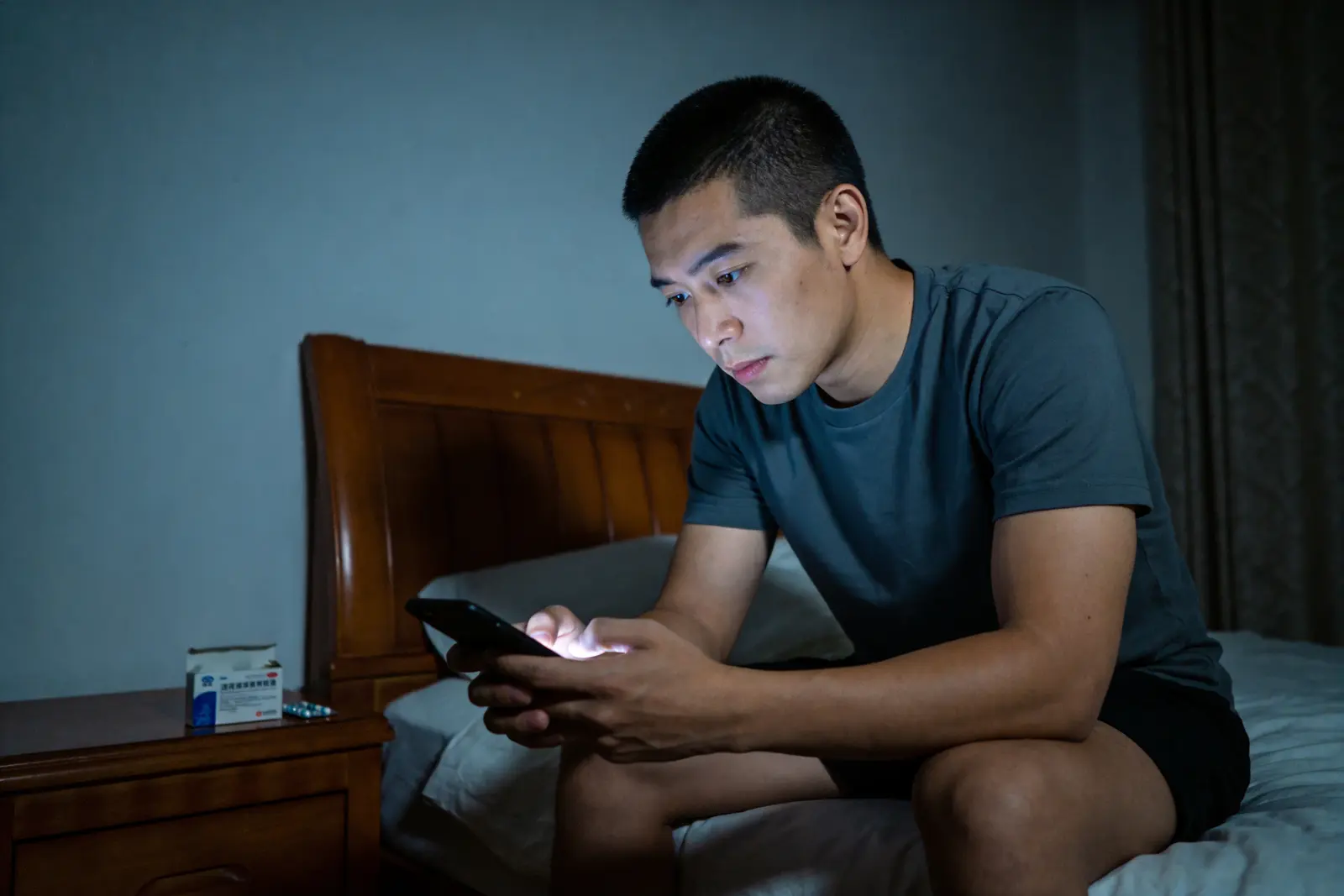
The refill button is the problem.
Who at home actually fits
TRD, stable life
Treatment-resistant depression, failed two or more SSRIs, no active substance use, no psychosis history, somebody at home who’s sober and reachable, working with a therapist already.
Anxiety only, alone
Anxiety without depression responds less well. Living alone means no support person, which matters more than people think. Possible, but the bar for screening should be higher.
Active addiction, psychosis
Active alcohol or stimulant use, history of psychosis or mania, uncontrolled hypertension, pregnancy, recent ketamine abuse. These need in-person care or a different medication entirely.
The patients who do best with at home ketamine usually share a few things. They’ve already tried the obvious meds and gotten partial responses, they have somebody in the house, they have an outpatient therapist they’re already working with so the integration doesn’t fall into a void, they take the protocol seriously which means they don’t try to multitask through the dosing session and they don’t drink afterward.
The patients who don’t do well are the ones using it as a fix instead of a tool, the ones who skip the integration calls and escalate their dose on their own and use it to feel less rather than to feel different. The drug doesn’t care which patient you are. The structure around the drug is supposed to, and the subscription model usually isn’t built to.

What I tell people who ask
If you’ve done two or three antidepressant trials, you’re still depressed, you’ve got a therapist, and you’re stable enough to follow a protocol, at home ketamine is a reasonable next step. Cheaper than IV, lower acuity, fits around a job. Go in with a real prescriber, not just a platform. Ask them how they screen, ask what the integration looks like, ask what happens if it’s not working at week six. If they can’t answer any of those, find somebody else.
If you’re shopping for a subscription that mails you troches indefinitely with no clinical contact between refills, that’s not psychiatric care. It’s a vending machine with a doctor’s signature stapled on it. The drug might still help, or it might quietly become the new thing you can’t function without, and the platform won’t notice either way, which is the part I keep flagging because nobody else seems to.
On the autonomy piece, because this is a controlled substance that comes with a real abuse pattern: my job is to lay out the honest version, your job is to decide. I’m a provider, not a parent. If you want to try it and we’ve worked through the screening honestly, you get the prescription, and if I have reservations I’ll write the prescription with the reservations on the record. Disapproving yes is still yes. What I won’t do is write for it without having had the conversation, because the conversation is half the treatment.
Sources
- Berman RM, Cappiello A, Anand A, et al. Antidepressant effects of ketamine in depressed patients. Biol Psychiatry. 2000;47(4):351-354. PMID 10686270. (Foundational ketamine antidepressant trial)
- McIntyre RS, Rosenblat JD, Nemeroff CB, et al. Synthesizing the Evidence for Ketamine and Esketamine in Treatment-Resistant Depression: An International Expert Opinion on the Available Evidence and Implementation. Am J Psychiatry. 2021;178(5):383-399. PMID 33726522.
- Daly EJ, Trivedi MH, Janik A, et al. Efficacy of esketamine nasal spray plus oral antidepressant treatment for relapse prevention in patients with treatment-resistant depression: a randomized clinical trial. JAMA Psychiatry. 2019;76(9):893-903. PMID 31166571.
- Dean RL, Hurducas C, Hawton K, et al. Ketamine and other glutamate receptor modulators for depression in adults with unipolar major depressive disorder. Cochrane Database Syst Rev. 2021;9(9):CD011612. PMID 34510411. (Cochrane systematic review)
- Rolan P, Lim S, Sunderland V, et al. The absolute bioavailability of racemic ketamine from a novel sublingual formulation. Br J Clin Pharmacol. 2014;77(6):1011-1016. PMID 24977293.
Treatment-resistant depression, failed two or more SSRIs, no active substance use, no psychosis history, somebody at home who's sober and reachable, working with a therapist already.
Anxiety without depression responds less well. Living alone means no support person, which matters more than people think. Possible, but the bar for screening should be higher.
Active alcohol or stimulant use, history of psychosis or mania, uncontrolled hypertension, pregnancy, recent ketamine abuse. These need in-person care or a different medication entirely.