Sections
Ketamine has been around since 1962, doing its boring day job as an anesthetic in operating rooms and battlefield medic kits, and the depression piece is the much newer story. The public conversation around it’s louder than the evidence usually deserves… somewhere between the breathless headlines and the people who treat any psychiatric drug as suspicious, there’s an actual treatment with actual indications and actual limits, and almost nobody is saying that part out loud.
This post is the overview. There are separate, more specific pieces on ketamine-assisted therapy, high-dose in-clinic work, and the low-dose at home protocols. Start here if you don’t yet know what shape of treatment you’re looking at, because the decision tree matters as much as the molecule does, and a lot of the trouble people get into with ketamine starts with picking the wrong delivery system for what they’re actually dealing with.
One thing to say up front. Ketamine sits past the first line. If you haven’t tried therapy, real lifestyle changes, and a couple of standard antidepressants at real doses for long enough, those are where you start. Ketamine is for people who’ve already done the standard stuff and are still suffering. TRD (treatment-resistant depression, which is the technical name for depression that hasn’t moved after two adequate medication trials), PTSD that hasn’t budged after years of work, suicidal thoughts that won’t quit between depressive episodes. That’s the population the data is on.
The fast onset is what makes it useful in the patient who isn’t sure they have six weeks left in them.
How the molecule actually works, without the textbook
The pharm-school version is that ketamine blocks NMDA receptors, which is one specific type of receptor your brain uses for routine signaling, and that blockade triggers a cascade of other changes that ends with your brain getting better at making new connections than it normally is. Plain version: it shoves the cellular machinery responsible for forming new neural connections briefly into overdrive. The window stays open for a few days to a couple of weeks per session, which is why ketamine is dosed in courses rather than as a one-off, and why what you do with the open window matters more than the drug itself.
What that looks like in real life. People who’ve been stuck in the same depressive groove for five, ten, twenty years sometimes get unstuck within hours. Not the SSRI version of feeling better (SSRIs are the standard antidepressant class, Zoloft and Lexapro and that family) where you wait six weeks to notice the volume coming down. The walls of the rut they’ve been walking in stop feeling impossible to climb. The window doesn’t stay open forever, and most of the meaningful change comes from what people do with it while it’s open, which is the part nobody puts on the brochure because it doesn’t sell.
The dissociation patients have during sessions appears to be part of how the drug works, not a side effect to engineer around. Studies that have tried to separate the antidepressant effect from the weird-feeling experience haven’t had a clean time of it. You feel weird, and the weird isn’t incidental.
One thing that’s nice to hear in a field that mostly disappoints people: when ketamine works, it works fast. SSRIs and the rest of the standard kit take four to six weeks to do anything noticeable. Ketamine sometimes does its thing in days. For people who’ve been waiting in line for the slow drugs to maybe help for the last decade, that speed alone is the part of the story that earns the molecule its place. The fast onset is what makes it useful in the patient who isn’t sure they have six weeks left in them. That’s not nothing.
From battlefield anesthetic to depression treatment
Ketamine was synthesized in 1962 and FDA approved as an anesthetic in 1970. It got heavy use in Vietnam because it doesn’t suppress your breathing the way most anesthetics do, which made it the only anesthetic you could give in a field hospital without a ventilator. It’s still on the WHO essential medicines list. That’s the fifty-year history almost nobody talks about because it doesn’t fit the narrative of a hot new drug.
The depression piece came later. Yale ran a small trial in 2000 giving low-dose IV ketamine to people with depression and watched their scores drop within hours, and the result was so unusual that for about a decade most of the field assumed something was wrong with the study. Replications kept coming back the same. By the mid-2010s ketamine clinics were opening across the country using off-label IV racemic ketamine, and in 2019 the FDA approved esketamine (the nasal-spray version, sold as Spravato) for treatment-resistant depression. First new mechanism for treating depression to get a label in roughly thirty years, which is the kind of thing the field doesn’t quite know how to talk about because it doesn’t fit the SSRI-era story.
Ketamine is past the first line. If you haven’t tried therapy, lifestyle changes, and a couple of standard antidepressants, those are where you start.

Spravato, IV, and the rest of the menu
The regulatory landscape confuses almost everyone, including some referring physicians, so here’s the short version. Spravato (esketamine) is FDA approved, intranasal, must be administered in a certified clinic with a two-hour monitoring period, and is covered by a growing list of insurance plans for TRD. IV racemic ketamine, which is what most ketamine clinics actually use, is off-label… the molecule is the same one anesthesiologists have used for decades, but the FDA hasn’t approved that specific use for psychiatric purposes, which means insurance usually doesn’t cover it. Off-label is a normal part of psychiatric prescribing, just be ready to pay cash.
Beyond Spravato and IV, there’s IM (intramuscular) ketamine, which has a similar profile to IV but easier logistics and slightly less precise dosing, sublingual lozenges or troches for at home protocols at much lower doses, and oral capsules in some boutique programs. Four delivery models, give or take, and they don’t do the same thing. High-dose in-clinic sessions are built around producing a major dissociative experience under monitoring, often paired with therapy. Low-dose at home protocols are closer to a maintenance approach, sub-psychedelic, used between in-clinic sessions or on their own for people who can’t get to a clinic regularly. Picking the wrong one for your situation is the most common preventable mistake in this field right now.
IV or IM, higher doses
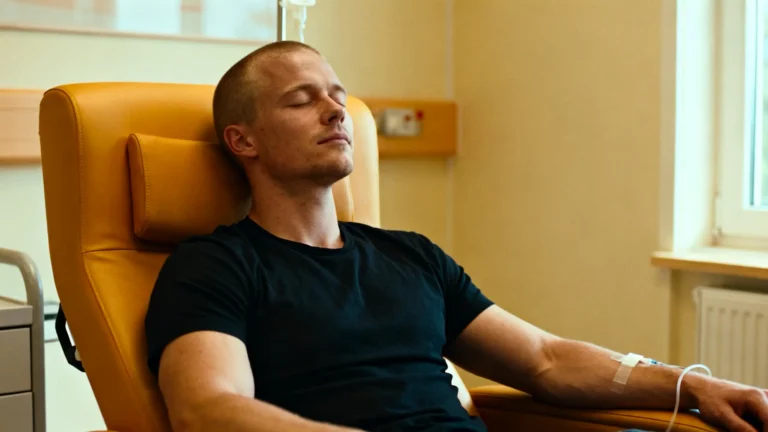
0.5 mg/kg infusion over 40 minutes is the canonical research dose. Six sessions over two to three weeks. Real dissociation, full monitoring, usually paired with therapy.
Spravato (esketamine)
FDA approved for treatment-resistant depression. Twice weekly for the first month, tapering after. Two-hour clinic monitoring. Increasingly covered by insurance.
Sublingual lozenges
Lower doses (often 100 to 400mg dissolved under the tongue), sub-psychedelic to mildly dissociative. Maintenance, not breakthrough. Tighter prescriber oversight because of abuse potential.
Who’s a candidate and who isn’t
The clearest indication is TRD, which is depression that hasn’t responded to at least two adequate trials of standard antidepressants. If you’ve done a real eight to twelve weeks each on a couple of SSRIs and you’re still stuck, you meet the criteria most clinics use. The second clear indication is the suicidality that lingers between episodes, where the rapid onset matters because you can’t ask somebody to wait six weeks for an SSRI to maybe work when they’re not sure they have six weeks. PTSD has solid emerging data, severe anxiety especially the kind tangled up with depression has weaker but real data.
Who shouldn’t get ketamine: anybody with a history of psychosis or a strong family history of schizophrenia (the way the drug acts can trigger or worsen psychotic symptoms in vulnerable people), anybody with uncontrolled high blood pressure or significant cardiac disease because sessions temporarily bump your blood pressure and heart rate, anybody with active alcohol or stimulant use disorders, active ketamine misuse obviously, pregnancy, some liver and bladder conditions since chronic high-dose recreational ketamine use has well-documented bladder toxicity (this is a recreational-use problem, not a clinic-dose problem, but it’s worth screening).
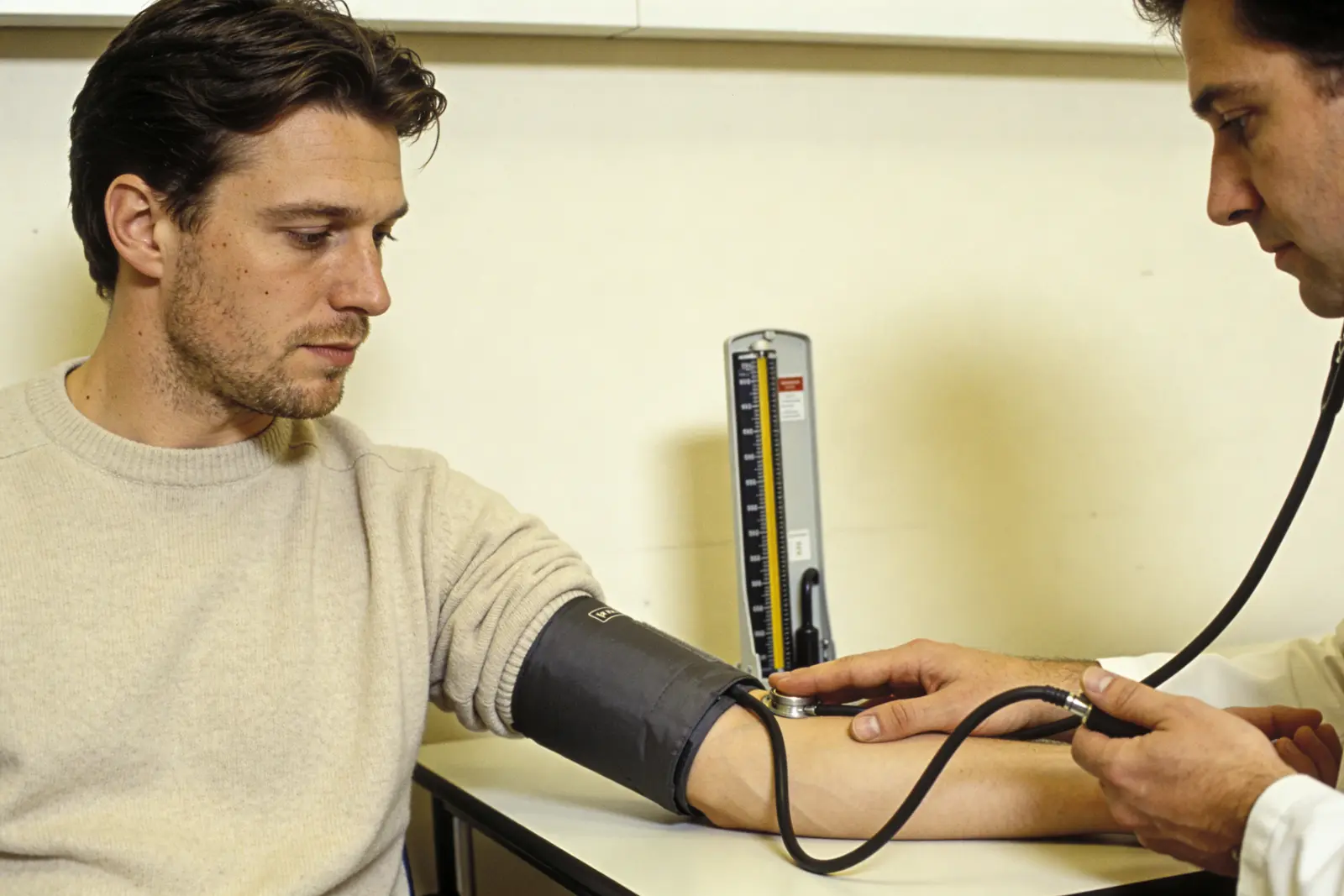
While we’re on the cardiac side: ketamine reliably raises blood pressure and heart rate during a session, which is fine in a healthy thirty five year old and is genuinely fraught in somebody on three blood pressure meds with a history of stroke. Any provider who tells you the cardiac side is no big deal isn’t being honest with you. It’s not no risk. It just needs to be screened for, monitored during, and worked with, not pretended away.
The gray zones: bipolar depression is treatable with ketamine but needs careful watching for mood elevation, older patients with cardiovascular risk factors can often be treated with tighter pre-session screening, and people in active trauma therapy sometimes do better waiting until they’ve built scaffolding with a therapist before adding ketamine in.

The piece nobody puts on the brochure
Ketamine doesn’t replace your personality, doesn’t fix your marriage, doesn’t give you a way out of doing the work. People who use it as a chemical bypass for actually changing their life don’t get the same results as people who use it as a tool alongside the work. What comes up most often is the patient with years of stuck depression who does a six-session IV course and comes back a couple weeks later saying it’s the first time in a long while he’s felt like there was anywhere to go, and the thing that actually changed his year wasn’t the ketamine alone… it was that he also restarted therapy that week and took a new job that summer. The drug didn’t do those things. It made them possible to consider, which is a different and smaller thing than the marketing suggests.
It made them possible to consider, which is a different and smaller thing than the marketing suggests.
The other thing nobody puts on the brochure is what it costs. Coverage for Spravato is improving and patchy. IV is almost always cash, often four to eight hundred dollars per session, and a standard course is six sessions plus maintenance. At home lozenge protocols are usually the cheapest entry point and aren’t right for everyone. If a clinic quotes you a number and won’t talk about whether the cheapest option is actually the right one for what you’re dealing with, that’s a clinic to leave.
If you’ve tried the standard stuff and you’re still stuck, ketamine is a real option to talk through with somebody honest. That doesn’t mean it’s the right tool, it means it’s a real option, and the four delivery models really aren’t interchangeable. The follow-up posts go deep on each one… pick the one closest to your situation.
Sources
- Berman RM, Cappiello A, Anand A, et al. Antidepressant effects of ketamine in depressed patients. Biol Psychiatry. 2000;47(4):351-354. PMID 10686270. (Foundational ketamine antidepressant trial)
- McIntyre RS, Rosenblat JD, Nemeroff CB, et al. Synthesizing the Evidence for Ketamine and Esketamine in Treatment-Resistant Depression: An International Expert Opinion on the Available Evidence and Implementation. Am J Psychiatry. 2021;178(5):383-399. PMID 33726522.
- Daly EJ, Trivedi MH, Janik A, et al. Efficacy of esketamine nasal spray plus oral antidepressant treatment for relapse prevention in patients with treatment-resistant depression: a randomized clinical trial. JAMA Psychiatry. 2019;76(9):893-903. PMID 31166571.
- Kim JW, Suzuki K, Kavalali ET, Monteggia LM. Ketamine: Mechanisms and Relevance to Treatment of Depression. Annu Rev Med. 2024;75:129-143. PMID 37729028.
- Dean RL, Hurducas C, Hawton K, et al. Ketamine and other glutamate receptor modulators for depression in adults with unipolar major depressive disorder. Cochrane Database Syst Rev. 2021;9(9):CD011612. PMID 34510411. (Cochrane systematic review)
0.5 mg/kg infusion over 40 minutes is the canonical research dose. Six sessions over two to three weeks. Real dissociation, full monitoring, usually paired with therapy.
FDA-approved for treatment-resistant depression. Twice weekly for the first month, tapering after. Two-hour clinic monitoring. Increasingly covered by insurance.
Lower doses (often 100 to 400mg dissolved under the tongue), sub-psychedelic to mildly dissociative. Maintenance, not breakthrough. Tighter prescriber oversight because of abuse potential.