Acamprosate (Campral) helps you stay sober after detox, not get you there. Non-addictive, renally cleared, six pills a day. Who it fits and who it doesn't.
Acamprosate, the brand name was Campral, is one of the quieter drugs in the alcohol-use-disorder toolkit, and that quiet is exactly why people get it wrong. It doesn’t stop you from drinking, it won’t make you sick if you drink, and it won’t get you through detox… what it does is help you stay stopped once you’ve already put the bottle down, which is honestly the part where most people slip.
If you’re reading this because you, or a guy you know, white-knuckled the first week sober and then caved around day twenty when the restlessness and the lousy sleep wouldn’t let up, this is the drug aimed squarely at that window. So let’s actually talk about what this drug does, who it fits, and where it falls short, because it’s not magic and I’m not going to pretend otherwise.
What acamprosate actually is
It’s a maintenance medication for alcohol use disorder, full stop. The FDA approved it in 2004 for keeping abstinence going in people who’ve already stopped drinking and want to stay that way.[1] It’s a prescription drug, not a controlled substance, so there’s no DEA schedule on it and no abuse potential to worry about, which already sets it apart from a lot of what gets handed out in this space.
Here’s the line I want burned into your head, because the confusion costs people real money and real relapses… acamprosate isn’t disulfiram. Disulfiram (Antabuse) is the one that makes you violently ill if you drink, the chemical babysitter. Acamprosate does nothing of the kind. You can drink on acamprosate and feel exactly as you would without it, no flushing, no vomiting, no deterrent. It isn’t a punishment drug, it’s a stabilizer for the brain you’re trying to heal.
Acamprosate helps you stay stopped. It’s not detox, and it’s not the drug that makes you sick if you slip… that one’s disulfiram, and people mix them up constantly.
How it works (and where we’re honestly guessing)
Chronic heavy drinking rewires the two big dials in your brain that control how revved-up or calmed-down you feel. Alcohol cranks the GABA system (the brake pedal) and tamps down glutamate (the gas pedal), and your brain, being adaptive, recalibrates to that flood… so when you suddenly take the alcohol away, the brakes are weak and the gas is jammed wide open. That over-excited glutamate state is a big part of why early sobriety feels like crawling out of your own skin.[2]
Acamprosate is thought to settle that imbalance, nudging the glutamate and GABA systems back toward their old set point so the protracted withdrawal (the weeks-long tail of restlessness, bad sleep, low mood, and craving) is less brutal. The best theory we’ve got is that it dampens overactive glutamate signaling at the NMDA receptor, but if we’re being honest the exact mechanism still isn’t nailed down, and the researchers who study it say so plainly.[3]
I’d rather tell you “we’ve got a strong theory and an FDA approval but not a clean mechanistic picture” than wave my hands and pretend the science is tidier than it really is. It works for a chunk of people, the trials back that up, and we’re still arguing about precisely why. Both of those things can be true at once.
Who it’s actually for
The honest answer is that acamprosate fits the guy whose main goal is total abstinence and who’s already gotten through the acute detox, the first few days where the shakes and the danger live. This is a stay-stopped drug, not a get-stopped drug, and it shines in that early-recovery stretch where you’re technically sober but feel like garbage and your brain keeps whispering that one drink would fix it.[4]
It also happens to be a good pick for men whose livers are already beat up, because acamprosate’s cleared by the kidneys, not the liver. Naltrexone, the other common maintenance option, leans on the liver and gets dicey in serious liver disease… so if your labs are ugly from years of drinking, acamprosate sidesteps that problem entirely. The flip side is kidneys, which I’ll get to.
And the part nobody wants to hear… it works best bolted onto actual counseling, a group, a sponsor, something. The trials that show a benefit ran the drug alongside psychosocial support, not instead of it. If your plan is “take a pill and skip the rest of the work,” the numbers say you’re setting yourself up. The drug supports the work, it doesn’t replace it, and most of the men who actually stay sober are doing both.
Starting it, and what the pill schedule really demands
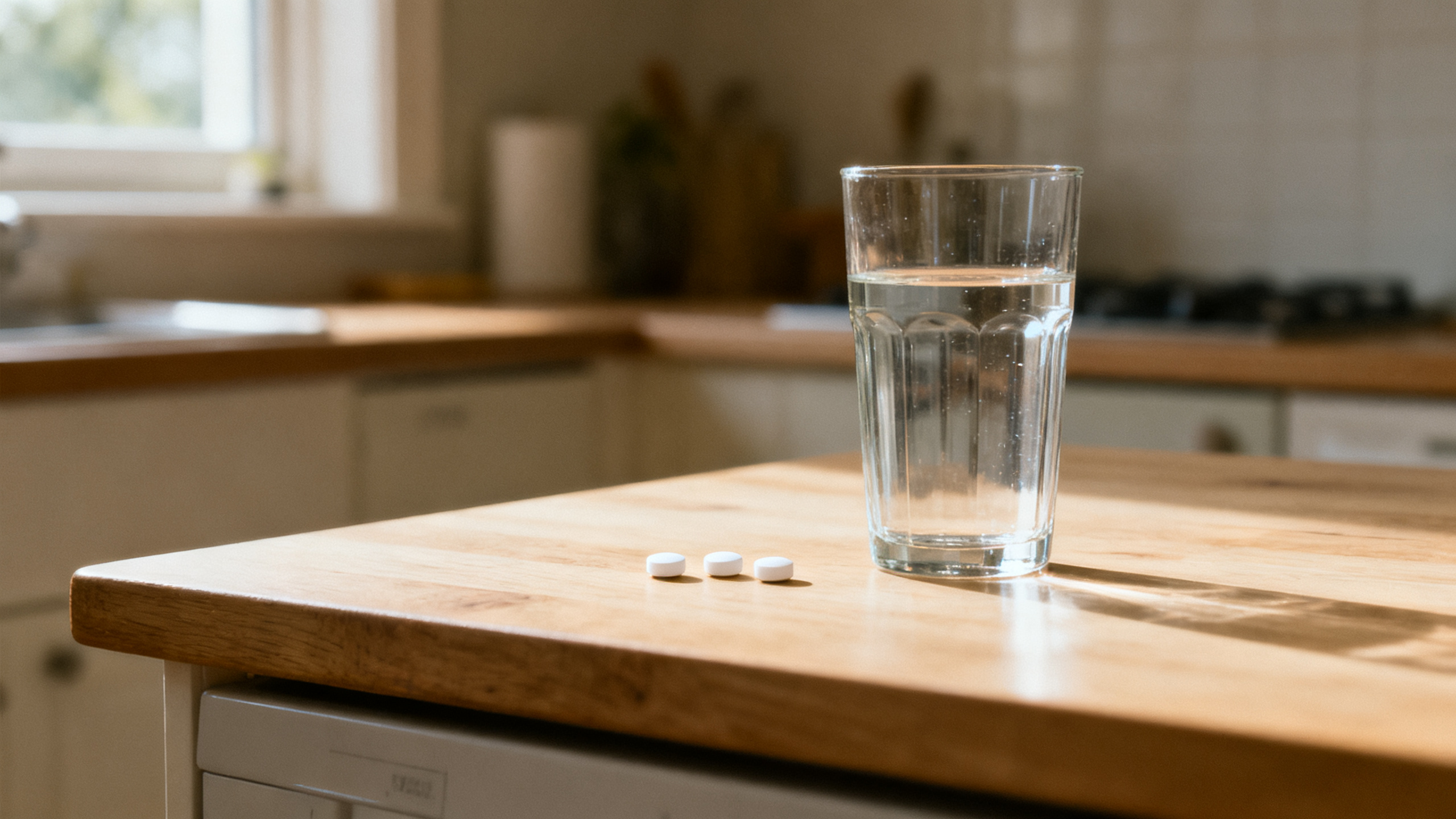
Here’s where I stop being polite about the inconvenience. The standard dose is two 333mg tablets, so 666mg, taken three times a day. That’s six pills a day, on a morning-noon-night rhythm, every single day.[1] No clever once-daily version exists. If you’re the kind of guy who forgets his keys, the lunchtime dose is going to be your nemesis, and I’d rather you know that going in than discover it the hard way.
That adherence burden is the single biggest practical knock on this drug, and it’s not a small one. A medication only works if it’s in your bloodstream, and a midday dose is the one people quietly drop. Pairing each dose with a fixed daily anchor, breakfast, the drive home, brushing your teeth at night, is the difference between this working and this gathering dust in a cabinet.
You usually start it as soon as you’ve achieved abstinence, ideally right after detox, and you keep going even if you do slip. A slip isn’t a reason to quit the drug, it’s a reason to keep taking it and get back on track, because the whole point is the long game. The first couple of weeks are mostly about building the habit of the schedule… the calming effect on craving and restlessness tends to creep in over weeks, not hit you on day two.
The side effects people actually notice
Good news first, acamprosate’s one of the better-tolerated drugs in psychiatry. It doesn’t get you high, it doesn’t cause dependence, and it doesn’t mess with your liver. The most common complaint, by a mile, is diarrhea, and it shows up early for a lot of people before settling down.[1] Annoying, sure, but rarely a dealbreaker once your gut adjusts.
Beyond the gut, you might run into some itching, mild nausea, gas, or trouble sleeping, and a few guys report feeling a bit flat or anxious. Most of it’s the low-grade nuisance category rather than the scary category. Because the drug’s renally cleared and doesn’t interact with alcohol, there’s no dangerous booze-plus-pill reaction to fear if you do drink, which removes one common source of anxiety.
The serious-but-rare stuff, in proportion
The one that genuinely matters, and the reason this needs a prescriber and not a vibe, is the kidney angle. Acamprosate leaves your body almost entirely through the kidneys, so if your kidney function’s reduced the dose has to come down, and in severe kidney impairment it’s flat-out off the table.[1] Anyone with a creatinine clearance below the cutoff needs the lower dose or a different drug, which is why your doctor should check kidney labs before starting.
The other thing the label flags, and it’s true of basically everyone in early recovery whether they’re on this drug or not, is to keep an eye on mood and any thoughts of self-harm.[1] Quitting drinking is a vulnerable stretch, depression rides along with alcohol use disorder a lot, and the drug isn’t the cause but you and the people around you should be watching. If your mood craters, that’s a phone-call-to-your-prescriber moment, not a tough-it-out moment.
Acamprosate versus naltrexone, the real choice
Most of the time the actual decision isn’t “drug or no drug,” it’s acamprosate versus naltrexone, and they pull different levers, so the choice should match the man. Acamprosate calms the post-withdrawal storm and supports full abstinence… naltrexone blocks the opioid reward you get from a drink, so it blunts how good alcohol feels and is the better fit if your goal’s to cut down or if you tend to drink in binges.[5]
Naltrexone also wins on convenience hands down, it’s once a day, or even a monthly injection, versus acamprosate’s six-pills-a-day grind. The catch with naltrexone is the liver (it needs decent liver function and can’t be used if you’re on opioid painkillers), whereas acamprosate’s the one you reach for when the liver’s shot or opioids are in the picture. Neither one’s a clear knockout winner in the head-to-head trials, and some prescribers even use both together.[6]
Acamprosate for the man chasing full abstinence with a beat-up liver. Naltrexone for the man cutting down, who can swallow one pill a day. The drug should fit the goal.
The honest bottom line
Acamprosate is a modest, real, unglamorous tool. The effect size in the research is genuine but moderate, meaning it nudges the odds in your favor rather than flipping a switch, and it works best when it’s one piece of a real recovery effort with counseling and support around it.[7] If you want one number to hold onto, the Cochrane review found it meaningfully reduced the risk of any drinking compared to placebo, which is a win worth having even if it’s not a miracle.
So who should actually think about it… the guy who’s already stopped, whose goal’s to stay stopped, who can stomach a three-times-a-day schedule, and whose kidneys are in decent shape. If that’s you, this is a low-drama, non-addictive drug that can quiet the noise of early sobriety enough to let the rest of the work take hold. If the pill schedule’s a non-starter or you’re aiming to cut down rather than quit cold, naltrexone’s probably the smarter call, and that’s a conversation worth having with a prescriber who actually treats this stuff.
Either way, the medication is the easy part. Staying sober is the work, and no pill, this one included, does that work for you.
Sources
FDA prescribing information for acamprosate via DailyMed, the source for the dosing, pharmacology, half-life, interaction, and side-effect details in this piece.
Helps you stay stopped after you have already quit. Not a detox drug, not a deterrent, and it will not make you sick if you drink (that one is disulfiram).
Two tablets, three times daily, every day. The morning-noon-night schedule is the single biggest reason people drop it, so build it into fixed daily anchors.
Renally cleared, so it spares a beat-up liver but must be dose-reduced in moderate kidney impairment and avoided in severe kidney disease. Check kidney labs first.