When the front desk wants advice but you have patients to see …😅
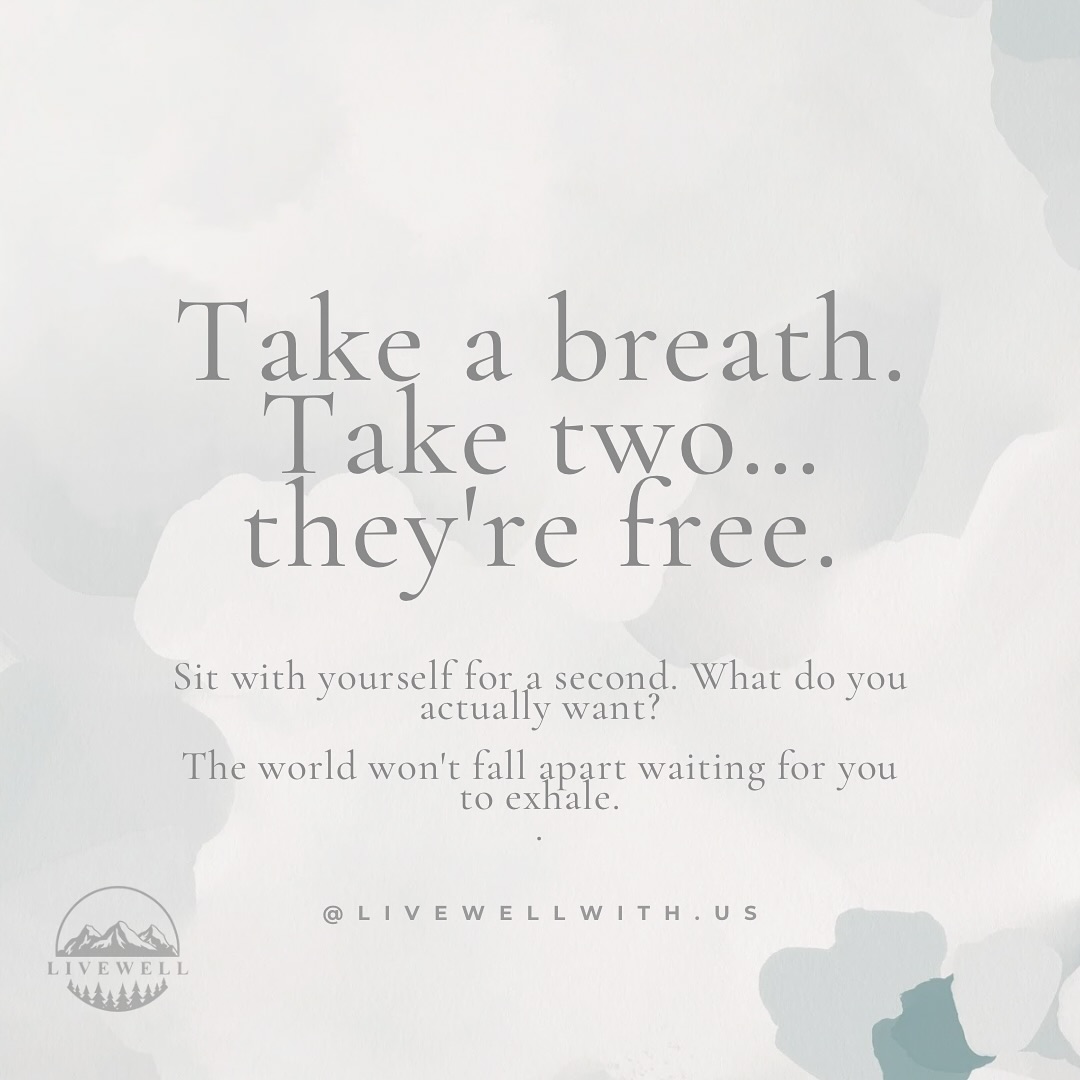
Before you send that text.
Before you say yes when you mean no (or no when you mean hell yes).
Before guilt, habit, or tired obligation lands you in a situation you’ll resent…
Give yourself one full breath to think.
What are you really feeling?
What’s the thing you’re not saying?
At least chew on your truth before you spit out something else that just… isn’t.
You don’t owe anyone the “right” answer.
You owe yourself an honest one.
#therapistthoughts #behonestwithyourself #mentalhealthawareness
Yeah… that includes admitting coffee isn’t a meal and 3AM overthinking doesn’t count as therapy.
The truth is, being honest with yourself feels awkward at first but kind of freeing later.
You don’t have to fake being okay all the time.
Nobody actually is. Just be real, breathe, and start from there.
In almost every scary movie, the monster stops being scary once you finally see it.
That’s how fear works.
It feels huge when it’s hiding.
But once you give it a name: anxiety, guilt, grief, change… it gets smaller. It’s anticlimactic. A lot less exciting.
So… Turn on the light.
Check the closet, under the bed, or out the window.
Half the time, there’s nothing even there.
And if there is, at least you’ll know what you’re dealing with.
(But just to be clear… if you do turn on the light and find someone actually in your closet… call the police, not us.)
Your Anxiety Isn’t Protecting You
Your brain tells you the worrying is useful. It says if you stop worrying, something bad will happen. Like worry is a protective force field.
It's not. It's a smoke detector that goes off when someone makes toast. Your threat detection system has been cranked to maximum and it's interpreting everything as danger. The meeting tomorrow. The text she hasn't responded to. The weird feeling in your chest that's been there all day.
You've worried about 10,000 things in your life and your survival rate is 100%. That's not because the worrying saved you. It's because the things you worried about were almost never as bad as your brain predicted.
Anxiety is treatable. Not "manageable." Not "something you just live with." Treatable. The tools exist. You just have to use them.
Handle your shit. We can help.

We all know someone who's been "about to start" for years now.
It's always something… the business idea they keep talking about, the weight they're gonna lose, or maybe the conversation they need to have but keep putting off because "the timing isn't right."
That person might be you. Probably is, actually.
Here's the thing… your brain doesn't know the difference between preparing and hiding.
Both feel productive.
Both feel like you're doing something.
But one moves you forward and one just runs out the clock.
You're not gonna feel ready.
The timing's never gonna be perfect.
And nobody's coming to give you permission.
So just… go. Fuck it up the first time. Learn something. Try again.
That's where success comes from.
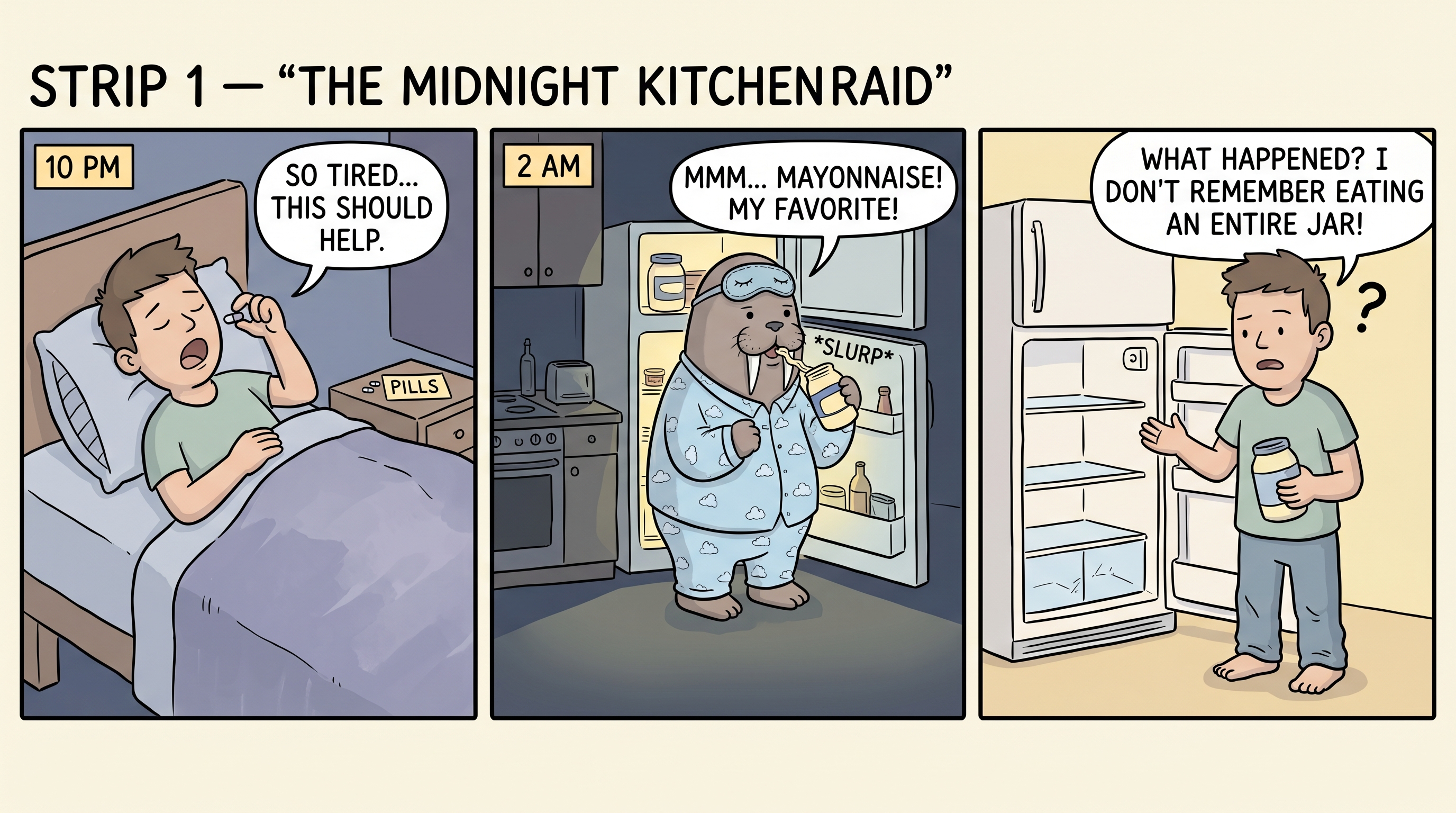
Ambien Walrus #2
Men and Therapy
The reason most men won't go to therapy isn't because they don't believe it works. It's because the version of therapy they've been shown doesn't appeal to them.
Sitting on a couch. Talking about feelings. Crying. Hugging. "Tell me how that makes you feel."
That's one style of therapy. It's not the only one. It's not even the best one for most men.
What works for guys is usually practical, structured, and focused on solving a specific problem. Concrete tools. Clear timelines. Measurable outcomes. Treat it like a problem-solving session, not an emotional excavation, and suddenly the guy who "doesn't do therapy" is showing up every two weeks and doing the work.
The modality matters. If one approach didn't work, that doesn't mean therapy doesn't work. It means you haven't found the right fit yet.
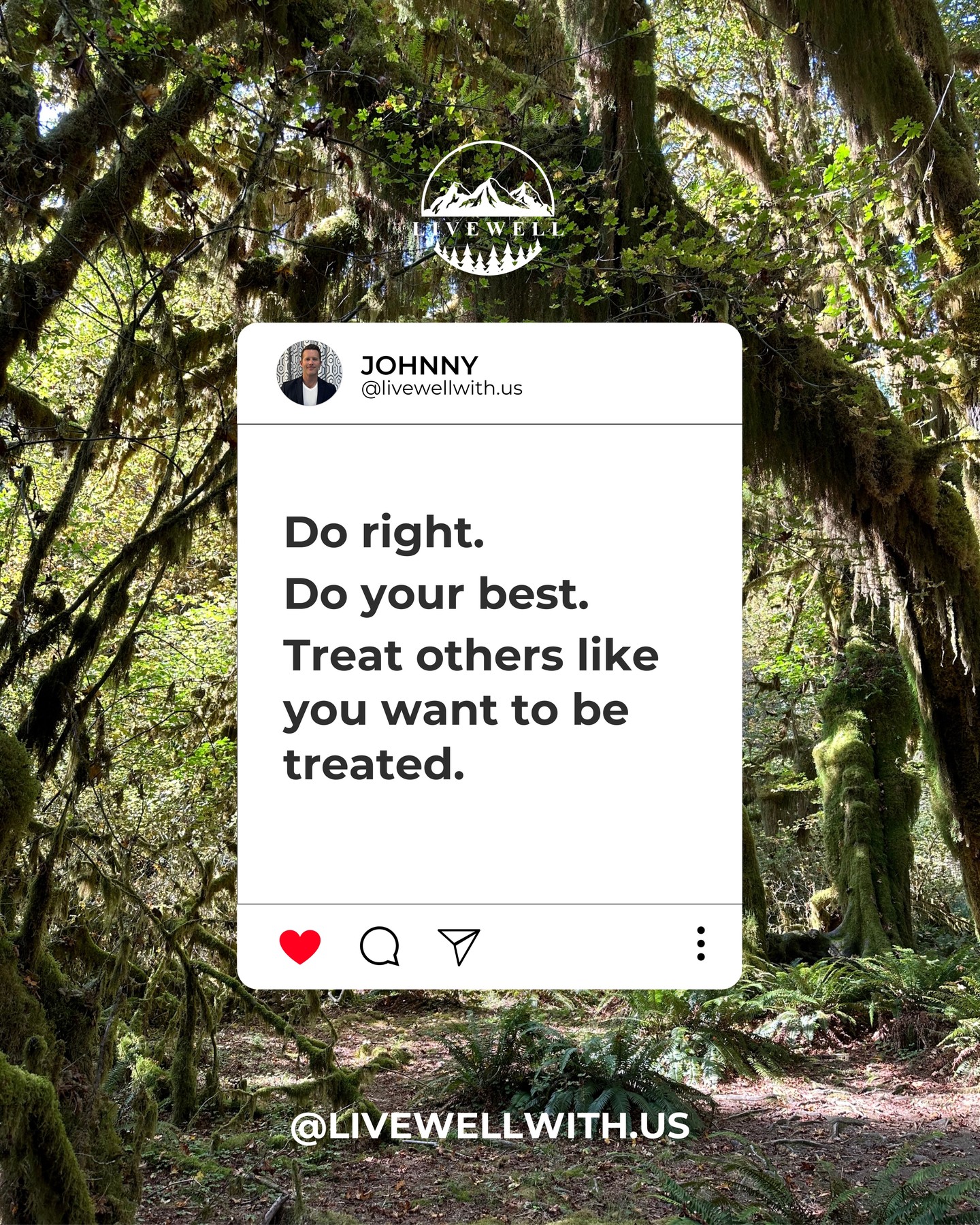
These words were pictured in a small picture frame that hung in the hallway of my childhood best friend.
I remember them to this day.
The most important principles and guiding lights in life aren't found in a complex, fancy-worded thesis from Cornell.
They are simple and genuine.
All one has to do is try to follow them.
Stop Googling Your Symptoms
Every time you Google a symptom and feel relieved when it says "probably benign," you've just reinforced the pattern. Your brain learned that checking equals relief. So it's going to make you check again. And again. And again.
Health anxiety feeds on reassurance. The Googling, the ER visits, the checking your heart rate, the pressing on things to see if they hurt. Each check provides about 20 minutes of relief and then the doubt creeps back in. "But what if they missed something."
The fix is counterintuitive: stop checking. Notice the symptom. Resist the urge to Google. Sit with that shit, and show yourself that nothing bad is going to happen just because you stopped working yourself up. Well… nothing other than you'll start to simmer down.
It's uncomfortable as hell. It also works really, really well.
That's basically what treatment for health anxiety looks like. Deliberately not doing the thing your brain is screaming at you to do, and discovering you're fine anyway.
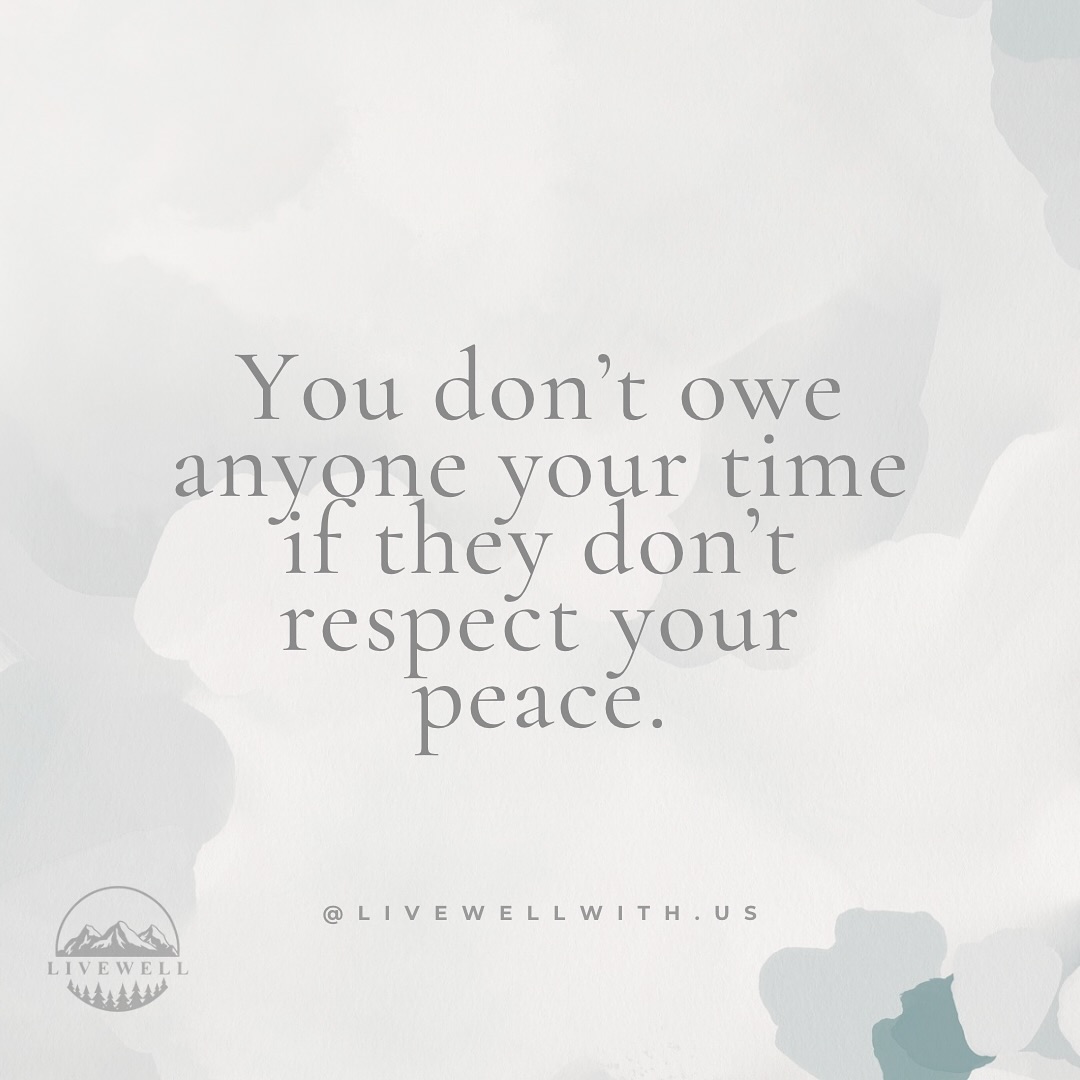
You don’t have to give your time to people who don’t respect your peace. Your time, energy, and mental well-being are too valuable to spend on relationships that leave you feeling drained, anxious, or unappreciated. It’s easy to fall into the trap of thinking you need to be there for everyone, but sometimes the best thing you can do for yourself is recognize when it’s time to step back.
We all need to set boundaries, and that’s not selfish. It’s a sign of self-respect. When you protect your peace, you’re prioritizing your emotional health, and that’s something we all need to be better at.
Your Peace is Self-Respect:
1. Check in with how you feel: Pay attention to how people make you feel after spending time with them. If you’re left feeling exhausted or unsettled, it’s worth considering if this is someone who truly deserves your time.
2. Start setting boundaries: Saying “no” can feel uncomfortable at first, but it’s one of the healthiest things you can do. Protecting your peace isn’t a negative it’s a way of taking care of yourself. You don’t have to explain yourself to anyone.
3. It’s okay to let go: Not all relationships are meant to last forever. Some people come into our lives for a reason or season, and it’s okay to outgrow them. Letting go doesn’t make you a bad person; it makes you someone who knows their worth.
4. Be mindful of where you invest your energy: You can’t pour from an empty cup. Spend your time with people who make you feel good, who support your growth, and who bring positivity into your life. Protect your energy it’s precious.
5. Remember you deserve peace: You are worthy of calm, of joy, and of relationships that nourish you. Setting boundaries and protecting your peace isn’t just a choice it’s a necessity for your mental and emotional well-being.
You have the right to protect your peace and prioritize your mental health. Don’t feel guilty about stepping away from situations or people that don’t bring you the respect or peace you deserve. Choosing your well-being is one of the most loving things you can do for yourself.
#mentalhealthmatters #emotionalwellness #selfrespect #healingjourney #mindfulliving #therapytalk #selfhealing
The First Appointment Isn’t Scary
Here's what actually happens at your first appointment.
You fill out paperwork. You sit in a normal office. A medical professional asks you questions about how you've been feeling. You answer honestly. They listen. They might suggest a diagnosis. They'll explain your options. You decide what you want to do.
That's it. Nobody's judging you. Nobody's going to lock you up. Nobody's going to make you lie on a couch and talk about your mother.
You've been putting this off because the unknown feels scarier than the thing you're already dealing with. But the thing you're dealing with isn't getting better on its own. It's been not getting better on its own for a while now.
The hardest part is booking the appointment. Everything after that is easier than you think.

A lot of what we call “high standards” is actually a need to control everything so we don’t feel uncomfortable.
Perfection sounds admirable on the surface.
It’s disciplined, driven, put-together. But underneath, it’s often anxiety.
It’s trying to eliminate uncertainty, mistakes, or judgment by tightening your grip on everything: your work, your relationships, even yourself.
The problem is, real life doesn’t jive with that.
People are imperfect.
Outcomes are unpredictable.
And when everything has to be “just right,” you end up rigid, stressed, and constantly disappointed.
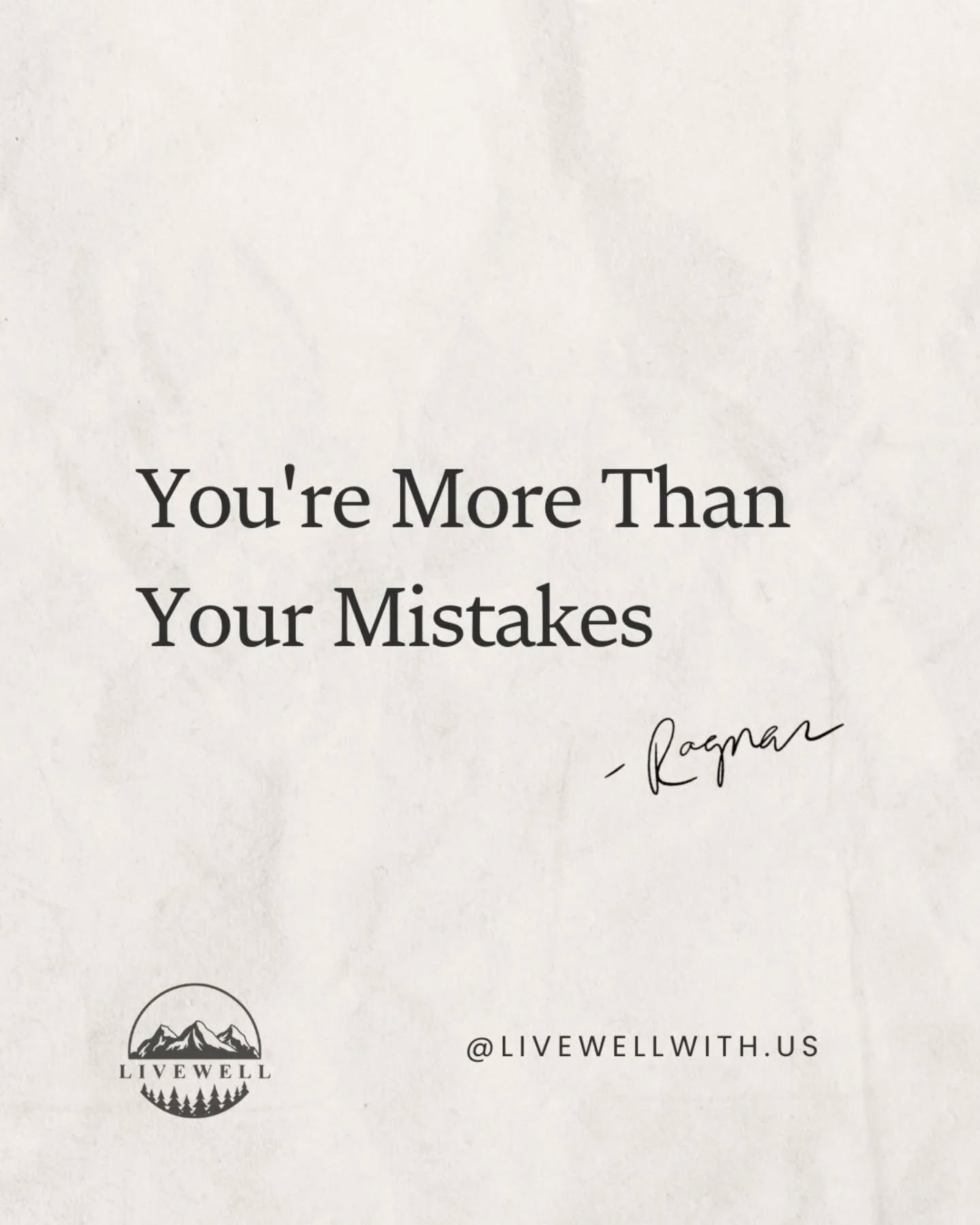
It’s not about forgiving yourself.
It’s about recognizing your own strength.
Mistakes don’t define us, they refine us.
They’re not obstacles, they’re as important as every other step on our journey.
Give yourself credit for how far you've come, and trust that you’ve got what it takes to face what’s next.
You've proven it time and time again.
You've got this.
Couples Therapy Early
The average couple waits six years of being unhappy before going to therapy. Six years.
You wouldn't wait six years to see a dentist with a toothache. But people treat their most important relationship like it should be able to heal itself through sheer stubbornness.
Couples therapy isn't the last resort before divorce. It's the smart move when the first cracks appear. When you're having the same fight for the third time. When the disconnection is starting to feel normal. When you're more like roommates than partners.
The couples who do best are the ones who come early, when there's still goodwill and the problems are small enough to fix. The couples who come late can sometimes be saved. But there's a lot more scar tissue to work through.
You maintain your car. You maintain your body. Maintain your relationship.
Grief Has No Timeline
There is no "should be over it by now."
Your dad died a year ago and you still pull up his number in your phone sometimes. Your buddy passed and you still expect to see him at the bar. The divorce was final months ago and it still hits you at random moments, like getting gut-punched by a memory.
That's normal. Grief doesn't have an expiration date, and the people who tell you to "move on" have either never lost anything important or they're doing the same thing you are and just hiding it better.
The problem isn't that you're still grieving. The problem is when grief goes underground and starts coming out as insomnia, anger, drinking, or a depression you can't name. That's unprocessed grief, and it's patient enough to wait but heavy enough to sink you.
If something's been off since the loss, it might be time to talk to someone.
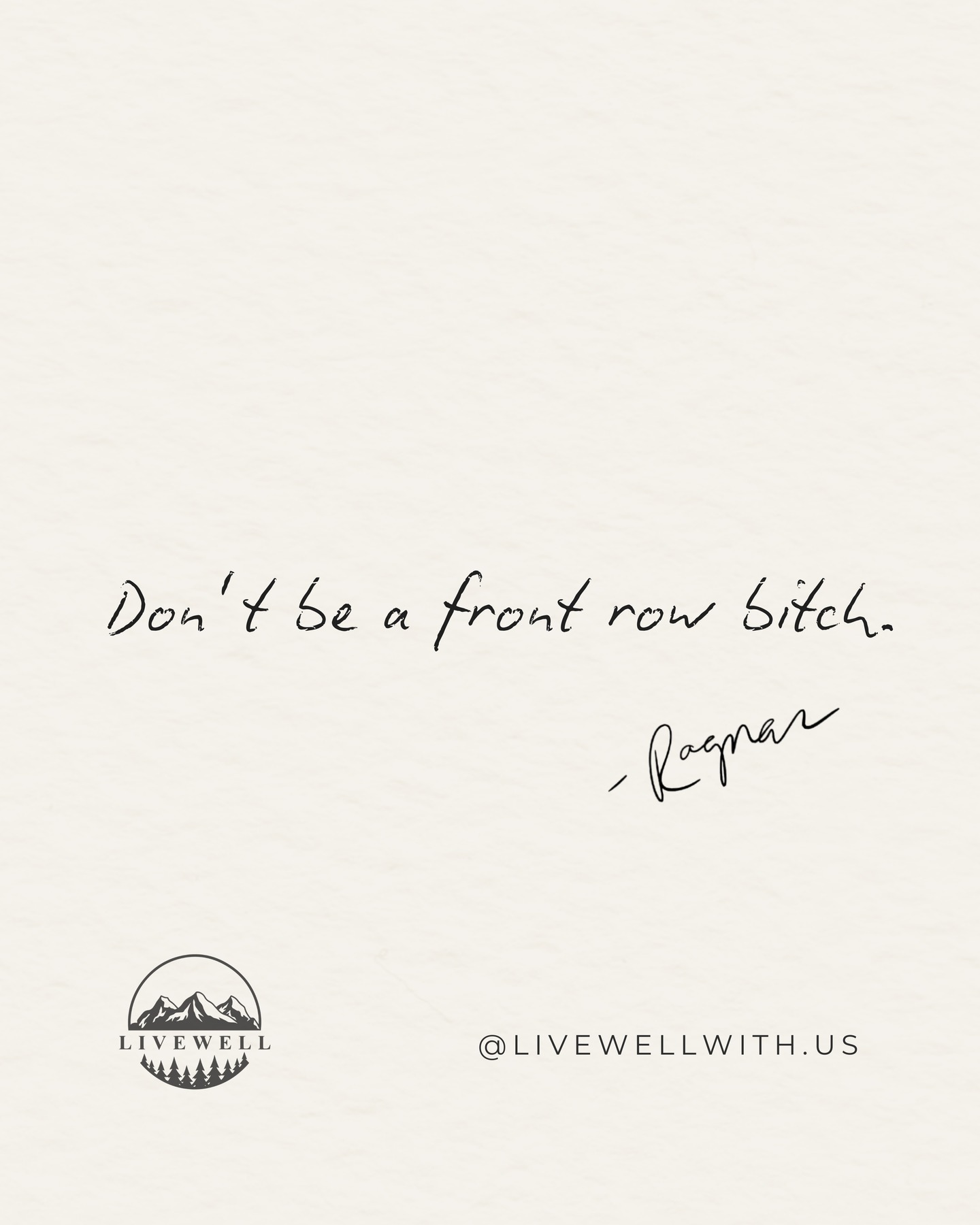
You know the type.
Reminds the teacher there was homework.
Says shit like “holding space” and “unpacking my trauma.”
Says “per my last email” unironically.
Always has their hand up.
Always has something to add.
Always making shit harder for everyone else while thinking they’re being helpful.
Nobody likes that person. Not in school. Not at work. Not in life.
There’s a difference between being engaged and being annoying.
Between being thoughtful and being performative. Between actually contributing and just wanting people to see you contribute.
If you’ve got something worth saying, say it.
If you’ve got skills that can actually help, use them. That’s not front row bitch energy.
That’s just being useful.
The difference is why you’re doing it.
Are you adding value or just adding noise? Are you helping or auditioning?
Say less. Do more. And if you’re not sure which one you are… you’re probably the Becky.
Sit down. Read the room. Nobody asked.
Before you book the appointment, try the basics.
Seriously. Most people walking around with sky-high anxiety haven't taken a real breath in years. Shallow little chest breaths all day, shoulders up by their ears, nervous system running on overdrive, and then wondering why they feel like shit constantly.
Your body has a built-in regulation system. It's called your breath. And it actually works, if you bother to use it.
We're not saying don't do therapy. Therapy is great. We literally do this for a living. But you don't need to pay someone $200 an hour to tell you to slow down and breathe. You can do that right now. For free. While you're reading this.
Start with what costs you nothing. See what happens. Then go from there.
Walrus comic coming
Reserved for the Ambien Walrus comics once the user generates them. Replace this snippet content with the embedded image.

True strength isn’t about meeting everyone’s expectations; it’s about being authentically yourself. When you stop trying to fit into other people’s molds and embrace who you truly are, you find the freedom to live your life on your own terms.
Unapologetically you:
1. Be yourself – Stop judging yourself for not fitting in, and embrace your individuality.
2. Accept your uniqueness – Your true self is not meant to match anyone else’s idea of you.
3. Live by your values – Focus on what matters to you, not what others think you should be.
4. Stop seeking approval – Let go of the need to please others and trust your own path.
5. Set boundaries – Protect your peace by saying no to what doesn’t align with who you are.
6. Celebrate your individuality – Embrace the parts of you that make you different, they’re your strength.
You don’t need to be what others expect you to be. True freedom comes when you step into who you really are, unapologetically.
#selfacceptancejourney #liveyourtruth #therapisttips #mentalwellbeing #mentalhealth #mentalhealthmatters

Nobody figures themselves out by playing it safe.
The job that didn’t work out.
The relationship that fell apart.
The moment you hit a wall and had no idea what came next.
That stuff changed you.
And who you became after it? That’s the real you.
Living well is an ongoing practice, not a pursuit of perfection. It’s a journey of growth, where the goal isn’t to be flawless, but to engage consistently with your well-being. Healing and personal development are not linear, and setbacks are natural. Embracing imperfection is key… each step, no matter how small or challenging, contributes to your overall healing process. The practice of living well involves patience, self-compassion, and the understanding that progress is often not perfect, but it is meaningful.
Not everything is trauma.
Sometimes you're just tired.
We live in an era where every emotion gets analyzed, labeled, and turned into a diagnosis.
Bad day? Must be depression.
Nervous about something? Anxiety disorder.
Annoyed at someone? Probably need to unpack your attachment style.
Sometimes, sure. But sometimes you just need to go outside, eat something that isn't garbage, drink some water, and get off your phone for an hour.
Your brain isn't designed to scroll bad news all day, sit under fluorescent lights, and never move your body.
Of course you feel like crap. That's not a mental health crisis. That's a lifestyle problem.
Not every feeling needs to be processed.
Some of them just need a walk and an early bedtime. Try the simple stuff before you pathologize yourself into a patient.
Kids remember how you responded when they were scared, embarrassed, or unsure.
That moment teaches them whether it is safe to come back to you again.
A calm response says, “You’re not in trouble for being honest.”
Overreacting sends the message that hiding is safer than telling the truth.
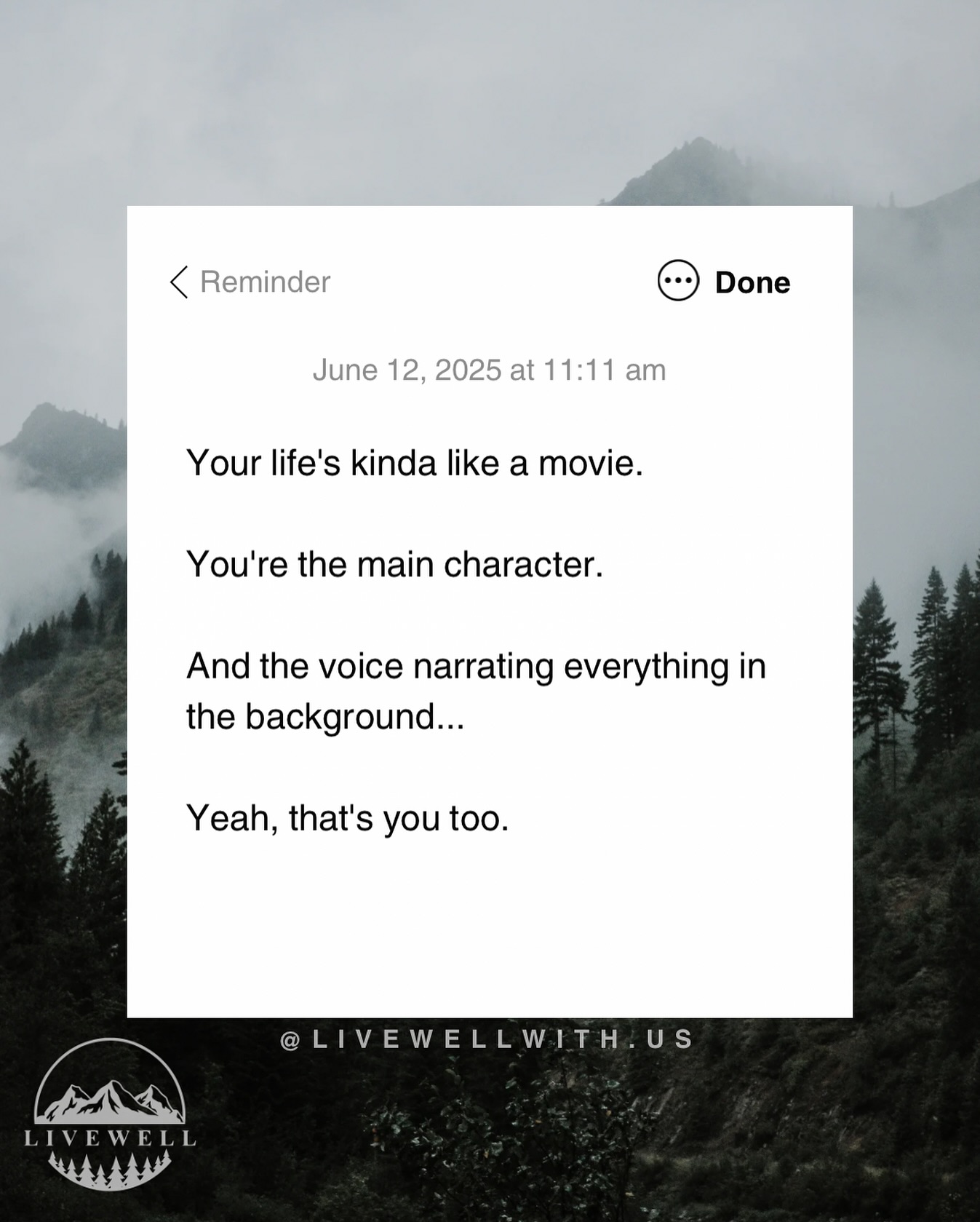
Pay attention to the story you’re telling yourself.
Everyone’s life is a story.
But most of the time? We’re not seeing life as it actually is.
We’re seeing it through the context of the story that has been playing in the background.
Stuff like:
“I always screw this up.”
“No one ever picks me.”
“I’ll never get it right.”
That voice narrating in the background? That’s you…and it’s deciding what happens next.
It’s not just commentary.
It’s a direction.
It tells you what to expect. What to fear. What to go after… and what to avoid.
And honestly? It’s running the whole show way more than you probably realize.
But here’s the good news,
Awareness creates choice.
If your narrator’s stuck on the same loop, the one where you always lose, or get left out, or fall short…well then maybe it’s time to write a new script.
Because if you woke up today, your story’s not over.
But the version you’ve been repeating?
Yeah, maybe that one is.
No one’s coming to rewrite it for you.
You either own your story, or your story owns you.
#therapist #therapistthoughts #mentalhealth #mentalhealthquotes #selfreflection #healingjourney
Self-Care Is Not a Bubble Bath
Instagram sold you a version of self-care that involves scented candles, face masks, and "treating yourself." That's not self-care. That's consumption dressed up in wellness language.
Real self-care is hard. It's boring. It's not photogenic. It looks like going to bed at a reasonable hour instead of watching your fourth episode. It looks like meal prepping on Sunday because you know you'll eat garbage all week if you don't. It's saying no to the thing you don't want to do instead of saying yes and resenting it. It's scheduling the doctor's appointment you've been putting off. It's having the conversation you've been avoiding.
Self-care isn't doing the things that feel good in the moment. It's doing the things that your future self will thank you for. And a lot of the time, those things feel like effort, not luxury.
The guys at LiveWell who are doing the best aren't the ones doing yoga retreats. They're the ones who've built small, sustainable routines: consistent sleep, regular exercise (even just walking), meals that aren't entirely drive-through, and a willingness to ask for help before things hit crisis level.
Self-care is discipline wearing comfortable clothes. It's not glamorous. It just works.
Yes, it sounds like a pep talk you give yourself in the mirror… but hey, it works.
Your brain responds to repetition more than pressure.
All fun vibes here at LIVEWELL 🌲✨🫶#mentalhealth #therapistthoughts #mentalhealthmatters #healingjourney #livewell
Social Anxiety Isn’t Shyness
Shyness is a preference. Social anxiety is a prison that looks like a choice.
The shy person chooses quiet. The socially anxious person craves connection but is physically prevented from pursuing it by a nervous system that interprets every social situation as a threat.
You rehearse phone calls before making them. You've driven to the gym and left without going in. You replay conversations for hours wondering if you said something stupid. You turned down the promotion because it involved presenting to people.
This is the third most common mental health condition in the country. It responds really well to treatment. SSRIs, CBT, sometimes beta-blockers for specific situations like public speaking.
You've been white-knuckling through this for years. It hasn't gotten better on its own. It won't. Because it's a treatable condition, not a personality flaw.
Medication Isn’t Forever
The number one fear we hear: "If I start medication, I'll be on it forever."
Maybe. Or maybe not. Depends on the condition.
For situational depression or anxiety triggered by a specific life event, medication is often temporary. Get through the crisis, build coping skills, taper off. Six months to a year is common.
For chronic conditions like recurrent depression, generalized anxiety, or ADHD, longer-term medication makes more sense. Just like blood pressure medication for someone with chronic hypertension. You take it because the condition is ongoing, not because you're addicted.
Either way, the decision to stop is always yours. You can taper off under medical supervision anytime. It's not a blood oath. It's a tool. Use it if it helps, adjust if it doesn't.
The question isn't "will I need this forever." The question is "do I need this right now, and is it making my life better." If the answer is yes, that's enough.