Sections
If you wake up exhausted, get your sleep checked even if your weight’s fine.
You work out, your weight’s fine and you wake up ready for another night. Sleep apnea still belongs in the conversation. Being lean doesn’t rule it out, and your jaw doesn’t care how proud you are of your waistline. [9] [1]
That doesn’t mean handing a breathing machine to every tired guy. It means listening to the symptoms before deciding he’s the wrong size for apnea. A questionnaire can get that conversation started. It can’t do the sleep test’s job. [2]
How to use this page
Put together what happens at night and what it does to your day, then bring that to the appointment. “I’m tired” leaves a lot to guess at. If you’ve already had a home test, take the report, especially if it didn’t explain how you’re feeling. [2]
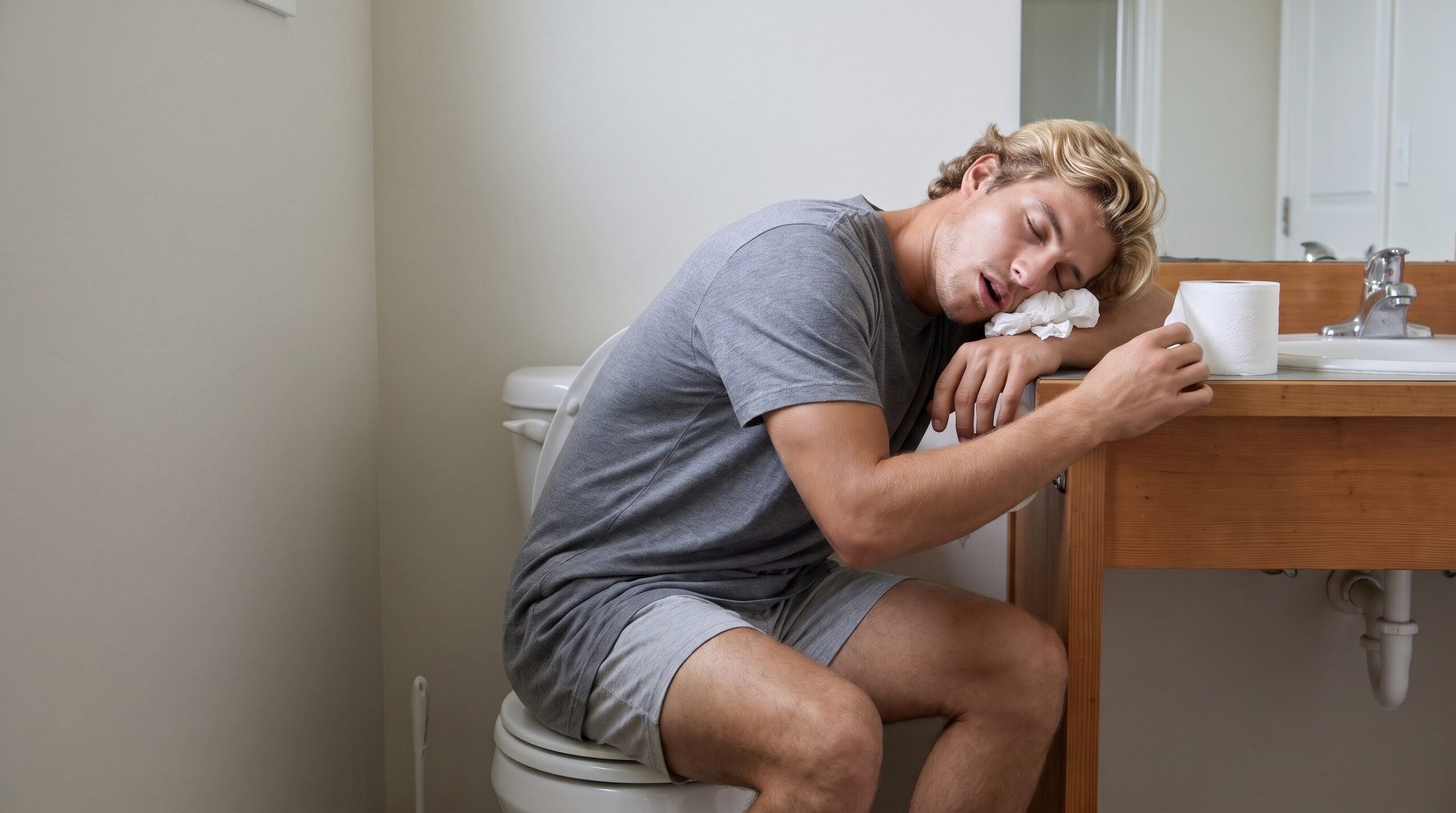
A lean guy can still have apnea
One sleep clinic found that 25% of the people it diagnosed with apnea had a body mass index below 25. Those people had already been sent for sleep testing. That’s why you can’t read the result as a claim that one in four lean guys walking around has apnea. [9]
A 2025 study compared scans from 23 adults with apnea and 23 comparison subjects. All were 18 to 35 and weren’t obese. After adjustments, the apnea group had smaller upper and lower jaw bone volumes and other jaw shape differences. Your weight isn’t the only bit of anatomy involved. [1]
It was one small sleep clinic study with all white participants, and comparison subjects could still have mild apnea. Take facial structure seriously. Don’t diagnose your selfie or turn a recessed chin into an automatic surgery referral. The study didn’t establish either of those shortcuts. [1]
Drop the idea that a guy has to look the part before his sleep deserves checking. Discuss the weight. Then keep listening to the rest of what he’s telling you.
Bring something more useful than “I’m tired”
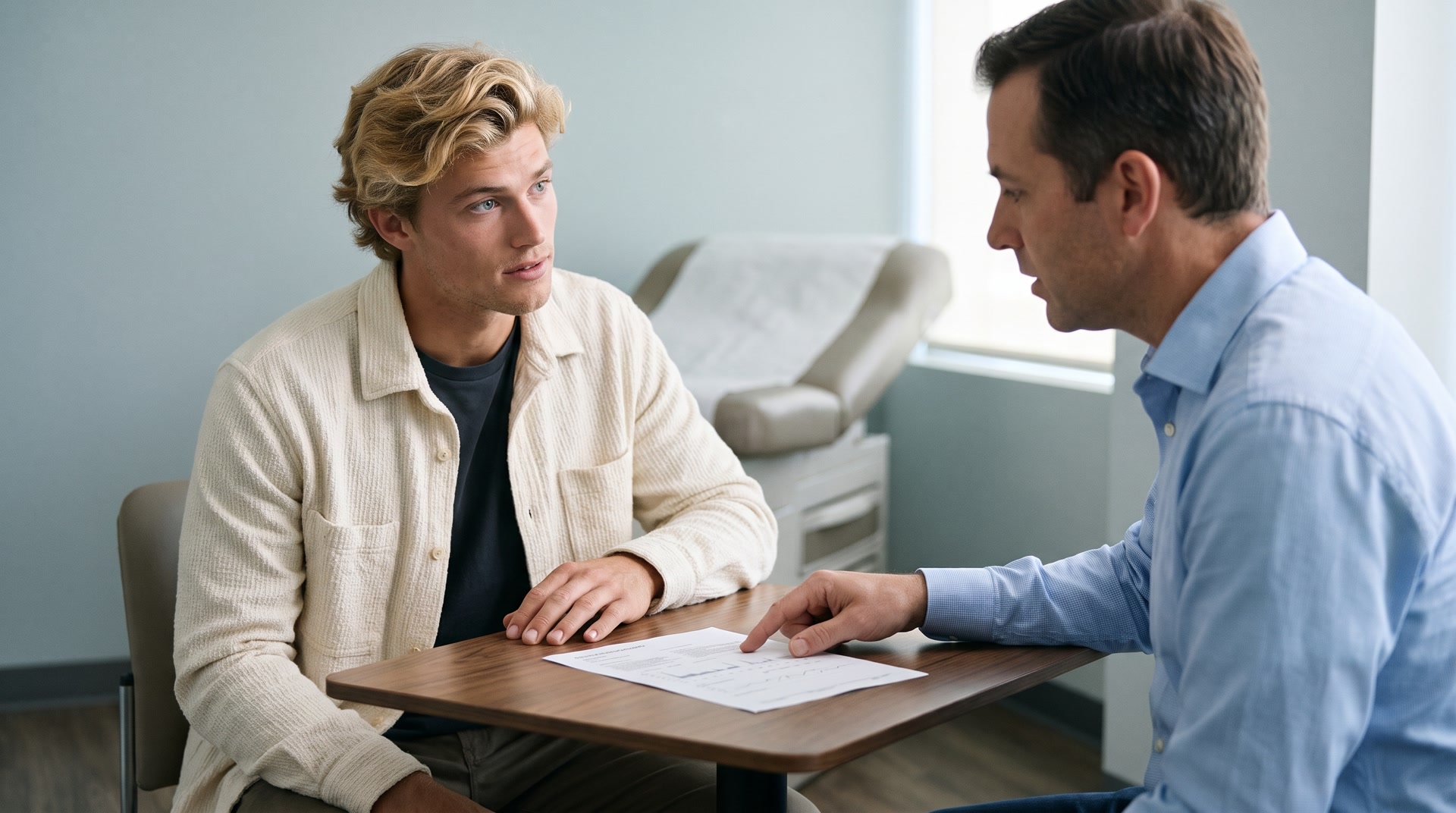
A bed partner seeing pauses, gasping or loud snoring is useful information. So is dozing when you’re trying to stay awake. Morning dry mouth, headaches, trouble focusing and repeated bathroom trips can happen with apnea too. None proves it on its own. [3]
Write down what happens. “I nod off in meetings after a full night in bed” gives the doctor more than “my energy sucks.” Ask whoever shares the bed what they’ve noticed. You’re not a particularly reliable witness to your own unconscious breathing.
Separate feeling exhausted from actually falling asleep. Both can wreck the afternoon, but they’re different complaints. You don’t need to arrive with a diagnosis and a device picked out. Give the clinician enough of an account to investigate the right problem.
If you’re sleepy at the wheel, don’t drive. Get a ride and get that symptom addressed. Finding out how much coffee it takes to keep you on the road isn’t a reasonable experiment. [4]
The home test has a job
A home test can make sense if you’re an adult whose symptoms point toward moderate or severe obstructive apnea and you don’t have other conditions that complicate testing. Some medical problems, opioid use or severe insomnia can make a lab study a better choice. Have someone go through that history before sending the home test. [2]
A negative, unclear or unusable home test needs a lab study according to the AASM guideline. “Didn’t find it” isn’t automatically “nothing to check.” Go through the recording and the next step with the clinician. If the recording didn’t work properly, don’t let anyone treat that as proof your sleep’s fine. [2]
Here we’re talking about not ruling out obstructive apnea because you’re lean. The separate UARS article tackles persistent symptoms the usual sleep result hasn’t explained. Don’t turn that into a game where every normal result earns a fresh diagnosis.
Get the treatment working in real life
For adults with confirmed apnea and excessive sleepiness, AASM recommends positive airway pressure, which keeps the airway open with air pressure during sleep. CPAP uses one set pressure; APAP adjusts it. Both can be used for ongoing treatment. Once the machine arrives, you still need to be able to sleep with it and check whether it’s helping. [5]
If the mask leaks or you can’t sleep with the setup, get help with it. The treatment guideline calls for checking whether it’s working and how much you’re actually using it, then sorting out problems. Leaving it in a drawer without saying anything doesn’t establish that CPAP failed. Tell the clinician what’s stopping you from using it so they can help sort it out. [5]
You can also discuss a custom adjustable oral appliance, including if you can’t tolerate CPAP or you prefer another treatment. That takes a sleep clinician and a qualified dentist. A random mouthguard isn’t the same thing, and follow up testing checks whether the apnea’s actually being treated. [6]
Don’t promise yourself a testosterone cure
The hormone link is interesting, but keep it honest. A review of 18 studies involving 1,823 men found lower testosterone associated with apnea after accounting for age and body mass index, with the clearest finding in severe apnea. That’s worth discussing if you’re having those symptoms. [7]
It doesn’t give a lean man his personal odds, prove apnea caused his low result or promise treatment will restore his testosterone. You can have a sleep problem and a hormone problem at the same time, and fixing one may leave you needing help with the other. [7]
The mood link isn’t a diagnosis either
Another review found more depression with severe apnea than mild apnea, but results varied a lot between studies. They looked at people at a point in time. They couldn’t tell which problem started first or what caused what. Don’t add a cause the study didn’t find. [8]
Sleep belongs in the mood conversation. That doesn’t make somebody’s depression fake or prove the antidepressant was a mistake. Being in good shape doesn’t make breathing symptoms disappear either. Bring in the actual pattern and get it checked.
Sources
- Jadoul and colleagues. Jaw structure in adults with apnea who weren’t obese. 2025. PMID 39897118.
- American Academy of Sleep Medicine. Guideline for diagnosing adult obstructive sleep apnea. 2017. PMID 28162150.
- National Heart, Lung, and Blood Institute. Sleep apnea symptoms. Updated 2025.
- National Heart, Lung, and Blood Institute. Living with sleep apnea. Updated 2025.
- American Academy of Sleep Medicine. Positive airway pressure treatment for adult apnea. 2019. PMID 30736887.
- American Academy of Sleep Medicine and American Academy of Dental Sleep Medicine. Oral appliance treatment guideline. 2015. PMID 26094920.
- Su and colleagues. Apnea and testosterone, systematic review. 2022. PMID 34536053.
- Zhao and colleagues. Apnea severity and depression, systematic review. 2024. PMID 38888794.
- Gray and colleagues. Obstructive apnea in people who aren’t obese. 2017. PMID 27655455.