Sections
Ibogaine might be the strangest substance in the whole psychedelic treatment conversation, because the promise is real and the risk is real and they sit right on top of each other. On one side you’ve got serious interest in its ability to interrupt opioid withdrawal and reduce drug use, plus a wave of attention after Stanford-linked observational work in veterans with traumatic brain injuries and heavy psychiatric burden. On the other side you’ve got a drug with real cardiac danger, messy legal status, and a treatment ecosystem that’s often lived way outside normal medical guardrails. So this isn’t a miracle-cure-getting-ignored story, it’s a compound that might do something real and might also kill the wrong patient if the protocol is loose.
Why anyone takes ibogaine seriously at all
The interest in ibogaine didn’t come out of nowhere. It’s been reported to blunt opioid withdrawal and reduce craving in ways that don’t look much like our standard detox tools, and the published human literature does show a signal there. An observational study of people with opioid use disorder treated with ibogaine found real detoxification and lower opioid use afterward, which is the kind of result that keeps the field from dismissing this as fringe mythology (Brown and Alper 2018, Brown and Alper 2018). More recent pharmacokinetic work in opioid use disorder patients also shows that the drug is doing something real and measurable in humans, not just generating stories after the fact (Knuijver 2024, Knuijver et al. 2024).
Why the Stanford work got so much attention
The more recent burst of attention came from the Stanford magnesium-ibogaine observational study in special operations veterans with traumatic brain injury, PTSD, depression, and anxiety. The reported improvements were dramatic enough that people paid attention fast, because in a population that damaged and treatment-resistant, large changes are hard to ignore (Cherian 2024, Cherian et al. 2024). That’s a real finding worth reading, just read it as an observational study and not a finished answer, because those are very different things. There wasn’t a randomized control group, the protocol bundled ibogaine with a broader treatment setting, and the results are exciting in exactly the way early findings are often exciting before the field learns what survives harder testing.
Why this still isn’t close to settled medicine
The evidence base for ibogaine is nowhere near strong enough to treat it like a mature psychiatric treatment. A lot of what’s out there’s observational, open label, or based on case reports, and that means the signal could be partly real, partly expectation, and partly the effect of intense treatment settings built around the drug. That’s not a dismissal of the drug, it’s just what early-stage evidence looks like before harder testing. The current reviews of the literature land in basically that spot too: interesting therapeutic potential, especially around substance use, but nowhere near the kind of clean, large, controlled data package you’d want before this became ordinary practice (Mosca 2023, Mosca et al. 2023; Köck 2022, Kock et al. 2022).
- Cardiac screening isn’t optional.
- QT risk, arrhythmia risk, and drug interactions are the whole conversation.
- Promise doesn’t erase the fact that people have died around unsafe use.
Ibogaine can be interesting and still not be casual, and you have to hold both of those at the same time.
The risk problem isn’t cosmetic
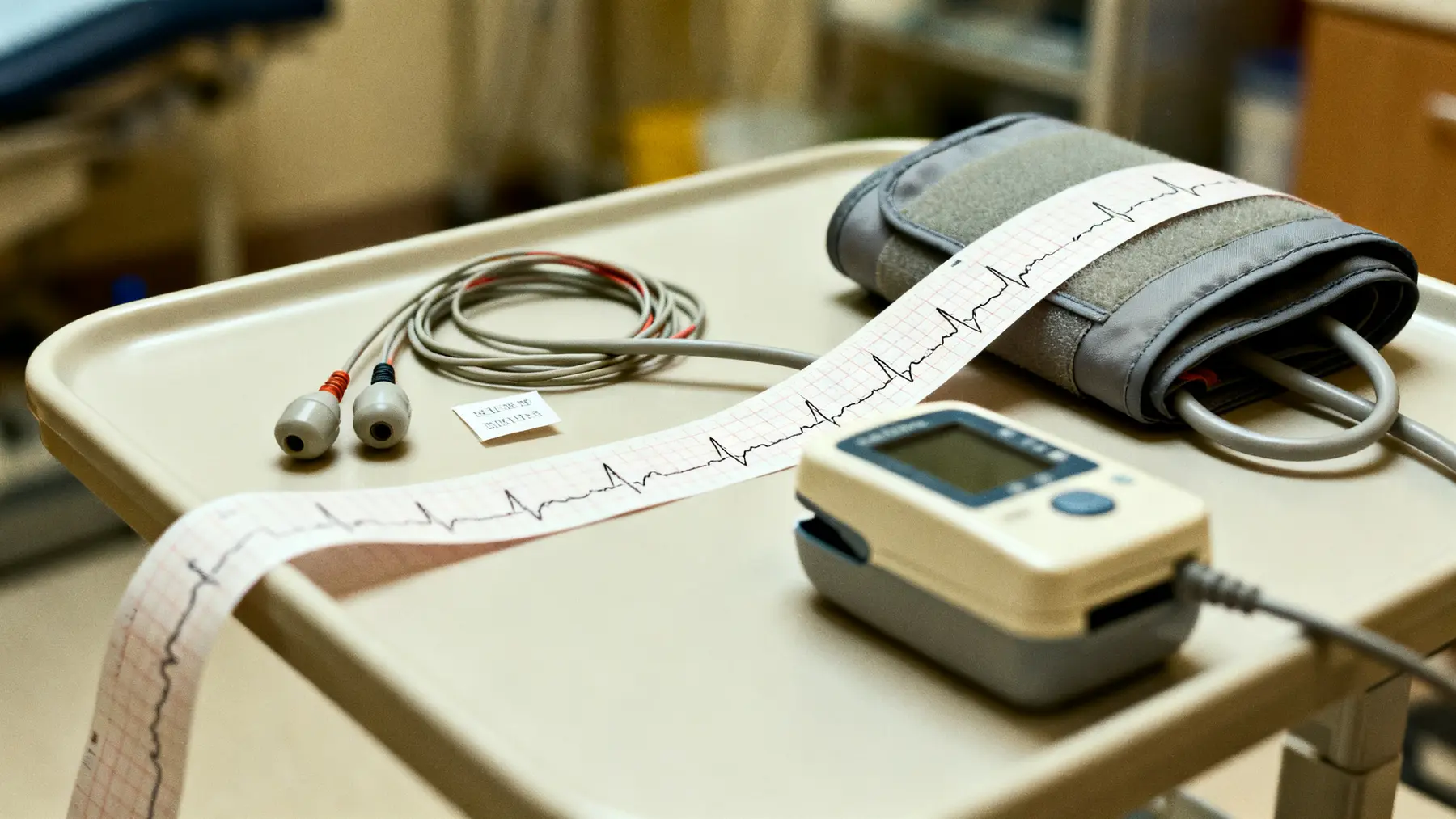
This is where the whole thing gets serious. Ibogaine can prolong the QT interval, slow the heart rate, destabilize people medically, and in some cases contribute to sudden death. That’s the central clinical problem, not propaganda, just the actual pharmacology. An observational safety study in opioid dependent patients found clinically relevant but reversible QTc prolongation, bradycardia, and severe ataxia during treatment, which is exactly the kind of signal that keeps this drug from sliding casually into mainstream practice (Knuijver 2021, Knuijver et al. 2022). If a substance has genuine addiction treatment or psychiatric value but can also throw the heart off rhythm, then the conversation isn’t whether to romanticize it, it’s whether anybody can build a safe enough protocol to justify using it at all.
Where people get confused
People tend to confuse three separate claims. One claim is that ibogaine has a real therapeutic signal, and I think it does, another is that it’s already been proven safe and effective enough for ordinary treatment, which it hasn’t, and the third is that because the signal looks dramatic in some cases the safety concerns must be overblown, and they aren’t. You can believe the anti-addiction effects are interesting and still admit the cardiac risk is a huge problem, and honestly that’s just the only coherent position here.

Where I land on it
My view is that ibogaine belongs in the same broad bucket as a few other restricted psychedelics, genuinely promising, nowhere near routine, and badly in need of better research before anybody treats it like a mature option. What makes it different is that the safety problem isn’t some small footnote at the end. It’s the first paragraph. I’d like to see the research move forward because a tool that can interrupt opioid dependence or help badly damaged trauma patients would matter a lot, but I’d also like to see people stop talking about ibogaine like the main barrier is prudishness or bureaucracy. Sometimes regulation is genuinely in the way of good science, and sometimes it’s the only thing keeping a treatment protocol from producing a corpse, and with ibogaine both of those are true at the same time.
The bottom line
Ibogaine has a real signal in addiction treatment and maybe in severe trauma-related syndromes, and it also has one of the ugliest safety profiles in the whole psychedelic conversation. That makes it worth studying carefully and stupid to hype. If stronger trials ever show that the benefits can be separated from the cardiac danger with real screening and protocol discipline, this could become a serious tool, but we’re not there yet.
How to use this page
Ibogaine: Real Promise, Real Risk should be used as a way to think more clearly, not as a script to copy onto your own life. Public mental health writing can clarify patterns. It cannot see your history, your risk, or the parts you leave out.
What to track
Track what actually changes in daily life: sleep, work, relationships, avoidance, irritability, substances, routines, and the moments where the old pattern still wins. Insight is useful only when it starts changing behavior.
What to bring into care
If the article makes something click, turn it into a concrete next question. What is the pattern, what has already been tried, what made it better or worse, and what would be different enough to call progress.
What would make it a poor fit
A poor fit is any takeaway that becomes a costume instead of a change. If the idea helps you sound more self-aware but nothing in the week changes, it may be interesting without being useful. The point is not to collect better language for the same stuck place.
What counts as progress
Progress should be visible in behavior. A shorter fight, a cleaner boundary, an earlier apology, a better sleep pattern, a call made before things collapse, or one less loop around the same old argument. Small counts if it is real and repeatable.
Why timing matters
Timing matters too. The first useful change is often small and unglamorous, which is why it gets missed. Look for the repeatable shift, not the dramatic moment.
When the plan should change
The takeaway from Ibogaine: Real Promise, Real Risk should change when it starts making you more certain but not more honest. Good mental health writing should open a cleaner question, not hand you a personality costume or a new excuse. If the idea does not change a conversation, a boundary, a habit, a repair, or the next step into care, it may be interesting without being useful yet.
How to check whether it is working
A useful checkpoint is small enough to test this week. What will you do differently. What moment usually pulls you back into the old pattern. What would someone close to you notice if the idea was actually working. If the answer lives only in your head, the page may have given language before it gave you a workable next step.
What this page cannot do
Public essays cannot see the private stakes. They do not know the relationship, the danger, the diagnosis, the substance use, the legal pressure, or the history that changes the meaning of a sentence. Use the page to think more clearly, then bring the hard parts back to a real conversation when the pattern is bigger than one article can hold.