The IV drip clinic is the chiropractor of the 2020s. Strip-mall storefront, soft lighting, a recliner, a nurse in scrubs, and a thousand-dollar-a-month subscription to feel like you’re doing something about your health. The wellness IV industry has convinced a lot of otherwise reasonable people that vitamins work better when delivered by needle than by mouth, which is true in a small number of medical situations and not really true in almost any situation those clinics are actually selling to.
I’m not a hospitalist, I’m a psychiatrist. I end up in this conversation anyway, because guys who walk in for anxiety or burnout or long COVID brain fog will tell me, almost apologetically, that they’ve been “doing the drips” for six months. They want to know if I think it’s helping. Most of the time the honest answer is that the rest of what they’re doing is helping, and the IV is the part they can post about on Instagram.
The kind of guy who comes in convinced he has an “immune problem” because he’s getting sick every three weeks, has two kids in daycare, and is paying a few hundred bucks a session for monthly “immune support” infusions is the most common version of this story. The kids are bringing home a virus every three weeks. That’s not an immune problem, that’s a daycare problem. Daycare is a biohazard. The drip can’t out-run the toddler.
What’s actually in the bag
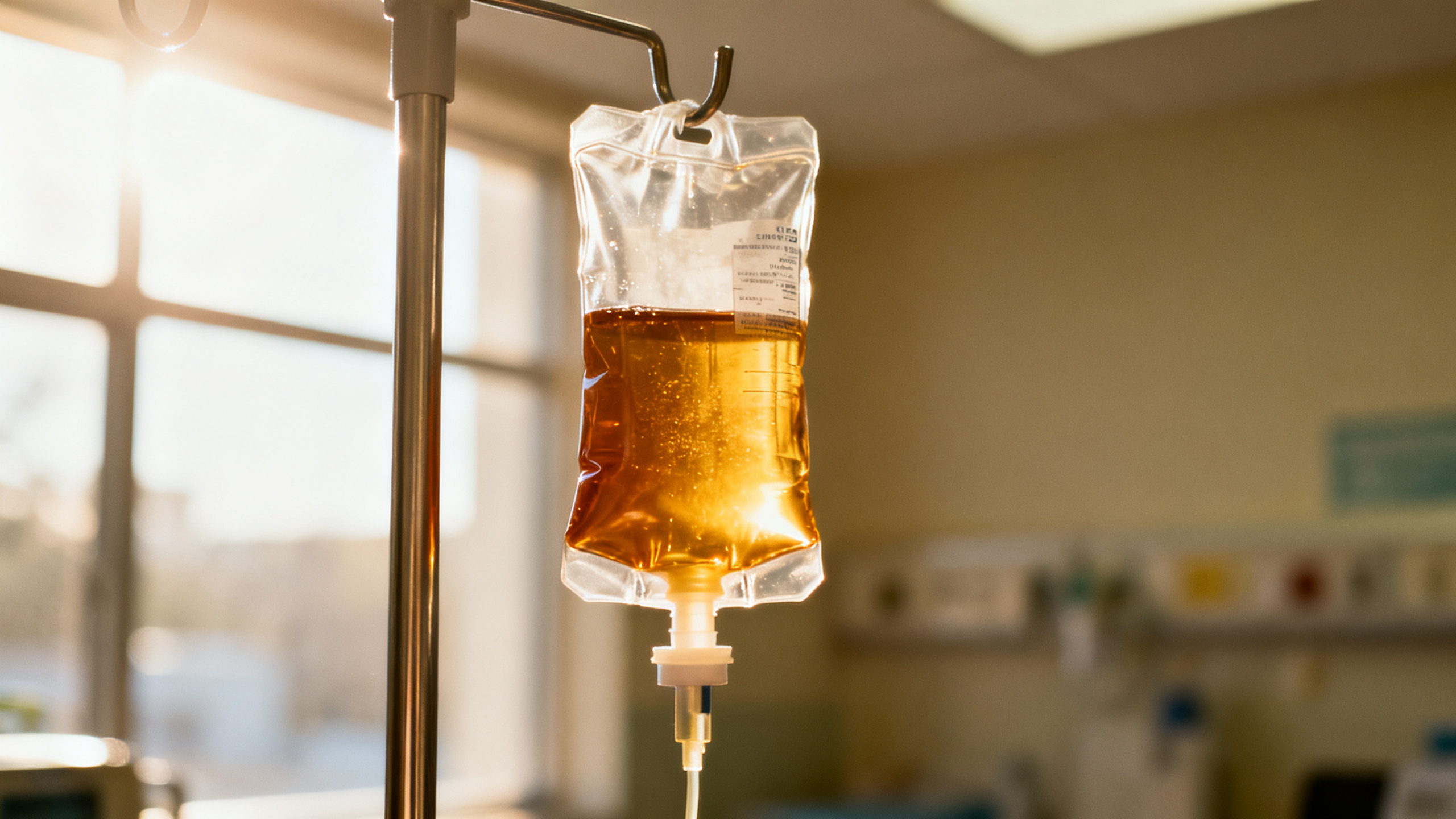
A typical “immune support” or “Myers cocktail” drip is some mix of saline, vitamin C (usually somewhere between 1 and 25 grams), B-complex vitamins, magnesium, calcium, zinc, and sometimes glutathione as a separate push. The branding varies place to place, the contents don’t, much. What you’re getting is water-soluble vitamins that your kidneys will start excreting within hours, plus electrolytes you almost certainly didn’t need.
Vitamin C is the headliner because it’s cheap and people have heard of it. The Linus Pauling vitamin-C-megadose story has been kicking around since the 1970s and it has not aged well. Oral vitamin C absorption tops out at around 200 mg per dose because the gut has saturable transporters, which is a fancy way of saying your gut has a limited number of doorways that vitamin C can squeeze through and they fill up fast. IV gets around that ceiling, which is genuinely interesting and is exactly why oncology researchers have studied high-dose IV vitamin C in specific cancer research protocols. Outside of those protocols, the case for megadose vitamin C in a healthy adult is thin enough you can read a newspaper through it.
B vitamins are water-soluble. If you’re not deficient, you pee them out. Your urine turns highlighter yellow about an hour after the drip and people interpret that as the vitamins working. It’s the vitamins leaving.
Glutathione is the one that gets sold as the prestige add-on. It’s the body’s main antioxidant inside cells, which sounds important, and it is important, inside cells, where you make your own. The data on IV glutathione doing anything useful in healthy adults is essentially absent. There’s some Parkinson’s research. That’s not what the strip mall clinic is treating.
Why people feel better anyway
They do feel better, I’m not going to pretend otherwise. The patient gets an hour in a quiet room, reclined, hydrated, attended to by somebody in scrubs who takes their vitals and asks how they’re sleeping. That’s a real intervention, it’s just not a pharmacological one.
The saline alone matters. A lot of the people walking into these clinics are mildly dehydrated, underslept, running on coffee and stress. Drop a liter of normal saline into them and they will, in fact, feel better for the rest of the day. That’s not vitamins, that’s water. Drink water like you actually like it, you’re gonna need it.
Then there’s placebo, which is not nothing. Placebo effects on subjective stuff like fatigue, mood, and “energy” run somewhere between 20 and 40 percent in most studies. An IV is the most theatrical placebo on the menu. There’s a needle. There’s a bag. There’s a clinical setting and a person in scrubs and a price tag, and the price tag itself elevates the response, the more expensive it is the better people feel afterward. Everything about the experience is engineered to produce a strong placebo signal, and it does.
Daycare is a biohazard. The drip can’t out-run the toddler.
I’m not being snide about this. The experience economy is real and people are allowed to spend their money on experiences. I just want patients to know they’re paying for the experience, not for a measurable improvement in their immune system, because that distinction matters when they’re choosing between an IV subscription and, say, a therapist, or a vacation, or a humidifier in the kids’ room. You can buy the feeling of being cared for and it’s worth something, just know that’s what you’re buying.
Your urine turns highlighter yellow about an hour after the drip and people interpret that as the vitamins working. It’s the vitamins leaving.

When IV vitamins are actually indicated
There is a real version of this. Hospitals run IV vitamins on people who need them. The bar is just much higher than “I want to feel boosted.”
Crohn’s, celiac, bariatric surgery
If your gut can’t absorb nutrients, IV makes sense. Bariatric patients often need lifelong B12 injections. Short-bowel patients sometimes need TPN. This is real medicine, not a subscription service.
Thiamine, B12, iron
Heavy drinkers get IV thiamine to prevent a neurological emergency called Wernicke’s. Pernicious anemia gets B12 injections. Iron-deficiency anemia that doesn’t tolerate oral iron gets IV iron infusions in a real medical setting.
NPO, post-op, sepsis
If you can’t eat, you get IV nutrition. Post-surgical patients, ICU patients, severe pregnancy vomiting. None of that resembles a recliner and a wellness playlist.
Vitamin D deficiency is the one place where the “I should be supplementing” instinct is often correct. A big chunk of the population is genuinely low, especially anyone who works indoors and lives north of about 35 degrees latitude (Portland, Seattle, anyone in the Pacific Northwest, definitely yes). The fix is oral cholecalciferol (the form of vitamin D you can get over the counter), 1000 to 4000 IU a day depending on your starting level, with a 25-hydroxy vitamin D blood test to check whether it’s working. Costs about five dollars a month. You don’t need an IV. Vitamin D isn’t even in most “immune drip” cocktails, because it’s fat-soluble and doesn’t play well with the IV format anyway.
What actually moves the needle on getting sick less
I tell people the boring stuff because the boring stuff is what works. Sleep seven to eight hours, genuinely. Sleep deprivation tanks immune function in studies that have been replicated for thirty years and the effect size is bigger than anything you’re going to get from a vitamin. If you have kids in daycare, accept that you’re going to catch everything for two or three years and then you’ll have the immune system of a Victorian nursemaid. If you have pets that lick your face, same deal, slightly slower. Wash your hands. Get the flu shot. Get the COVID booster if you’re in a risk group. Vitamin D if your labs say you’re low.
The part nobody wants to hear: most “I keep getting sick” complaints in healthy adults aren’t an immune problem. They’re an exposure problem. The drip can’t beat the toddler at home and it can’t beat the open-plan office with the guy who shows up with a cold every other Tuesday. And if you’ve actually got something making you sick more than your peers (a real immune deficiency, a primary care issue that hasn’t been worked up, chronic poor sleep, a drinking problem you’re not naming, an undiagnosed sleep apnea you’ve been blaming on age), the drip won’t catch it. It’ll just put it under a different colored light.
The wellness industry has gotten very good at selling people the feeling that they’re doing something proactive about their health. Some of that energy is useful and patients can convert it into the actual stuff that works, more sleep, a strength program, the conversation with the primary care doc that they’ve been ducking for two years. Some of it stops at the IV chair and burns the money and the motivation in the same place. Knowing which one you’re doing is the part of self-care nobody’s selling, because there’s no recliner to sit in for that part.
Where I land, and where you land is yours
If you’ve got the money and the IV makes you feel better and you understand what you’re buying, fine. People spend money on stranger things. I’m a provider, not a parent. If you want to spend a few hundred bucks an hour to feel cared for in a recliner, the appointment isn’t mine. The most I’ll do is the disapproving yes where I tell you what the data says about the vitamins themselves before you sign up.
The version I’d push back on is the one where you’re choosing between the drip and rent, or between the drip and seeing your primary care doc for actual labs. There the drip should lose every time. The thing about expensive placebo is it works best on people who can afford it without noticing. Everybody else is just paying retail to feel cared for, and there are cheaper ways to be cared for if you go looking.
Sources
- Hemilä H, Chalker E. Vitamin C for preventing and treating the common cold. Cochrane Database Syst Rev. 2013;(1):CD000980. PMID 23440782. (No effect of routine vitamin C on common cold in general population)
- Prather AA, Janicki-Deverts D, Hall MH, Cohen S. Behaviorally Assessed Sleep and Susceptibility to the Common Cold. Sleep. 2015;38(9):1353-1359. PMID 26118561. (Short sleep increases infection risk; effect larger than any vitamin)
- Levine M, Conry-Cantilena C, Wang Y, et al. Vitamin C pharmacokinetics in healthy volunteers: evidence for a recommended dietary allowance. Proc Natl Acad Sci USA. 1996;93(8):3704-3709. PMID 8623000. (Saturable gut transport, oral plateau around 200mg)