Finasteride (Propecia, Proscar): how it holds onto your hair, the sexual side effects, the contested post-finasteride question, and the PSA catch.
Finasteride is the little pill a lot of guys are quietly taking to keep their hair, and a smaller group are taking for a prostate that’s gotten too big for comfort. It’s been around since the early ’90s, the patents expired ages ago, so it’s cheap and generic now. If you’ve been staring at your hairline in the mirror lately and wondering whether the stuff actually works or whether it’s going to wreck your sex life, this is the honest version.
What it actually is
Finasteride is a 5-alpha-reductase inhibitor. That’s a mouthful, but the idea is simple. Your body takes regular testosterone and, with an enzyme called 5-alpha-reductase, converts a slice of it into a stronger androgen called DHT (dihydrotestosterone). Finasteride blocks most of that conversion. Less DHT floating around.[1]
Why does that matter? Because DHT is the thing that miniaturizes hair follicles on the top of a genetically susceptible man’s head, and it’s also the thing that drives the prostate to keep growing as you age. Knock DHT down and you slow both problems. That’s the whole trick, one enzyme, two uses.
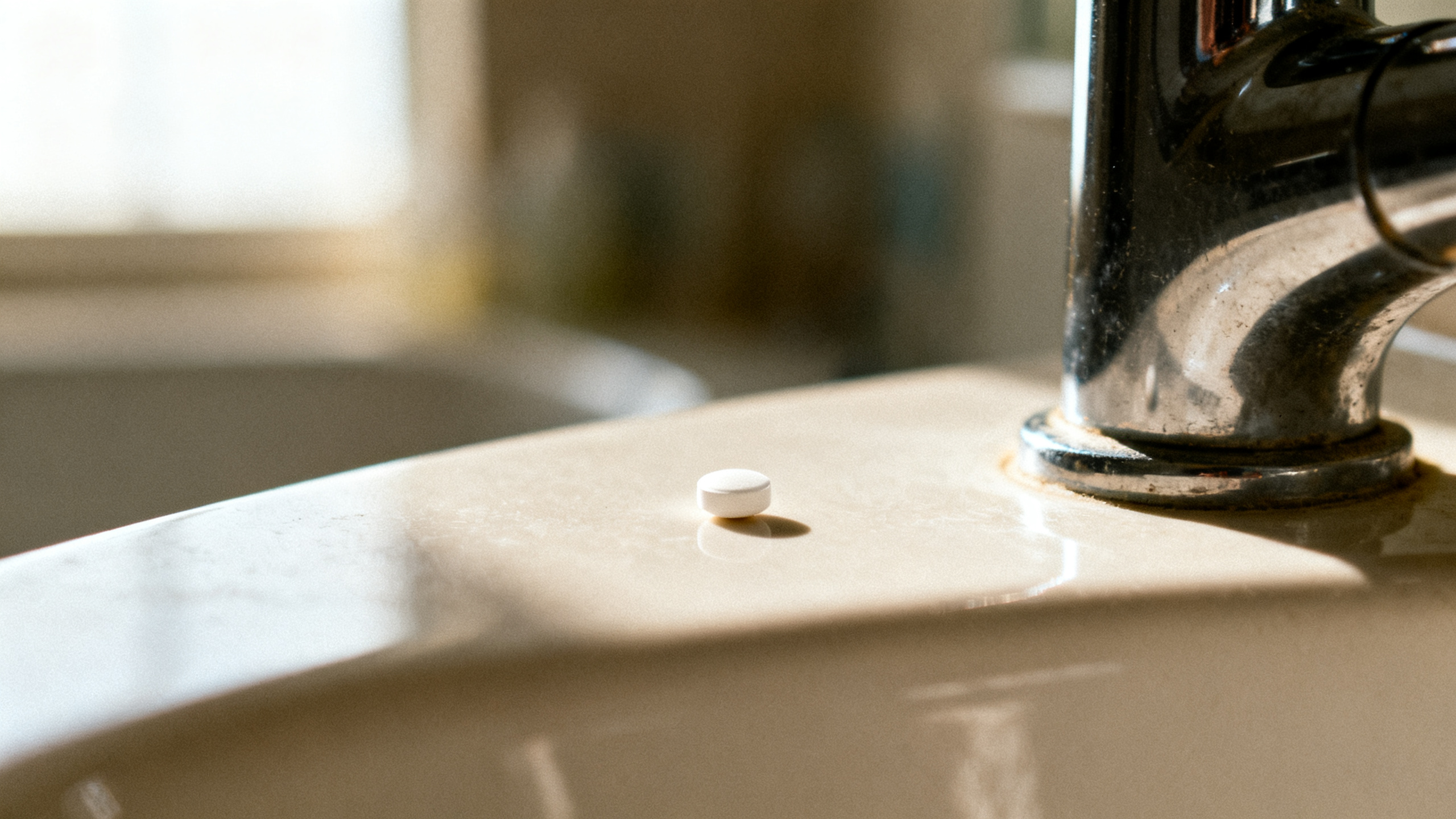
It comes in two doses with two brand names, and they’re the same drug. The 1mg version is Propecia, sold for male pattern hair loss. The 5mg version is Proscar, sold for an enlarged prostate. Same molecule, the dose is just tuned to the job.
How it works, and where we’re honest about the limits
The mechanism behind the drug’s genuinely well understood, which isn’t always the case in this field. We know the enzyme, we know it gets blocked, we can measure DHT dropping in your blood and on your scalp. At 1mg a day, finasteride knocks scalp DHT down by around 60 percent or so.[1] That’s not hand-waving, it’s measurable chemistry.
What’s less tidy is predicting who responds and how well. Most men on it either keep the hair they’ve got or get some back, but the amount varies a lot, and nobody can tell you in advance exactly where you’ll land. The big trials showed that after a couple of years, the large majority of men either held steady or improved, while almost everyone on a sugar pill kept losing.[2] So it works. It just isn’t a guarantee of a full head of hair.
It works only while you take it. Stop, and within six to twelve months the hair you saved is gone again, like you never started.
That last point is the one people don’t want to hear, so let me say it plainly. This isn’t a course of treatment with a finish line. It’s a daily thing you keep doing, maybe for decades, or you give back what it gave you. If that sounds like a lot of commitment for hair, that’s a fair thing to sit with before you start, not after.
Who it’s actually for
For the hair side, the honest answer is younger guys who are early in the process. Finasteride is much better at holding onto follicles that are still alive than at resurrecting ground that’s already gone bald and shiny. If you’re noticing thinning at the crown or the hairline creeping back and you’re in your twenties or thirties, that’s the sweet spot. If you’ve been slick on top for ten years, this drug isn’t going to do much for you, and anyone telling you otherwise is selling something. If you’re weighing your options more broadly, our rundown on what actually works for hair loss and what’s hype lays out the rest of the field.
For the prostate side, it’s men with real benign prostatic hyperplasia, an enlarged prostate that’s actually causing trouble, the weak stream, the getting up three times a night, the feeling like you never quite empty. It shrinks the gland over months and lowers the odds you’ll end up needing surgery down the line.[3] It tends to do the most good for men with genuinely large prostates, less for guys whose glands are only mildly enlarged.
And honestly, plenty of guys don’t need it at all. A receding hairline isn’t a medical emergency, and a lot of men decide they’d rather just let it go than take a daily pill for the next thirty years. That’s a completely legitimate call. This is one of those drugs where the question isn’t only “does it work,” it’s “does this problem bother you enough to be worth it.” Nobody can answer that but you.
Starting it, and what the first stretch feels like
Here’s the thing nobody warns you about: nothing happens fast, and what does happen first can look like it’s getting worse. Finasteride is slow. You won’t see anything for the first few months, and you really shouldn’t judge it until you’ve been on it a solid year. Some guys go through an early shedding phase where weak hairs drop out to make room for stronger ones, which feels like a cruel joke when you started the pill to keep your hair. It usually settles. A lot of men pair it with minoxidil, the topical that works on a totally different mechanism, since the two together tend to hold more ground than either alone.
The dosing is dead simple. One pill a day, same rough time, with or without food, doesn’t matter. No titration, no ramping up. The hard part isn’t the schedule, it’s the patience. People quit at month four because they don’t see results, which is exactly when they should still be waiting.
If you’re starting it for the prostate, same deal, give it six months to a year to really shrink the gland and ease the symptoms. The relief builds slowly rather than switching on.
The side effects people actually notice
Let’s get to the part you actually came here for. The side effects that matter to most men are sexual: lower libido, trouble getting or keeping an erection, changes in ejaculation. In the trials, these showed up in a minority of men, usually in the low single digits as a percentage, and they generally went away if you stopped the drug, and in a fair number of cases even faded while men stayed on it.[2]
A low percentage isn’t zero, though, and if you’re the guy it happens to, the statistic doesn’t help much. So the smart move is to know going in that it’s a real possibility, pay attention in the first few months, and have a low bar for stopping if your sex life takes a hit you don’t like. It’s hair. It isn’t worth being miserable over.
A smaller number of men get some breast tenderness or slight enlargement, since you’re nudging the testosterone-to-estrogen balance a little. Worth a mention to your doctor if it shows up, especially if it’s only on one side or there’s a lump, because that needs a proper look.
Post-finasteride syndrome, leveled with you
Now the contested part, and I’m not going to wave it away. There’s a bunch of reports from men describing sexual, physical, and mood symptoms that supposedly persist long after they stopped the drug. People call it post-finasteride syndrome. You could probably find a subreddit full of guys who swear it happened to them, and you’ll find doctors who roll their eyes at the whole idea.
The honest scientific status is that it’s genuinely unknown. Regulators in some countries have added warnings about persistent sexual side effects to the label, which means the concern was taken seriously enough to act on.[4] At the same time, the controlled evidence is thin, the reports are hard to separate from other causes, and we don’t have a clean mechanism or a reliable estimate of how often it really happens, if it happens as its own distinct thing at all.[5]
So here’s where I land, and I’m not going to insult your intelligence about it. I’m not going to tell you it’s all in your head, because the data doesn’t support that kind of certainty, and dismissing men who report a real symptom is how the field loses trust it doesn’t deserve to lose. I’m also not going to tell you it’s a common, proven catastrophe, because the data doesn’t support that either. It’s a real-enough possibility that you should know about it, weigh it, and decide for yourself. If the idea of any chance of lasting effects rules it out for you, that’s a reasonable line to draw, and you won’t get an argument from me.
The prostate cancer screening catch
This one’s important and gets missed all the time. Finasteride lowers your PSA, the blood marker doctors use to screen for prostate cancer, by roughly half.[3] That’s not because it’s hiding anything, it’s just a side effect of shrinking prostate tissue. But it means a PSA reading on finasteride looks artificially low.
The practical fix is simple: tell every doctor who orders a PSA that you take finasteride. They’ll roughly double the number to interpret it properly. If you skip this, a real problem can look reassuringly normal. So just say it. Every time. It’s a five-second sentence that keeps your screening honest.
Interactions and a couple of caveats
Finasteride is pretty mellow on the drug-interaction front. It doesn’t tangle up with most of the everyday stuff guys take. The bigger caveats aren’t about other pills, they’re about handling.
The one real rule: a woman who’s pregnant or could become pregnant shouldn’t handle crushed or broken tablets, because the drug can affect a developing male fetus. The pills are coated so an intact one is fine to be around, just don’t leave split or crushed ones lying where they’d be handled. Since the readers here are men, that’s about all that needs saying, keep your pills to yourself and don’t crush them on the kitchen counter.
One more honest note: if you’re trying to have kids, finasteride can nudge your semen numbers in a small subset of men, and that usually reverses after stopping. If you’re in a fertility stretch and things aren’t working, it’s worth putting on the table with your doctor.
The honest bottom line
Finasteride works, the chemistry is solid, and for the right guy it’s a cheap, simple way to hold onto his hair or get an oversized prostate under control. It’s not magic and it’s not forever-once-and-done, it’s a daily commitment that gives back what it gave the moment you stop.
The sexual side effects are real for a minority and usually reversible, the post-finasteride question is genuinely unknown and worth taking seriously without panicking, and the PSA thing is a must-tell-your-doctor detail. None of this is a reason to be scared of the drug, and none of it gives you a reason to pretend the drug’s free of trade-offs.
If you’re early in hair loss and it bothers you, it’s a legitimate option to talk through with someone who’ll be straight with you, and worth lining up against minoxidil and the other choices before you commit. If you’d rather just let nature do its thing, that’s legitimate too. The only bad move is starting it without knowing what you signed up for, and now you do.
Sources
FDA prescribing information for finasteride via DailyMed, the source for the dosing, pharmacology, half-life, interaction, and side-effect details in this piece.
Propecia (1mg) is for male pattern hair loss, Proscar (5mg) is for an enlarged prostate. Same molecule, the dose just matches the job.
At 1mg a day finasteride drops scalp and blood DHT by roughly two-thirds, which is the whole point: less DHT, slower hair loss and prostate growth.
Finasteride roughly halves your PSA, so a reading on it looks artificially low. Tell every doctor who orders a PSA that you take it.