Strong Body, Steady Mind
Something has shifted in the modern world, and it did not happen quietly. Over the last decade, physical activity, especially weightlifting, has moved from the fringe corners of gym culture into the center of everyday conversation. Social media, athletes, physicians, therapists, and even celebrities are all saying a version of the same thing. Strength training is not just about how you look. It is about how you think, how you regulate stress, and how you show up in your life. The message is everywhere now, from clinic rooms to podcasts like “Mind Pump, “Joe DeFranco’s Industrial Strength Show”, and The Dr. Layne Norton Podcast. These podcasts do a remarkable job breaking down topics ranging from macros and specific muscle groups to faith, discipline, and mental health, all through the lens of physical movement.
Weightlifting is one of the most reliable forms of exercise for your mind
For adults, weightlifting is one of the most reliable things you can do for your psychological well-being. The research is clearest that exercise of any kind moderately reduces depressive symptoms, and resistance training specifically holds its own against everything else that has been studied. It gives your mind something rare in today’s overstimulated world. A single, focused task. When you are under a barbell, your brain does not have the luxury of rumination. You cannot replay arguments from work or spiral into what-ifs about the future. Your attention narrows to breath, posture, tension, and movement. For about an hour a day, your mind is pulled out of abstraction and placed back into your physical body. That alone is therapeutic.
But the benefits go far beyond internal silence.
Deadlifts
Deadlifts
Deadlifts teach you how to pick things up off the floor safely and efficiently. That sounds simple until you realize how often life demands it. My grandmother is 93 years old and still lives alone in a three-story house. She keeps her vacuum in the basement because that is where it has always lived. And I will be damned if that woman does not lug that 25-pound, awkward box up two flights of stairs once a week to clean her home. That movement pattern is a deadlift. Strong hips, a stable spine, and confidence in your ability to move load through space. Strength training is not about adding plates to a bar for ego. It is about preserving independence.
Strength training is not about adding plates to a bar for ego.


Squats
Squats
Squats prepare you for sitting down and standing up, getting off the floor, rising from a chair, climbing stairs without panting, and yes, picking up your kids and tossing them into the air while they laugh. These are the movements that quietly disappear as people age if they are not trained. Squatting strength is not optional for quality of life. It is foundational.


Overhead Presses
Overhead Presses
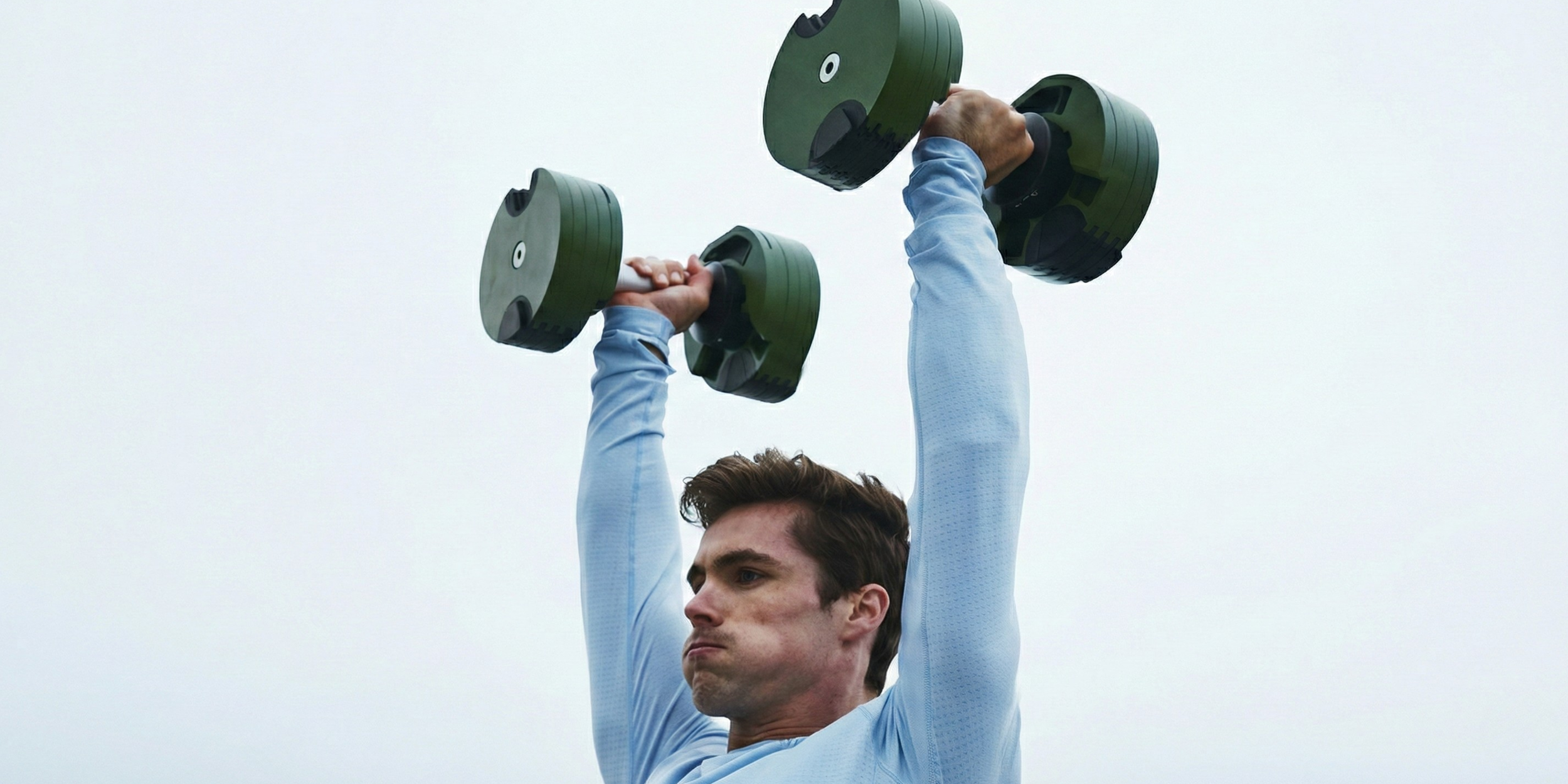
Overhead pressing trains your ability to reach and stabilize weight above your head. Think about grabbing that delicate Christmas plate from the top shelf, placing water jugs onto a high garage rack, or for women especially, hoisting and retrieving an overly heavy suitcase into an airplane bin while pretending it is no big deal. Shoulder strength is functional strength. It protects joints and builds confidence in everyday tasks that would otherwise feel precarious.
Shoulder strength is functional strength.
These are just the practical examples. Then there are the secondary gains that quietly compound over time. Improved posture. Increased bone density. Better balance. A growing sense of confidence that comes from watching yourself get stronger and hit personal bests you did not think were possible six months earlier. There is something deeply stabilizing about evidence. When your body proves it can adapt and improve, your mind follows.
Sources
- Gordon BR, McDowell CP, Hallgren M, Meyer JD, Lyons M, Herring MP. Association of Efficacy of Resistance Exercise Training With Depressive Symptoms: Meta-analysis and Meta-regression Analysis of Randomized Clinical Trials. JAMA Psychiatry. 2018;75(6):566-576. PMID 29800984.
- Pearce M, Garcia L, Abbas A, et al. Association Between Physical Activity and Risk of Depression: A Systematic Review and Meta-analysis. JAMA Psychiatry. 2022;79(6):550-559. PMID 35416941.
- Schuch FB, Vancampfort D, Richards J, Rosenbaum S, Ward PB, Stubbs B. Exercise as a treatment for depression: A meta-analysis adjusting for publication bias. J Psychiatr Res. 2016;77:42-51. PMID 26978184.
- El-Kotob R, Ponzano M, Chaput JP, et al. Resistance training and health in adults: an overview of systematic reviews. Appl Physiol Nutr Metab. 2020;45(10 Suppl 2):S165-S179. PMID 33054335.
- Clegg AJ, Hill JE, Mullin DS, et al. Exercise for depression. Cochrane Database Syst Rev. 2026;(1):CD004366. DOI 10.1002/14651858.CD004366.pub7.